

Daily Dose Of Jazz…
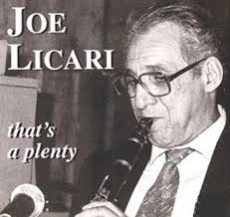
Joe Licari was born on January 10, 1934 in Brooklyn, New York and studied with Bob Wilber. His influences were Benny Goodman, Frank Teschemacher, Pee Wee Russell, Johnny Dodds, Sidney Bechet, and Jimmie Noone, using some of their ideas to find his own voice.
Known as an especially “hot” player with an exuberant and always emotive attack, Licari has worked along side of Roy Eldridge, Wild Bill Davison, Conrad Janis, Big Chief Russell Moore, Connie Kay, Bob Haggart, Vic Dickenson, Pee Wee Erwin, Doc Cheatham and the vocalist Julie Wilson. He’s also appeared in films, on television and radio shows and in clubs, sometimes standing in for Woody Allen.
As a leader, he recorded three albums and dozens as a sideman working as a featured player on albums by The Red Onion Jazz Band, Julie Wilson, Big Chief Russell Moore, Herb Gardner, Dick Voigt’s Big Apple Jazz Band, Jim Lowe, Dorothy Loudon, and Betty Comora. As a member of the Grove Street Stompers, they were a prominent fixture for decades on Monday nights at Arthur’s Tavern in Greenwich Village.
Clarinetist Joe Licari continues to record and perform at various clubs around New York City with The Speakeasy Jazz Babies, The Smith Street Society Jazz Band, Swing 39, Mark Shane. Delta Five, and Jon-Erik Kellso`s Hot Four.
More Posts: clarinet,history,instrumental,jazz,music
Daily Dose Of Jazz…
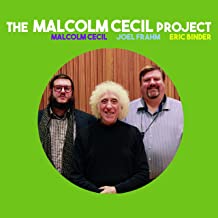
Malcolm Cecil was born on January 9, 1937 in London, England. By the time he came of age he was a founding member of the UK’s leading jazz quintet of the late 1950s, The Jazz Couriers, before going on to join a number of British jazz combos led by Dick Morrissey, Tony Crombie and Ronnie Scott into the early 1960s.
Malcolm later joined Cyril Davies and Alexis Korner to form the original line-up of Blues Incorporated. With Robert Margouleff he formed the duo TONTO’s Expanding Head Band, a project based on a unique combination of synthesizers. This led to them collaborating on and co-producing several of Stevie Wonder’s Grammy-winning albums Talking Book, Music of My Mind, Innervisions and Fulfillingness’ First Finale of the early 1970s. They are also credited as engineers for the Stevie Wonder produced 1974 album Perfect Angel by Minnie Riperton.
Their unique sound made them highly sought-after and they went on to venture in not only jazz, but rock and r&b to collaborate with, amongst others, Quincy Jones, Gil Scott-Heron, Weather Report, Bobby Womack, The Isley Brothers, Billy Preston, Stephen Stills, The Doobie Brothers, Dave Mason, Little Feat, Joan Baez and Steve Hillage. Bassist, engineer and record producer Malcolm Cecil continues to perform and produce.
More Posts: bandleader,bass,history,instrumental,jazz,music,record producer
Daily Dose Of Jazz…
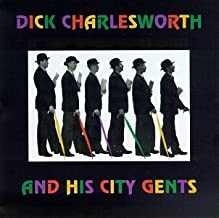
Dick Charlesworth, born Richard Anthony Charlesworth on January 8, 1932 in Sheffield, England. Attending King Edward VII School, at 16, he became a clerk in the Ministry of Labour and was in due course transferred to London. He bought a clarinet and started playing jazz as a hobby in 1952. Entirely self-taught, he became good enough to play clarinet and saxophone in a dance band and performed with jazz bands in south London including Jim Weller’s Jazzmen.
He formed his first group in 1956 and his Dick Charlesworth’s Jazzmen won the South London Jazz Band Championship in 1957. His group was signed by the Melodisc label, and they recorded an EP in December 1957 and produced an album for Doug Dobell’s 77 Records.
Leaving the Civil Service in 1959 he became a professional musician and signed a recording contract with EMI, remarketing the group as Dick Charlesworth’s City Gents. This was the time of light jazz, sporting distinctive attire of pin stripes and bowler hats, with their Latin motto, Dum vivimus vivamus, simply translated as “While we live, let us enjoy life”. They charted one single Billy Boy on the UK Singles Chart in 1961.
When jazz went out of vogue in the Sixties, Dick broke up his band, and from 1964 to 1969 fronted a band on the cruise liners. He then settled in Mojacar, Spain where he ran a music bar. Returning to Britain in 1977, he was active on the London jazz scene until the early 2000s working with, among others, Keith Smith, Rod Mason, Alan Littlejohn, Denny Wright, and appeared on the BBC Radio series, Jazz Score.
In his later years, Charlesworth lived in Thames Ditton, Surrey, and played a residency at various pubs with his band The Dick Charlesworth’s Fraternity Four, and released their final recording in 2004. Clarinetist, saxophonist and bandleader Dick Charlesworth passed away following a heart attack on April 15, 2008, at the age of 76.
More Posts: bandleader,clarinet,history,instrumental,jazz,music,saxophone
Daily Dose Of Jazz…
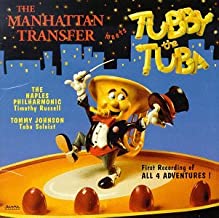
Tommy Johnson was born John Thomas Johnson on January 7, 1935 in Los Angeles, California. He had a musical upbringing as his father was a baritone soloist in the choir at the Angelus Temple in Echo Park.
He attended the University of Southern California Thornton School of Music and received a bachelor’s degree in music in 1956. He played his first film in 1958, the score for Al Capone and went on to become Hollywood’s first-call tuba player.
Known mostly for playing for television series and commercials, he also was a prolific player in film scores such as Jaws, The Godfather, the Indiana Jones series, the Star Trek film series, The Lion King, Titanic, and over another 120 film scores, working wth the likes of John Williams, James Horner, and Alan Silvestri..
He ventured into playing jazz backing such artists as Frank Sinatra, The Manhattan Transfer and performing with the American Jazz Philharmonic,, as well as rock and roll and pop artists like Weird Al Yankovic and Elvis Presley.
As an educator he taught junior high school music in the Los Angeles Unified School District for nearly 20 years, but for most of his career, he taught advanced tuba players in private lessons and at USC and UCLA.
On October 16, 2006, tubist Tommy Johnson passed away from complications of cancer and kidney failure at the UCLA Medical Center in Los Angeles at the age of 71.
More Posts: history,instrumental,jazz,music,tuba
Daily Dose Of Jazz…
Roger Quincey Dickerson was born in 1898 in Paducah, Kentucky and raised in St. Louis, Missouri, where he worked in local theaters in the late 1910s. After touring with Wilson Robinson’s Bostonians in 1923, he then worked in Andrew Preer’s group at the Cotton Club in New York City, remaining in the group after Preer’s death in 1927.
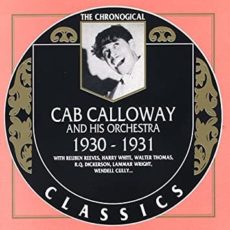
From the mid to late 1920s he recorded in small groups with Harry Cooper and Jasper Taylor, with a latter session also featuring Johnny Dodds. When Cab Calloway took over the Preer band in 1930 Dickerson was still in the group, and he recorded several times under the new leader.
Leaving Calloway’s employ in 1931 he quit music but recorded again in 1949 accompanying a singer named Ray Cully. Trumpeter Roger Dickerson passed away on January 21, 1951 in Glens Falls, New York.
More Posts: history,instrumental,jazz,music,trumpet