

Daily Dose Of Jazz…
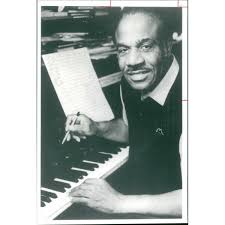
William Moore, Jr., better known as Billy Moore was born on December 7, 1917 in Parkersburg, West Virginia. Chiefly known as an arranger for most of his jazz career, Billy wrote charts for Jimmie Lunceford, Charlie Barnet, Jan Savitt, and Tommy Dorsey in the 1940s. He also worked for publishing companies in New York City.
In the 1950s he relocated to France, where he accompanied and wrote for The Peters Sisters from 1953 to 1960. Following this, he worked from 1960 to 1963 as an arranger for Berliner Rundfunk and then accompanied the Delta Rhythm Boys on tour.
He formed his own music publishing company in order to combat the then prevalent habit of band leaders taking credit for the work of their arrangers and composers. Amongst his uncredited works is the famous countermelody to Barnet’s million-selling hit Skyliner. Moving to Copenhagen, Denmark in the 1970s, he remained active as an arranger. Being friends with Leonard Feather, he sometimes used Moore’s name for songwriting credits.
In his later years in Denmark, he was the administrator of the music foundation established in Ben Webster’s name and for whom he also worked as a business aide. He was also the manager and musical director for the European tours of the Peters Sisters. Pianist and arranger Billy Moore passed away on February 28, 1989 in Copenhagen, Denmark.
Daily Dose Of Jazz…
Francis Dunlop was born on December 6, 1928 in Buffalo, New York and began playing guitar at age nine and drums at ten. He was playing professionally by age 16 and received some classical education in percussion. He toured with Big Jay McNeely and recorded with Moe Koffman in 1950 before serving in the Army during the Korean War.
After his discharge, Frankie played with Sonny Stitt, Charles Mingus, Sonny Rollins, Maynard Ferguson, Lena Horne, Duke Ellington, and Thelonious Monk. It is his recordings with the latter two that he is principally remembered. Later in his life, he recorded with Lionel Hampton, Earl Hines, Ray Crawford, and Joe Zawinul.
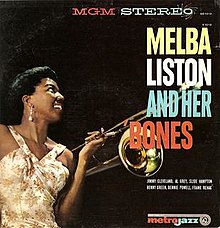
In 1984, he retired, having recorded on over 100 albums with Wilbur Ware, Randy Weston, Melba Liston, Martin Mull, Dodo Greene, Herman Foster, Bill Barron, Richard Davis, Mose Allison and Leo Wright among many others. Drummer Frankie Dunlop passed away on July 7, 2014.
More Posts: drums,history,instrumental,jazz,music
Daily Dose Of Jazz…
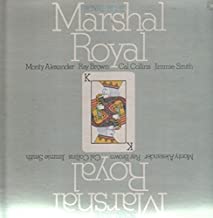
Marshal Walton Royal Jr. was born into a musical family on December 5, 1912 in Sapulpa, Oklahoma. His first professional gig was with Lawrence Brown’s band at Danceland in Los Angeles, California. In a very short time, he secured a regular gig at the Apex, working for Curtis Mosby in Mosby’s Blue Blowers, a 10-piece band. Following that gig, he began an eight-year stint from 1931–1939 with the Les Hite Orchestra at Sebastian’s Cotton Club in Los Angeles. He spent 1940 to 1942 with Lionel Hampton, until the war interrupted his career.
With his brother Ernie, he served in the U.S. Navy in the 45-piece regimental band that was attached to the Navy’s pre~flight training school for pilots at St. Mary’s College in Moraga, California. Two swing bands were organized from the larger regimental band, and they played for smokers and dances at USOs and officers clubs. Royal was the leader of the Bombardiers, one of those bands, which also included not only his brother Ernie, but Jackie Kelson (later known as Jackie Kelso), Buddy Collette, Jerome Richardson, and Vernon Alley.
When he left Basie in 1970, Royal settled permanently in Los Angeles, continuing to play and record, working with Bill Berry’s big band, Frank Capp and Nat Pierce, Earl Hines, and Duke Ellington. Royal recorded as a soloist with Dave Frishberg and Warren Vache. He co-led a band with Snooky Young in the 1970s and 1980s, recording with the band in 1978.
Alto saxophonist and clarinetist Marshal Royal, best known for his twenty years with Count Basie, passed away in Culver City, California, on May 9, 1995, aged 82.
More Posts: bandleader,clarinet,history,instrumental,jaz,music,saxophone
Daily Dose Of Jazz…
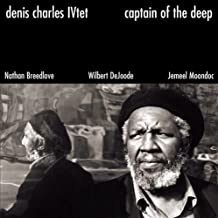
Denis Charles was born in St. Croix, Virgin Islands on December 4, 1933 and first played bongos at age seven with local ensembles in the Virgin Islands. Moving to New York City in 1945, he gigged frequently around town and in 1954 began working with Cecil Taylor, and the pair collaborated for the next four years. Following his work with Taylor, he played with Steve Lacy, Gil Evans, and Jimmy Giuffre. He befriended Ed Blackwell, and the two influenced each other.
Recording with Sonny Rollins on a calypso-tinged set, Denis then returned to play with Lacy until 1964. He worked with Archie Shepp and Don Cherry in ‘67 and then disappeared from the jazz scene until 1971. In the 1970s and 1980s he played regularly on the New York jazz scene with Frank Lowe, David Murray, Charles Tyler, Billy Bang, and others, and also played funk, rock, and traditional Caribbean music.
Between 1989~1992 drummer Denis Charles released three albums as a leader before passing away of pneumonia in his sleep on March 26, 1998 in New York City in 1998, four days after a five-week European tour with the Borgmann/Morris/Charles (BMC) Trio, with Wilber Morris and Thomas Borgmann. In 2002 Veronique N. Doumbe released a film documentary Denis A. Charles: An Interrupted Conversation about his life.
More Posts: bandleader,composer,drums,history,instrumental,jazz,music
Daily Dose Of Jazz…
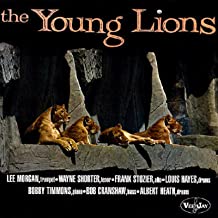
Bob Cranshaw was born Melbourne Robert Cranshaw on December 3, 1932 in Chicago, Illinois. His career spanned the heyday of Blue Note Records to his recent involvement with the Musicians Union. He is perhaps best known for his long association with Sonny Rollins. Cranshaw performed in Rollins’s working band on and off for over five decades, starting with a live appearance at the 1959 Playboy Jazz Festival in Chicago and on record with the 1962 album The Bridge.
He recorded on over 3000 sessions as a sideman with Mary Lou Williams, Pepper Adams, Nat Adderley, Eric Alexander, Hank Mobley, Mose Allison, Granchan Moncur III, Gene Ammons, Wes Montgomery, Kenny Barron, James Moody, George Benson, Shirley Scott, Wayne Shorter, Horace Silver, Walter Bishop Jr., Ella Fitzgerald, Lee Morgan, Oliver Nelson, Duke Pearson, Paul Bley, Jaki Byard, Johnny Coles, Donald Byrd, Hank Crawford, Sonny Criss, Houston Person, Frank Foster, and Sonny Red, and the list goes on and on.
Bassist Bob Cranshaw, who was a session bassist for the iconic PBS children’s programs Sesame Street and The Electric Company and played bass in the Saturday Night Live house band, passed away at the age of 83 on November 2, 2016 in Manhattan, New York from stage four cancer.
More Posts: bass,history,instrumental,jazz,music