

Daily Dose Of Jazz…
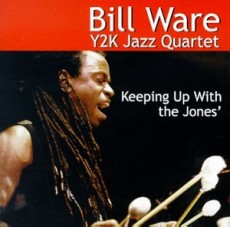
Bill Ware III was born William Anthony Ware III on January 28, 1959 in East Orange, New Jersey. He played bass and piano early in his career at Harlem’s Jazzmobile, prior to choosing vibraphone as his main instrument. After spending several years playing Latin jazz he formed his own Latin Jazz group, AM Sleep.
In 1987 Ware joined saxophonist Roy Nathanson and trombonist Curtis Fowlkes’ Jazz Passengers as a regular memberand by 1990 had put together a group of sidemen as the Club Bird All-Stars, who accompanied him on a tour of Japan. Stretching out to other genres he played with Groove Collective and Steely Dan during the first half Nineties.
Later in the decade Bill teamed up with fellow former Jazz Passengers, Brad Jones and E. J. Rodriguez forming the ensemble Vibes. His 2001 tribute to Duke Ellington was recorded with guitarist Marc Ribot, and Deborah Harry on his 2002 effort Four.
During the mid-2000s, he recorded several projects blending jazz with Western Classical music as well as composing five film scores with Nathanson. He recorded fourteen solo projects as a leader for AM Sleep, Knitting Factory, Cathexis, Wollenware, Random Chance and Pony Canyon record labels. Vibraphonist Bill Ware continues to compose, perform and record.

Give A Gift Of Jazz – Share
More Posts: bass,piano,vibraphone
Daily Dose Of Jazz…
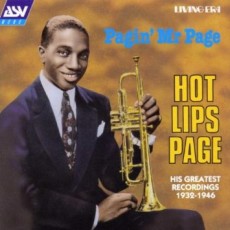
Hot Lips Page was born Oran Thaddeus Page on January 27, 1908 in Dallas, Texas. His main trumpet influence was Louis Armstrong as well as early influence from Harry Smith and Benno Kennedy. In his early teens he moved to Corsicana, Texas and traveled across the Southwest and toured as far East as Atlanta and north to New York City. He played in circuses and minstrel shows and backed blues singers Ma Rainey, Bessie Smith and Ida Cox.
In 1926 he caught the eye of the bassist Walter Page (no relation) who had recently assumed leadership of the Oklahoma City Blue Devils and by 1928 was playing and touring. In 1931 he left to join the Bennie Moten Orchestra in Kansas City.
Hot Lips went on to occasionally appear as vocalist, emcee and trumpet soloist with Count Basie’s Reno Club orchestra after Moten’s sudden death disbanded the group. It was during this period that Page embarked upon a solo career, playing with small pick up bands from Kansas City. At the behest of Armstrong’s manager Joe Glaser, he moved to New York City in 1936.
His career as a bandleader got off to an auspicious start in 1937 with sold-out appearances and an extended run at Harlem’s Smalls Paradise, but struggling by 1939 he was struggling to maintain a regular working band, he led small combos and bands on 52nd Street through the Fifties. Page was known as “Mr. After Hours” to his many friends for his ability to take on all comers in late night jam sessions, recorded for the Mezzrow-Bechet Septet in 1945, as Pappa Snow White, with Mezz Mezzrow, Sidney Bechet, Pops Foster, Chu Berry, Sid Catlett and vocalist Pleasant Joe.
Over the course of his short career Hot Lips made over 200 recordings, most as a leader, for Bluebird, Vocalion, Decca and Harmony Records, among others. He toured extensively throughout the southern and northeast states and Canada, led as many as thirteen different big bands, appeared with Bud Freeman and Artie Shaw, recording over 40 sides with the latter. His band backed the singer Wynonie Harris was the leader of the Apollo Theater, recorded duets with Pearl Bailey on The Hucklebuck and Baby It’s Cold Outside and twice toured Europe.
Known as Hot Lips to the public and Lips by fellow musicians, the bandleader and trumpeter heralded as one of the giants of the Swing Era and a founder of what became rhythm and blues, passed away due to mysterious circumstances in New York on November 5, 1954 at the age of 46.
Inspire A Young Mind
Daily Dose Of Jazz…
Talib Ahmad Dawood, formerly Alfonso Nelson Rainey, was born on January 26, 1923 on Antigua. He first took lessons from his father, a trumpeter who played in marching bands; his mother was a singer who accompanied him on piano. He also learned to play the banjo and the pipe organ.
His further education came in the United States at from his high school and music school experiences at the end of the 1930s in New York. Because of the support he received fromof the Barrymore Foundation, Talib first took the stage name Barrymore Rainey. After studying at the Juilliard School in 1940, he played with Tiny Bradshaw, Louis Armstrong, Benny Carter, Andy Kirk, Jimmie Lunceford, Roy Eldridge and other swing orchestras.
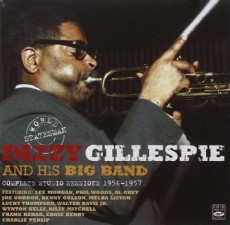
In Philadelphia he met Sheikh Nasir Ahmad, an Ahmadiyya missionary, through whom he converted to Islam and took the name Talib Dawud. In the second half of the 1940s and again in 1956 he was a member of the Dizzy Gillespie Big Band, performing with in 1957 at the Newport Jazz Festival.
1958 saw Dawud married to singer Dakota Staton who was no longer actively working since 1959 and the two operated an Africa-Import Shop in New York City. As a member of the Ahmadiyya Muslim sect, which distanced itself from the Nation of Islam, he wrote numerous articles in the African-American Chicago daily New Crusader on the controversy between Elijah Muhammad and Malcolm X.
Trumpeter Talib Dawud never had the opportunity to record as a leader, and on July 9, 1999 he passed away in New York City.
Dose A Day – Blues Away
More Posts: trumpet
Daily Dose Of Jazz…
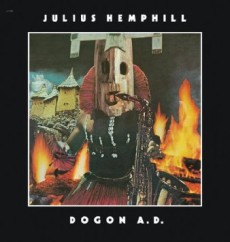
Julius Arthur Hemphill was born on January 24, 1938 in Fort Worth, Texas and attended M. Terrell High School, studied clarinet with John Carter before taking up the saxophone due to the early influence of Gerry Mulligan.
Hemphill joined the Army in 1964, served for several years, and later, for a brief period, performed with Ike Turner. In 1968 he moved to St. Louis, Missouri and co-founded the multidisciplinary arts collective. This brought together saxophonists Oliver Lake and Hamiet Bluiett, trumpeters Baikida Carroll and Floyd LeFlore and writer/director Malinke Robert Elliott.
A move to New York City in the mid-1970s witnessed Julius thriving in the free jazz community. He gave saxophone lessons to David Sanborn, and Tim Berne among others. He founded the World Saxophone Quartet in 1976 after collaboration with Anthony Braxton. He remained a member until the early 1990s and then formed a saxophone quintet.
Hemphill recorded over twenty albums as a leader and another ten records with the World Saxophone Quartet and recorded or performed with Bjork, Bill Frisell, Jean-Pau Bourelly and others. Late in his life his ill-health including diabetes and heart surgery, forced Hemphill to stop playing saxophone, but he continued writing music. His saxophone sextet, led by Marty Ehrlich, also released several albums of Hemphill’s music, but without Hemphill playing. The most recent is entitled The Hard Blues, posthumously recorded live in Lisbon.
Prior to his death on April 2, 1995 in new York City, composer and alto saxophonist and flautist recorded a multi-hour interview on his life and music for the Smithsonian Institute and it is held at the archive center of the National Museum of American History in Washington D.C.
Give The Gift Of Knowledge
Daily Dose Of Jazz…
Jerry Blake was born Jacinto Chabania on January 23, 1908 in Gary, Indiana and grew up in Nashville, Tennessee. He began his musical education playing violin before switching to reeds.
In 1924 he toured with the Sells-Fioto Circus Band but was left stranded in Chicago. Making the best of the situation, he joined Al Wynn’s band, then played with Bobby Lee and Charlie Turner. He then toured Europe in 1928-29 as a member of Sam Wooding’s ensemble.
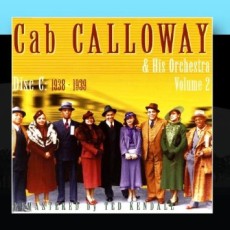
Back in the States in the 1930s Jerry played in the US with Chick Webb,Zack Whyte and Don Redman, then was off to Europe again with Willie Lewis from 1934 to 1935. After his return home he spent time performing with Claude Hopkins, Fletcher Henderson and Cab Calloway, acting as the latter’s musical director during his 1938-42 stint.
In the early 1940s Blake played with Count Basie, Earl Hines, Lionel Hampton and Redman again. Sometime around 1943 he had a mental breakdown and never played again for the rest of his life, most of which he spent in institutions. Alto saxophonist and clarinetist Jerry Blake, who never recorded as a leader, passed away on December 31, 1961.
Put A Dose In Your Pocket