

Daily Dose Of Jazz…
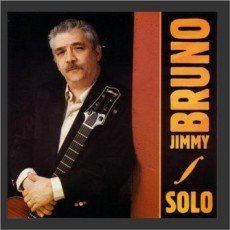
Jimmy Bruno was born in Philadelphia, Pennsylvania on July 22, 1953 to a father who played guitar and a mother who was a gifted singer. He began playing guitar at the age of 7, playing eight to ten hours a day. He studied jazz improvisation with Philly bassist Al Stauffer and to develop technique, taught himself to play the rigorous and exacting classical violin etudes of Wohlfahrt and Paganini. Although he briefly considered leveraging his perfect SAT scores into medical school, a summer guitar gig in Wildwood, New Jersey changed the direction of his life. He began his professional career at the age of 19, touring with Buddy Rich.
Jimmy went on to play guitar in orchestras for Anthony Newley, Doc Severinsen, Lena Horne, and many more music icons. A move to Los Angeles, California saw him as a session musician for many years working with Tommy Tedesco. By his mid-thirties he was ready to pursue jazz and he moved back East. Back in his hometown he played small clubs and venues during the 1980s, met Concord Records founder Carl Jefferson and landed a multi-CD deal that has elicited 13 critically acclaimed sessions.
Bruno has shared the stage with Joe Beck, Bobby Watson, Jack Wilkins, Tal Farlow, Howard Alden, Christian McBride, Kurt Elling and many more. Among his many credits, Bruno is the only guitarist to have ever led Fank Sinatra’s band. He counts Johnny Smith, Hank Garland, Joe Pass, Tal Farlow, Wes Montgomery, Howard Roberts, Jim Hall and Pat Martino among his influences.
As an educator, in 2007, Jimmy and Affiliated Artists opened the Jimmy Bruno Guitar Institute (JBGI) bringing his method and approach to jazz improvisation to eager guitar students around the world. In 2011 Jimmy opened up Jimmy Bruno’s Guitar Workshop, a website that allows students to learn directly from him through video lessons. He continues to perform and record as well.

Take A Dose On The Road
More Posts: guitar
Daily Dose Of Jazz…
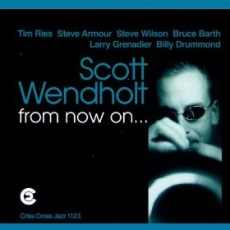
Scott Wendholt was born on July 21, 1965 in Denver, Colorado. He first picked up the trumpet in the third grade and began improvising in the fifth. Linda Walker and Ed Barnes, were two teachers he was inspired by, the latter ran a citywide elementary school group that played some Blues and a reasonable facsimile of jazz and provided at least some tools for jazz improvisation.
His major influences at the time were Al Hirt, Chuck Mangione, and Spyro Gyra until the ninth grade, when Greg Gisbert, a classmate and trumpeter, hipped him to Art Blakey’s “Straight Ahead,” featuring Wynton Marsalis and he started taking trumpet lessons in high school. Scott went on to study At Indiana University in David Baker’s Jazz Studies Program earning his bachelor degree.
A move to Cincinnati was fortuitous for the young trumpeter getting on the scene, landing him at the King’s Island amusement park with a Rock-and-Roll band. From there he went to work with the Blue Wisp Big Band, and working sideman gigs. It was a good training ground to be a leader, for learning appropriate tunes for small group gigs and learning how to hang out.
In 1991 Scott put together a quartet to play at Augie’s, a Harlem bar near Columbia University and the group lasted three and a half years. Then 1992, saw Vincent Herring hiring him for his first real legitimate sideman gig. Then a year later in 1993 Scott recorded his debut album The Scheme of Things on the Criss Cross Jazz label. He would go on to work inside the big band culture in New York City with the likes of Toshiko Akiyoshi, Bob Mintzer, the Maria Schneider Orchestra, the Carnegie Hall Big Band and the Vanguard Jazz Orchestra.
Wendholt has worked with Gisbert, Javon Jackson, John Gunther, Ralph Bowen, Chris Botti, Don Braden, Rim Ries, Roberta Piket, Bobby McFerrin, Dwayne Burno, Mike Abbott, Al DiMeola, Lounge Lizards, Sophie B. Hawkins, Peter Abbott, Brad Leali, John Fedchock, Woody Herman, Ira Coleman, Billy Drummond, Eric Alexander, Anthony Wonsey, Bob Mintzer, Bill Cunliffe, Phil DeGreg, Vincent Herring, Jim McNeely, Mingus Big Band, Buddy Rich and the list goes on and on.
Not one to reside in a single musical genre, the Mile High City trumpeter and flugelhorn player Scott Wendholt continues to perform, record and compose.
Give The Gift Of Knowledge
More Posts: flugelhorn,trumpet
Daily Dose Of Jazz…
Charles Lacy Tyler was born on July 20, 1941 in Cadiz, Kentucky and spent his childhood years in Indianapolis, Indiana. He played piano as a child and clarinet at 7, before switching to alto in his early teens, and finally settled with the baritone saxophone. During the summers, he visited Chicago, New York City and Cleveland, Ohio that he met the young tenor saxophonist Albert Ayler at age 14.
After a stint in the army from 1957–1959, Tyler relocated to Cleveland in 1960 and began playing with Ayler, commuting between New York and Cleveland. During that period he got to jam with Ornette Coleman and Sunny Murray. In 1965 he recorded with Ayler’s group Bells and Spirits Rejoice.
Charles recorded his first album as leader in 1966 for ESP-Disk, returned to Indianapolis to study with David Baker at Indiana University between 1967 and 1968, then recorded a second album for ESP titled Eastern Man Alone. In 1968 he transferred to the University of California, Berkeley to study and teach. In Los Angeles, he worked with Arthur Blythe, Buddy Bradford and David Murray before heading back to New York in 1974, to lead his own freebop groups with Blythe, trumpeter Earl Cross, drummer Steve Reid and others.
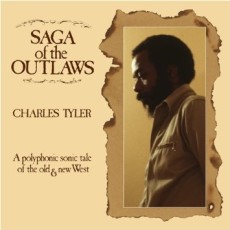
During this period he recorded on his Akba label the album Voyage from Jericho. By 1975, Tyler enrolled at Columbia University and made an extensive tour of Scandinavia releasing his second Akba album Live in Europe. The next year he performed the piece Saga of the Outlaws at Sam Rivers’ Studio Rivbea that was released two years later. He would go on to perform sideman or co-leader duties with Steve Reid, Cecil Taylor, Hal Russell, Wilbur Morris and Billy Bang.
In 1982, during a European tour with the Sun Ra Orchestra, he relocated to Denmark and three years later moved to France, recording with other expatriates like Khan Jamal in Copenhagen and Steve Lacy in Paris. Free jazz alto and baritone saxophonist CharlesTyler died in Toulon, France of heart failure on June 27, 1992.
Put A Dose In Your Pocket
More Posts: saxophone
Daily Dose Of Jazz…
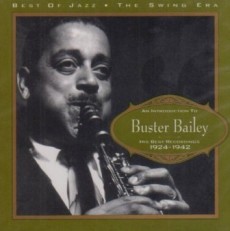
William C. “Buster” Bailey was born July 19, 1902 in Memphis, Tennessee and was educated on the instrument by classical teacher Franz Schoepp, the man who taught Benny Goodman. He got his start with the W.C. Handy Orchestra in 1917 when he was just fifteen years old. After two years of touring with Handy, he quit while the band was in Chicago and in 1919 Bailey joined Erskine Tate’s Vendome Orchestra.
1923 saw Buster joining up with Joe “King” Oliver as part of his King Oliver’s Creole Jazz Band. It was here that he met and became friends with fellow band mate Louis Armstrong. In 1924, when Armstrong left King Oliver’s Jazz Band to join the Fletcher Henderson Orchestra in New York. It was less than a month that Armstrong extended an invitation for Bailey to join the band and accepting, he moved to New York City.
During the late 1920s Bailey became a highly respected sideman with Perry Bradford, Clarence Williams and others, Recording both clarinet and soprano saxophone. He toured Europe with Noble Sissle’s orchestra in 1927, returned and performed with Edgar Hayes and Dave Nelson, rejoined Sissle in 1931. By 1934 he was back with Henderson and then settled in with the John Kirby Band. Off and on he would perform with the mills Blue Rhythm Band, Midge Williams and Her Jazz Jesters and record as a leader as Buster Bailey and His Rhythm Busters.
In 1947 he joined Wilbur de Paris and performed with him until 1949. During the early 1950s Bailey was with Big Chief Russell Moore but for most of the decade he played with Henry “Red” Allen. From 1961 to 1963 he performed with Wild Bill Davison, the Saints And Sinners, and rejoined his old friend Armstrong and became a member of Louis Armstrong and His All-Stars.
Buster appeared on film three times during his career in That’s The Spirit in 1933, Sepia Cinderella in 1947 as part of John Kirby’s band and in When The Boys Meet The Girls in 1965 with Louis Armstrong. He also appeared in 1958 in the DuMont TV series Jazz Party and in 1961 on the TV program The Dupont Show of the Week in an episode titled “America’s Music – Chicago and All That Jazz”.
Clarinetist Buster Bailey, who was also well versed on saxophone and one of the most respected session players of his era, passed away in Brooklyn, New York on April 12, 1967 of a heart attack.
Jazz Is Global – Share
Daily Dose Of Jazz…
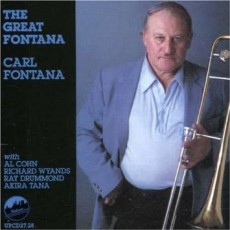
Carl Charles Fontana was born on July 18, 1928 in Monroe, Louisiana and learned jazz from his father Collie, a saxophonist and violinist. He first performed with his father’s band while in high school and would go on to attend the University of Louisiana Monroe for two years prior to transferring to Louisiana State University and getting a degree in Music Education.
Fontana got his first professional break on the jazz scene in 1951 when he was hired to stand in for Urbie Green in the Woody Herman band. Impressing the bandleader with his improvisational skills he kept him on as a permanent member of the band even after Green returned..
Three years later he left Herman and joined Lionel Hampton’s big band. In early 1955 he played briefly with Hal McIntyre before joining Stan Kenton’s big band later in the year. He recorded three albums with Kenton and also worked with fellow trombonist Kai Winding during this period. Being an inventive yet fluid player made it easy for him to record and tour, but Carl was also a master of the “Doodle Tonguing” technique, that allowed him to smoothly execute runs of notes at speeds many had not previously considered possible to achieve on a slide trombone.
By 1958, Fontana was living in Las Vegas, Nevada and would tour only on rare occasions. He primarily performed with house orchestras in Las Vegas during the 1960s, particularly Paul Anka’s band with Rosolino, and in the bands backing Sammy Davis Jr., Tony Bennett, Wayne Newton and the Benny Goodman Orchestra. This continued into the Seventies in addition to recording with Louie Bellson, Bill Watrous, and Supersax as well as co-leading a date with Jack Hanna, titled The Hanna-Fontana Band: Live at Concord.
The 1980s saw him appearing regularly on National Public Radio’s Monday Night Jazz program. And although he recorded on more than 70 albums over his long career, his first true record as a headliner did not appear until 1985 when Uptown Jazz released The Great Fontana. He continued performing and recording sporadically throughout the 1990s.
Trombonist Carl Fontana, who never earned great fame but was on every great trombonist’s list of greats, passed away in Las Vegas, Nevada aged 75 after suffering from Alzheimer’s disease on October 9, 2003.
Jazz Is Global – Share
More Posts: trombone