

Daily Dose Of Jazz…
Abdul Wadud was born Ronald DeVaughn on April 30, 1947 in Cleveland, Ohio. The son of R&B singer Raheem DeVaughn, he took up the cello and concentrated solely on the instrument from the age of nine, and never decided to double on bass.
Abdul studied at Youngstown State and Oberlin in the late ’60s and early ’70s. He played in the Black Unity Trio at Oberlin, met Julius Hemphill and the two subsequently worked together well through the Eighties. He has performed with the New Jersey Symphony Orchestra in the ’70s, earned his master’s degree in 1972, and then in 1976 played with Arthur Blythe for the first time and has maintain a working relationship.
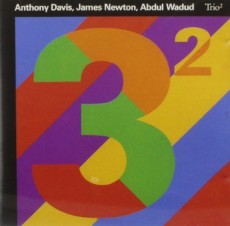
He also worked and recorded with Frank Lowe, George Lewis, Oliver Lake, Sam Rivers, Cecil Taylor, David Murray, Chico Freeman, Anthony Davis and James Newton. Along with Newton and Davis they performed as a trio and were also a part of the octet Episteme from 1982 to 1984. Abdul recorded and in a duo with Jenkins for Red in the ’70s and as a leader for Bishara and Gramavision in the ’70s and ’80s. He has been a member of the Black Swan Quartet, Human Arts Ensemble, Julius Hemphill Quartet and Muhal Richard Abrams Orchestra.
His plucking and bowed solos have been featured in jazz and symphonic/classical settings, he is easily considered the finest cellist to emerge from the ’60s and ’70s generation, playing in both jazz and classical settings. Cellist Abdul Wadud transitioned on August 10, 2022 in Cleveland, Ohio at the age of 75.

Dose A Day – Blues Away
More Posts: cello

Daily Dose Of Jazz…
George Rufus Adams was born on April 29, 1940 in Covington, Georgia and his musical style is deeply rooted in the blues and in primarily that of African-American popular music. The tenor’s greatest influences seem to have been Rahsaan Roland Kirk and the adventurous edginess of John Coltrane and Albert Ayler.
George played with tremendous intensity and passion, as well as lyricism and subtlety. At times he bent over backwards when playing, almost ending up on his back. He and Don Pullen shared a musical vision and their quartet straddled the range from R&B to the avant-garde.
One of Adams’ last recordings was America for Blue Note Records consisting of classic American songs like Tennessee Waltz, You Are My Sunshine and Take Me Out To The Ballgame as well as a few original songs that articulate his positive view of his country and the gifts it had given him. It also includes The Star Spangled Banner and America The Beautiful.
Tenor saxophonist, flautist and bass clarinetist George Adams, best known for his work with Charles Mingus, Gil Evans, Roy Haynes, and in the quartet he co-led with pianist Don Pullen, passed away on November 14, 1992 in New York City.
He was also known for his idiosyncratic singing he left for posterity two-dozen albums as a leader and another 25 as a sideman over the course of his sort career.
Take A Dose On The Road
Daily Dose Of Jazz…
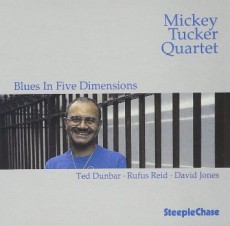
Mickey Tucker was born on April 28, 1941 in Durham, North Carolina and began on piano at age six, playing in church when he was young. By the 1960s he was doing studio work with R&B musicians such as Little Anthony & The Imperials, Damita Jo, and accompanying comedian Timmie Rogers, switching to jazz music late in the decade.
In the late ’60s and ’70s Mickey played with Bill Harman, Junior Cook, James Moody, Frank Foster, Roland Kirk, Eric Kloss, Thad Jones, Mel Lewis, Roy Brooks, Eddie Jefferson, Billy Harper, Philly Joe Jones, George Benson,, Willis Jackson and Final Edition.
The 1980s saw Tucker performing with the Art Farmer and Benny Golson group The Jazztet, and with Richie Cole, Phil Woods and Louis Hayes. He would work with Junior Cook, and the Jazztet again in the Nineties as well as with Bob Ackerman.
Pianist Mickey Tucker has released eleven albums as a soloist or leader, and another 10 as a sideman. He moved to Sydney, Australia and is currently pursuing his musical endeavors in jazz as a pianist and organist.
Put A Dose In Your Pocket
More Posts: piano
Daily Dose Of Jazz…
Ruth Price was born on April 27, 1938 in Phoenixville, Pennsylvania. Originally a dancer, she went to ballet school in 1952. One evening a friend took her to hear Lester Young and she was hooked and by 1954, when Charlie Ventura’s regular singer fell ill, after hearing her sing he approached her to fill the vacancy and a jazz vocalist was born. She went on to pursue work in Philadelphia, Pennsylvania and New York City as a vocalist and dancer.
Though her catalogue is relatively minimal, the vocalist is known for producing projects that are lasting. By 1955 she was in the studio recording her debut release My Name is Ruth Price: I Sing, followed by Ruth Price Sings with the Johnny Smith Quartet the next year and then with The Party’s Over in 1957.
In 1957 Ruth moved to Hollywood in 1957, and over the next several years performed recorded and toured with Mel Torme, Red Garland, John Coltrane, Philly Joe Jones, Dizzy Gillespie, Billy Taylor, Stan Getz, Sonny Stitt, Sonny Rollins, the Charles Mingus Quintet, Art Pepper, Victor Feldman, Russ Freeman and Hank Jones.
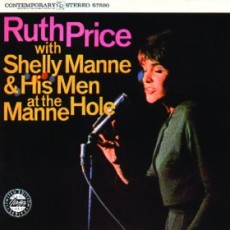
In 1961 Price recorded with Shelley Manne and His Men at the Manne Hole, recorded Live And Beautiful in ’63 and not another until 1983 with Lucky To Be Me and later toured with Harry James from 1964-1965. Her diverse repertoire includes many obscure, lesser-known gems from the Great American Songbook.
In the Nineties she never stepped far from the music and gained further renown not as a singer but as the owner of the prestigious Los Angeles nightspot The Jazz Bakery that opened in its doors in 1992 and hosted all the greats for nearly two decades until she closed them in 2009.
A talented singer whose wide expressive qualities do justice to any lyrics that she chooses to interpret made her a jazz poll winner. Highly respected for her knowledge and performances of those rare gems in American popular song, it was a natural transition to become an educator in recent years as an adjunct assistant professor at the University of California – Los Angeles in the Department of Ethnomusicology, and has taught at the Dick Grove School of Music. She continues to record and receive critical acclaim for her work.
Inspire A young Mind
More Posts: vocal
Daily Dose Of Jazz…
Karl Curtis George was born on April 26, 1913 in St. Louis, Missouri. Early in his career he played with McKinney’s Cotton Pickers in 1933, and Cecil Lee. in the 1930s he spent time in the Jeter Pillars Orchestra and then in the orchestras of Teddy Wilson from 1939–40, followed by a year-long stint with Lionel Hampton in 1941.
George served in the Army from 1942 to 1943, then moved to California and played with Stan Kenton, Benny Carter, spent a spring with Count Basie and in Los Angeles with Happy Johnson, his final collaboration of note.
He also played in sessions led by Charles Mingus, Slim Gaillard, Oscar Pettiford, Dinah Washington and Lucky Thompson. During years1945-1946 Karl led his own group on record the track “Peek-A-Boo” by the Karl George Octet, originally released on Melodisc, has been reissued on a Topnotch compilation.
Jazz trumpeter Karl George retired back in his hometown once his health got the better of him, while recordings he had played on continued to be stocked on record store shelves. He lived out the rest of his life in almost total obscurity until passing away in May 1978.
Dose A Day – Blues Away
More Posts: trumpet