

Daily Dose O fJazz…
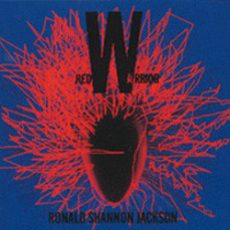
Ronald Shannon Jackson was born on January 12, 1940 in Fort Worth, Texas and as a child he was immersed in music. His father monopolized the local jukebox business and established the only African American-owned record store in the metropolitan area. His mother played piano and organ at their local church. Beginning at age five until nine he took piano lessons and in the third grade he studied music with John Carter. He graduated from I.M. Terrell High School, where he played with the marching band and learned about symphonic percussion. By the age of 15, he was playing professionally. His first paid gig was with tenor saxophonist James Clay.
Attending Lincoln University in Jefferson City, Missouri gave him access to St. Louis, Missouri and the musicians touring the Midwest. His roommate was pianist John Hicks and his bandmates also included Lester Bowie and Julius Hemphill. Transferring first to Texas Southern University, then to Prairie View A & M before landing at the University of Bridgeport in Connecticut studying history and sociology. In 1966, through trumpeter Kenny Dorham he attended New York University on a full music scholarship.
Once in New York City he performed with many jazz musicians, including Charles Mingus, Betty Carter, Jackie McLean, Joe Henderson, Kenny Dorham, McCoy Tyner, Stanley Turrentine, Charles Tyler and Albert Ayler. By 1975 he joined Ornette Coleman’s electric free funk band, Prime Time, where he learned composition and harmolodics. He would go on to play Paris, France, record four albums with Cecil Taylor, and formed his band, The Decoding Society, in 1979. In addition to leading Decoding Society lineups, guitarist James Blood Ulmer recruited Ron for another group.
Continuing to push the envelope over the next few years he formed several groups including Last Exit, SXL, Mooko, and Power Tools. Jackson joined trumpeter Wadada Leo Smith’s Golden Quartet, then played with the Punk Funk All Stars, and toured Europe with The Last Poets. In 2011 he formed a power trio called Encryption.
Drummer Ron Jackson who recorded nineteen albums as a leader, six with Last Exit and as a sideman fifteen with Albert Ayler, James Blood Ulmer, Cecil Taylor, SXL, Music Revelation Ensemble, and Ornette Coleman, died of leukemia on October 19, 2013, aged 73.

More Posts: bandleader,history,instrumental,jazz,music,percussion
Daily Dose Of Jazz…
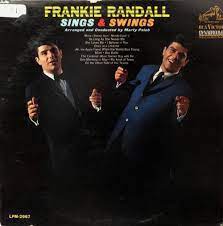
Frankie Randall was born Franklin Joseph Lisbona on January 11, 1938 in Passaic, New Jersey. In 1964, he kicked off his acting career starring in Wild on the Beach and appeared in The Day of the Wolves in 1971. He appeared numerous times on the Dean Martin TV show, and hosted the summer version of the show when Martin was not available.
He released dozens of RCA singles and albums from the 1960s onwards. After starting out in pop music, Randall, a piano player, began performing material from The Great American Songbook. His version of the song “I Can See for Miles” by The Who is included in Rhino Records’ album Golden Throats: The Great Celebrity Sing Off.
In 2001, a Golden Palm Star on the Palm Springs, California, Walk of Stars was dedicated to him. Frankie was inducted into the Las Vegas Casino Legends Hall of Fame the following year. He was presented the Amadeus Award by the Desert Symphony on January 11, 2013.
On December 28, 2014, pianist and vocalist Frankie Randall died of lung cancer in Indio, California at the age of 76.
More Posts: bandleader,history,instrumental,jazz,music,vocal

Daily Dose Of Jazz…
Mike Stern was born Michael Sedgwick on January 10, 1953 in Boston, Massachusetts and grew up in Washington, D.C. He attended the Berklee College of Music in Boston and when he was twenty-two, he became a member of Blood, Sweat & Tears, spending three years with the band. During this stint he appeared on the albums More Than Ever and Brand New Day.
1979 saw him joining Billy Cobham’s fusion band. Two years later he joined Miles Davis, making his public debut in 1981, a performance recorded on the album We Want Miles. He remained with Davis through 1983 until he was replaced by guitarist John Scofield. From 1983 to 1984 he toured with Jaco Pastorius and in 1985 returned to tour with Davis.
Stern’s solo debut, Upside Downside, with Jaco Pastorius, David Sanborn, and Bob Berg, was released on Atlantic Records in 1986. For the next two years he was a member of Michael Brecker’s quintet, appearing on Don’t Try This At Home. His second Atlantic album, dropped in 1988, was Time in Place, and he would go on to release more than a dozen albums.
He formed a touring group in 1989 with Bob Berg, Dennis Chambers and Lincoln Goines. His acclaimed 1993 album, Standards (and Other Songs), led to his being named Best Jazz Guitarist of the Year by the readers and critics of Guitar Player. He was nominated for two Grammy awards, received another Best Jazz Guitarist award, and in 2009 in the first of a series of articles celebrating Down Beat‘s 75th anniversary, Stern was named one of the 75 Great Guitarists of all time.
Serious injuries to his shoulders and right arm after tripping and falling led to the ending of his 2016 European tour. Modifying his playing technique in the summer of 2017 he returned to Europe on tour with a new formation called Mike Stern/Randy Brecker Band, featuring Randy Brecker, Teymur Phell and Lenny White.
Guitarist Mike Stern, who received a Certified Legend Award from Guitar Player magazine, continues to perform, record and tour.
More Posts: bandleader,guitar,history,instrumental,jazz,music
Daily Dose Of Jazz…
Charles Pervis Harris was born in Alexandria, Virginia and raised in Baltimore, Maryland on January 9, 1916. He studied violin before switching to bass in high school. He played professional dates while studying education at what is now Coppin State College. He went on to work at the Royal Theater in Baltimore after graduating.
Joining Lionel Hampton in 1941, he played with him for several years and was one of three bassists in Hampton’s ensemble, one of his bandmates being Charles Mingus. Harris did some recording with Dizzy Gillespie in the 1940s as well. Fatigued from touring he returned to Baltimore in 1949.
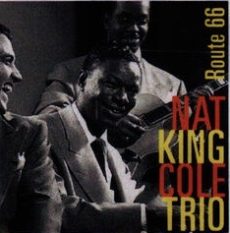
Soon after he worked in a band called Three Strikes and a Miss, again at the Royal Theater. While working there Nat King Cole heard him and asked him to join his trio. During his tenure with the vocalist, Charlie performed on some of Cole’s best-known tunes, such as Unforgettable, Route 66, It’s Only A Paper Moon, Sweet Lorraine and Mona Lisa. During the 1956-57 season he performed on Nat’s tv show on NBC.
After leaving the band he returned to Baltimore and remained there, playing, teaching, and working as a furniture salesman. Double bassist Charlie Harris died from cancer on September 9, 2003 at Bon Secours Hospital.
More Posts: bass,history,instrumental,jazz,music

Daily Dose Of Jazz…
Bobby Battle was born on January 8, 1944 and grew up in Detroit, Michigan. He moved to New York City in 1968, playing with Roland Kirk and Pharoah Sanders shortly after his arrival.
He studied at New York University from 1972 to 1975. He played with Don Pullen and Sam Rivers through the late 1970s, and worked often with Arthur Blythe in the 1980s and 1990s. He also worked with Kenny Dorham, Sonny Stitt, and Sonny Fortune. He worked as a duo with Jimmy Ponder in 1987.
Battle’s only release as a leader is The Offering, issued in 1990 on Mapleshade, on which Battle leads a quartet with David Murray, Larry Willis, and Santi Debriano. As a sideman he recorded four albums with Arthur Blythe and four with Don Pullen.
Drummer Bobby Battle, who occasionally played saxophone, died on December 6, 2019 in his hometown.
More Posts: bandleader,drums,history,instrumental,jazz,music