

Daily Dose Of Jazz…
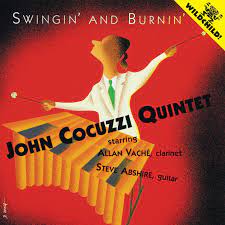
John Cocuzzi was born in Camp Springs, Maryland on Andrews Air Force Base on October 26, 1964. Taking a very early interest in playing drums, immediately after graduating from high school, in 1982 he attended Montgomery Junior College in Rockville, Maryland as an applied percussion major. While there he also studied arranging with Bill Potts, who wrote for Buddy Rich and others.
Towards the end of the decade he had established himself, performing in and around the nation’s capital. During these years, in addition to playing drums, Cocuzzi also played piano and vibraphone, gradually advancing his skills on the latter instrument until it became the dominant force in his impressive arsenal.
The early 90s saw John appearing at numerous festivals across the country, as well as Belgium and the Netherlands. Throughout his career he has mainly led his own small groups and has also played piano with the swing, blues and jump band, Big Joe And The Dynaflows, led by Big Joe Maher.
He has worked and/or recorded with Howard Alden, Joe Ascione, Louie Bellson, Bobby Gordon, Chuck Hedges, Nat King Cole, Milt Hinton, Dick Hyman, Russell Malone, Ken Peplowski, Bucky and John Pizzarelli, Houston Person, Eddie Locke, Barbara Morrison, Peter Appleyard, Russell Malone, Ed Polcer, Daryl Sherman, Warren and Allan Vaché, Johnny Varro, Bob Wilber and Snooky Young. A dynamic and swinging drummer, Cocuzzi is a fluently inventive improviser on piano. His vibraphone playing ably blends the urgent thrust he displays in his drumming with the fluid grace of his piano playing.
On radio, Cocuzzi recorded a session for NPR’s “Riverwalk: Live at The Landing” with the Jim Cullum Band. It was a tribute to Benny Goodman, The Swing Shift: Jazz on Late-Night Radio, and featured Allan Vaché on clarinet with Nicholas Payton on trumpet.
For 15 years, he was the music director for the 219 Restaurant’s Basin Street Lounge in Old Town, Alexandria, Virginia. He was also music director for the Crystal City Jazz Celebration from 2003 to 2006.
Jazz, blues and swing vibraphonist, pianist and drummer John Cocuzzi, whose influences are Lionel Hampton and Red Norvo, continues to perform

More Posts: bandleader,drums,history,instrumental,jazz,music,piano,vibraphone
Daily Dose Of Jazz…
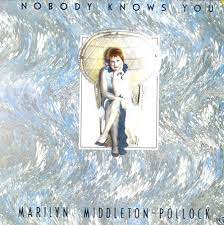
Marilyn Middleton Pollock, born October 25, 1947 in Chicago, Illinois began singing folk music professionally at the age of fifteen. Expanded her repertoire to include rock & roll and blues, she then turned to jazz.
By the end of the 1980s Marilyn had moved to England where she worked with Max Collie, touring with him internationally. Their album Nobody Knows You received the Music Retailers Association Award for Excellence in 1988. She appeared in the theater show A New Orleans Mardi Gras and then in her critically acclaimed solo shows Those Women of the Vaudeville Blues and Jazz Me Blues.
From 1994 she produced the series Vaudeville, Red Hot and Blue for BBC Radio 2 with her jazz band The Chicago Hoods. She toured Great Britain several times with her band.
Vocalist Marilyn Middleton Pollock continues to perform, tour and record.
More Posts: bandleader,instrumental,jazz,music,vocal
Three Wishes
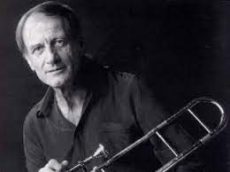
Nica was inquisitive about the three wishes Albert Mangelsdorff would request, so she asked and he told her:
- “First, I vant to live long enough to get my playing, so I vould be satisfied.”
- “I vould say, that the life of a jazz musician vouldn’t interfere vith family life.”
- “I vish that people all over the vorld vould get smart enough that there vould be peace forever.”
“I should have made that the first vish.”
*Dialect transcribed by Nica de Koenigswarter
*Excerpt from Three Wishes: An Intimate Look at Jazz Greats ~ Compiled and Photographed by Pannonica de Koenigswarter

More Posts: baroness,history,instrumental,jazz,music,pannonica,three,trombone,wishes
Daily Dose Of Jazz…
Terri England was born on October 24, 1956 in South Texas, England into a family of musicians, artists, and entrepreneurs. At six years of age she took an interest in playing guitar that would never wane, while also receiving extensive classical training on piano and cello. During formal education her immersion in both art and music proved to be valuable experiences strongly influencing her later development as an independent artist.
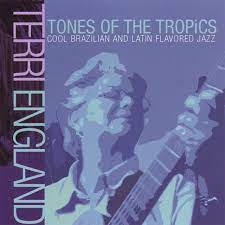
Her orchestral activities would teach her to create dynamic, musical arrangements that take the listener on a stimulating sonic journey. Her debut album, Tone Of The Tropics, is a mix of high energy tunes and melodies backed by samba, bossa nova and batucada rhythms from Brazil and booty-shakin’ Latin beats. Using a Brazilian guitar fingerstyle technique, England conveys a refreshing economy of expression that allows her music to breathe while flowing above rich harmonies and tight, syncopated rhythms.
Recording and mixing in her own studio, Terri blends bass, drums and percussion, as well as unexpected tempo changes on a few tunes. She releases her recordings through her publishing company, Inglaterra Música.
Guitarist, composer and arranger Terri England continues to produce original music by combining cool Brazilian and Latin rhythms, jazz highlights and classical orchestral arrangements.
More Posts: arranger,bandleader,composer,guitar,history,instrumental,jazz,music
Daily Dose Of Jazz…
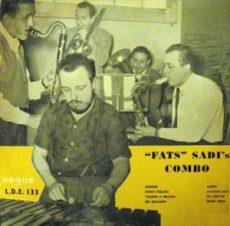
Sadi Pol Lallemand was born on October 23, 1927 in Andenne, Belgium. His first instrument was the xylophone, which he played in a circus in the 1930s. After World War II, he turned professional playing the vibraphone and performed with Bobby Jaspar in the Bob Shots, then with Don Byas.
Moving to Europe he lived in Paris, France from 1950 to 1961 where he played with Aimé Barelli, Django Reinhardt, and Martial Solal. In the Sixties, Fats moved to Brussels, Belgium and was a member of Kenny Clarke/Francy Boland Big Band.
He worked for RTBF, the TV channel of the French Community in Belgium. Sadi led both a quartet and nonet, and won the Belgian Golden Django for best French-speaking artist in 1996.
Vibraphonist, percussionist, vocalist and composer Fats Sadi, who chose the name “Sadi” because he disliked his last name, which means “the German” in French, transitioned on February 20, 2009 in Huy, Belgium.
More Posts: composer,history,instrumental,jazz,music,percussion,vibraphone,vocal