

Three Wishes
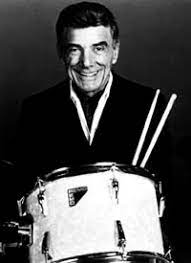
Louis Bellson was talking with Nica and during the conversation she asked him what three wishes he would ask for if they could be given and this was his answer:
-
-
“That jazz music would become an integral part of all music. And I hope that the American people would consider it a part of American creative art. Because I feel that its music potential has a place alongside all other great music of the world. And also it should be respected and the musicians should be respected too, because I feel in the future there is going to be a greater tie~in with symphony music.”
-
“I hope that all the young fine musicians today who are interested in jazz as a creative art have the opportunity to express themselves. By this I mean there are no clubs or places where the youngster can gain knowledge and learn his craft. It is shameful to know that there are many gigantic industries in every other form, but our creative form suffers the most.”
-
“I am hoping that music will mend the entire world. It has been proven that our relations with other countries has been one hundred percent pure in friendship because of music. I feel that music will blossom into a flower, and that flower will express one great thought, and that is: We belong to the human race and we all learn the same notes.”
-
*Excerpt from Three Wishes: An Intimate Look at Jazz Greats ~ Compiled and Photographed by Pannonica de Koenigswarter

More Posts: baroness,drums,history,instrumental,jazz,music,pannonica,three,wishes
Daily Dose Of Jazz…
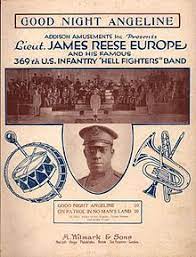
James Reese Europe was born on February 22, 1881 in Mobile, Alabama and in 1891 his family moved to Washington, D.C. In 1904 he moved to New York City and six years later he organized the Clef Club, a society for Black Americans in the music industry. In 1912, the club, with its 125 members who played in various configurations, made history when they became the first band to play a proto-jazza concert at Carnegie Hall for the benefit of the Colored Music Settlement School.
The importance of this historic concert is that it took place 12 years before the Paul Whiteman and George Gershwin concert at Aeolian Hall, and 26 years before Benny Goodman’s famed concert at Carnegie. The Clef Club’s performances played music written solely by Black composers, including Harry T. Burleigh and Samuel Coleridge-Taylor.
In 1913 and 1914 Jim made a series of phonograph records for the Victor Talking Machine Company. These recordings are some of the best examples of the pre-jazz hot ragtime style of the U.S. Northeast of the 1910s, predating and protecting the idea that the Original Dixieland Jass Band recorded the first jazz pieces in 1917 for Victor.
Europe was known for his outspoken personality and unwillingness to bend to musical conventions, particularly in his insistence on playing his own style of music. During World War I, Europe obtained a commission in the New York Army National Guard, where he fought as a lieutenant with the 369th Infantry Regiment otherwise known as the “Harlem Hellfighters” when it was assigned to the French Army. He went on to direct the regimental band to great acclaim. They made their first recordings in France for the Pathé Brothers.
Returning home in 1919 he made more records for Pathé with Noble Sissle and continued to lead his band. During a talk backstage with two of his drummers, Steve and Herbert Wright about their stage behavior, Herbert got agitated and stabbed Europe in the neck with a pen knife. The show went on, Jim went to the hospital but doctors were unable to stem the flow of blood.
Arranger, composer and bandleader Jim Europe, who also played piano and violin, and was the leading ragtime and early jazz figure on the Negro music scene of New York City in the 1910s, transitioned on May 9, 1919.
More Posts: arranger,bandleader,composer,history,instrumental,jazz,music,piano,violin
Daily Dose Of Jazz…
James Graham Collier OBE was born on February 21, 1937 in Tynemouth, Northumberland, England. After leaving school he joined the British Army as a musician, spending three years in Hong Kong, China. He subsequently won a Down Beat magazine scholarship to the Berklee School of Music, in Boston, Massachusetts studying with Herb Pomeroy.
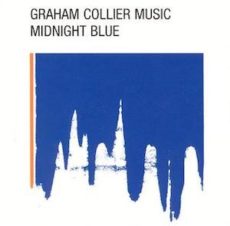
After graduating in 1963 he returned to Britain and founded the first version of an ensemble devoted to his own compositions, Graham Collier Music, which included Kenny Wheeler, Harry Beckett and John Surman. Later configurations included Karl Jenkins, Mike Gibbs, Art Themen and many other notable musicians.
As the first recipient of an Arts Council bursary for jazz, Graham was commissioned by festivals, groups and broadcasters across Europe, North America, Australia and the Far East. He recorded nineteen albums, worked on stage plays, musicals, documentary and fiction film, and radio drama productions.
Collier was an author and educator, writing seven books on jazz, giving lectures and workshops around the world. He launched the jazz degree course at London’s Royal Academy of Music and was its artistic director until he resigned in 1999, so he could concentrate on his own music.
Bassist, composer and bandleader Graham Collier, who along with a group of jazz educators formed the International Association of Schools of Jazz, transitioned from heart failure on September 9, 2011.
More Posts: bandleader,bass,composer,history,instrumental,jazz,music

Requisites
No Blues ~ The Horace Parlan Trio | By Eddie CarterThere’s nothing I enjoy more than listening to a piano trio album and that’s what prompted this morning’s discussion. The Horace Parlan Trio steps into the spotlight with their 1976 album, No Blues (SteepleChase Records SCS-1056). Horace was born in Pittsburgh, Pennsylvania, and was stricken with polio as a child, partially paralyzing his right hand. As a result, he developed a left-hand chord-voicing style and an ability to play with the right hand effectively. Parlan was discovered by Charles Mingus and spent two years with his Jazz Workshop. Over his lengthy career, he recorded with some of the elite musicians in jazz as a leader and sideman. On this date, Horace is joined by a burning rhythm section, Niels-Henning Ørsted Pedersen on double bass, and Tony Inzalaco on drums. The copy used in this report is a friend’s original Danish Stereo release.
Side One gets underway with the trio’s mid~tempo theme on Miles Davis’ No Blues. Horace swings blissfully into the opening solo with flawless execution. Niels-Henning bounces into the second statement with efficient ease, and Tony executes some nifty drumming in a conversation with the piano ahead of the threesome’s reprise and exit. My Foolish Heart by Victor Young and Ned Washington is one of the prettiest jazz standards in The Great American Songbook. Parlan has the solo showcase to himself and applies an equal amount of warmth and tenderness with Pederson and Inzalaco gracefully moving in the background towards a gentle ending. The tempo moves up rapidly for Richard Rodgers and Lorenz Hart’s Have You Met Miss Jones? Tony takes flight first on a brief intro, then Horace kicks off the melody swiftly. Parlan and Inzalaco make it a brightly swinging affair with two energetic readings before the close.
A Theme For Ahmad is Horace’s very moving tribute to Ahmad Jamal. As the song’s only soloist, he gives an elegant performance that’s quite beautiful with Niels-Henning and Tony adding their subtle support into a gorgeous finale. Side Two starts with one of the best-known tunes by Randy Weston, Hi-Fly. Parlan begins with a very pretty introduction segueing into the threesome’s laid-back and tasty opening chorus. Horace takes the lead and swings easily with sprightly notes, then Tony adds a short soulful statement ahead of the ending theme. Up next is a beautiful song by Austin Wells, West of Eden. The rhythm has a bouncing beat and tropical flavor that the ensemble portrays on the melody. Parlan has the only solo spotlight again and gives a delightful interpretation preceding the group’s slow disappearance into nothingness.
The pace picks up for the album’s closer, Holy Land by Cedar Walton. The trio gets into a good groove from the outset of the melody. Horace gives a vivid impression with a fleet lead reading, then Niels-Henning keeps things moving with a joyful excursion into the trio’s reprise and exit. No Blues was produced by Nils Winther and the recording engineer was Freddy Hansson. The sound quality is crystal-clear with superb fidelity that’s audiophile class and the interaction between the trio is exceptional. If you’re a fan of jazz piano or are just discovering Horace’s music for the first time, I invite you to audition No Blues by The Horace Parlan Trio for a spot in your library. It’s an album of beautiful music that’s sure to please your ears with each listen!
~ Darn That Dream, My Foolish Heart, Have You Met Miss Jones? – Source: JazzStandards.com ~ Hi-Fly – Source: Wikipedia.org © 2021 by Edward Thomas Carter

More Posts: choice,classic,collectible,collector,history,instrumental,jazz,music,piano
Daily Dose Of Jazz…
Iain Ballamy was born Guildford, England on February 20, 1964. Taking piano lessons from age of 6 to 14, he received further education at George Abbot School from 1975 to 1980. He went on to study Musical Instrument Technology from 1980 to 1982 at Merton College.
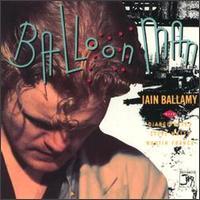
Discovering the saxophone in 1978 with three lessons, his first professional gig was in 1980, playing Ronnie Scotts as the Iain Ballamy Quartet at age 20. He was a founding member of Loose Tubes in 1984. His first recording was with Billy Jenkinsthe following year, and his first solo album, Balloon Man, was released in 1988.
During his career, his performances and recording sessions reads like a who’s who list, including but not limited to Gil Evans, Hermeto Pascoal, Carla Bley, Dewey Redman, George Coleman, London Sinfonietta, Françios Jeanneau, Randy Weston, Clare Martin, Charlie Watts Orchestra, Jeremy Stacey, Jane Chapman, Bryan Ferry, Everything But The Girl, Ian Shaw, Slim Gaillard, Ronnie Scott, Gordon Beck, and one of his closest musical collaborators, Django Bates.
In 1999, Ballamy founded the record label Feral Records, in partnership with graphic artist and filmmaker Dave McKean. He composed the musical score for the movie MirrorMask and the score for the film Luna, both directed by McKean.
Bellamy is currently a visiting professor at the Royal Academy of Music, Birmingham Conservatoire, Trinity College of Music, and the Royal Welsh College of Music & Drama. Modern saxophonist and composer Iain Ballamy continues to explore jazz.
More Posts: bandleader,composer,educator,history,instrumental,jazz,music,saxophone