

Daily Dose Of Jazz…
Arthur Crawford Wethington was born on January 26, 1904 in Chicago, Illinois and graduated from the Chicago College of Music. Working under pianist Lottie Hightower in the mid-1920s, he then took a position in Carroll Dickerson’s band in 1928. 1929 saw this ensemble playing with Louis Armstrong in New York City.
Between 1930 and 1936 Crawford played with the Mills Blue Rhythm Band, recording several times with the group. He recorded with Edgar Hayes in 1937 and also worked with Cab Calloway, Red Allen, and Adelaide Hall.
After 1937 Wethington quit performing full-time but was active as a music teacher, and in the 1960s he took work in New York City as a supervisor for a transit line power plant.
Saxophonist and educator Crawford Wethington, who was never recorded as a leader, passed away on September 11, 1994 in White Plains, New York.
More Posts: educator,history,instrumental,jazz,music,saxophone

Daily Dose Of Jazz…
James Otis Wyble was born on January 25, 1922 in Port Arthur, Texas and in his early years worked for a radio station in Houston. He and guitarist Cameron Hill played Western swing, an outgrowth of jazz, in a band led by Burt “Foreman” Phillips. The sound of two guitars attracted Bob Wills, another fan of Western swing, and he hired both men for his band, the Texas Playboys.
His career interrupted by World War II, he served in the Army from 1942 to 1946, but returned to music after he came home. Jimmy continued to play in Western swing bands, but his interest in jazz surfaced on his 1953 debut album, The Jimmy Wyble Quintet. He would soon work with Barney Kessel and Benny Goodman, and then played with Red Norvo for eight years, including on a tour of Australia accompanying Frank Sinatra.
During the 1960s Wyble took a job as a studio musician in Los Angeles, California working as a guitarist for movies and television, playing on movie soundtracks, including The Wild Bunch, Ocean’s Eleven, Everything You Always Wanted to Know About Sex and Kings Go Forth, and played on TV shows such as The Flip Wilson Show and Kraft Music Hall.
He became an educator after taking classical guitar lessons from Laurindo Almeida, teaching guitar to Larry Koonse, Howard Roberts, Howard Alden and Steve Lukather among others. The 1970s saw Jimmy developing a two-line contrapuntal approach to guitar and composed numerous etudes in this style, publishing Classical/Country, The Art of Two-Line Improvisation, and Concepts for the Classical and Jazz Guitar.
During the 1980s, he left the music business, returning to performance in 2005. Larry Koonse, his former student, issued the album What’s in the Box with compositions by Wyble based on his book of etudes.
Guitarist, composer, and educator Jimmy Wyble continued to perform, record and teach until his death on January 16, 2010.
More Posts: composer,educator,guitar,history,instrumental,jazz,music

Requisites
Dr. Jeckyle ~ Art Blakey & The Jazz Messengers | By Eddie Carter
Art Blakey’s impact on the jazz world as a bandleader and drummer offered a creative and unique perspective that helped shape the artistic style of Hard-Bop and Post-Bop for more than three decades. It was this vision that enabled The Jazz Messengers to become one of the greatest ensembles worldwide. Up next from the library is a recent acquisition titled Dr. Jeckyle (Paddle Wheel K28P 6462). Blakey and the band are performing the second of two performances that were recorded on the final two days of 1985 at Sweet Basil in Greenwich Village. Sharing the spotlight with the drummer is Terence Blanchard on trumpet, Tim Williams on trombone, Donald Harrison on alto sax, Jean Toussiant on tenor sax, Mulgrew Miller on piano, and Lonnie Plaxico on bass. My copy used in this report is the 1987 King Record Company Japanese Stereo album.
Fuller Love (also known as In Case You Missed It) by alto saxophonist Bobby Watson opens the album with an aggressive attack by Blakey preceding the speedy melody by the ensemble. Tim begins the solos with an exciting performance. Donald swings with a robust beat on the second statement. Jean takes the reins next for a rousing reading. Mulgrew charges into the last solo with an impeccably hip contribution before the ensemble takes the song out. Dr. Jeckyle comes next with the propulsive power of Blakey’s drums in full effect on the introduction leading to the melody. Blanchard sizzles on the lead solo, then Harrison gives an equally fierce statement. Williams heats things up on the following reading, then Toussiant contributes considerable energy on the fourth scintillating statement. Miller wraps it up with a tidal wave of compelling emotion.
81 by Ron Carter begins Side Two cooking at an easy groove during the ensemble’s opening chorus. Donald kicks off the solos laying down a lively rhythm. Tim moves into the second statement with an easy swing, followed by Jean who gives an intriguing improvisation. Mulgrew strolls into an enjoyable performance on the next reading. Lonnie takes the final spot with an exquisite solo before the close. One By One by Wayne Shorter picks up the pace one final time with the septet at an optimum level on the melody. Harrison flies right out of the gate with a speedy lead statement. Williams steps up next for a heated interpretation, then Toussiant responds with radiant intensity. Blanchard drives into the next reading ferociously, and Miller delivers a closing chorus of incandescent fury ahead of the ensemble’s finale and audience’s ovation.
Dr. Jeckyle was produced by Shigeyuki Kawashima and Horst Liepolt. It was recorded by Kazunori Sugiyama and the album was mixed at King Studio, Japan by Hatsuro Takanami and mastered by Akira Makino. This is a digital recording with a superb soundstage possessing a bright treble, vibrant midrange, and deep bass that’s fun to listen to. Though released three years before Art’s passing in 1990, Dr. Jeckyle is an exhilarating, exciting live album by Art Blakey & The Jazz Messengers that still stands up very well over three decades later and belongs in every jazz fan’s library!

More Posts: choice,classic,collectible,collector,drums,history,instrumental,jazz,music
Daily Dose Of Jazz…
Igor Grigoriev was born on January 24, 1955 in Moscow, Russia and taught himself to play the guitar as a young child, and later obtained his master’s degree from a music institution in Russia. As a young boy in the late sixties, he was interested in the latest music of the time, rock and started his career, gaining fame by playing and touring around the world.
Becoming a band leader of the trio, Roof, with trumpeter Andrew Solovyov, and percussionist Michael Zhukov they recorded on Melodia Records and Leo Records. His group, Asphalt also gained tremendous popularity despite its short life span.
As he developed musically, Grigoriev became interested in Charlie Parker’s work, but in later years the influence of classical composers became evident in his music. Permanently migrating to the United States in 1989 he continued his career, as a classical and jazz musician, but later he became more and more interested in Avant-garde music.
Better known for his 1990s work, he rapidly assimilated the American avant-garde and forged his own, instantly identifiable style. His music of the 1970s and 1980s saw transition from rock to classical to jazz and to avant-garde music. Igor developed methods of simultaneously improvising bass lines, harmony and melodic lines. In his later years, his playing became less predictable and formulaic.
He has recorded a number of solo albums, as well as recording or performing with Stan Getz, Red Callender, Larry Gales, Milcho Leviev, Ira Schulman, Rod Oakes, and many others. Igor and Rod founded OGOGO in 1996, which is one of the most important organizations to perform improvised music. His central focus was free improvisation, though he occasionally appeared in more conventional jazz and classical contexts, such as big band, various ensembles, and string orchestra.
He composed and arranged for a wide range of music genres, did orchestra work for a Russian circus, and arranged music for theatrical plays. As an educator he taught guitar, music history, jazz history, ensembles, and improvisation at Los Angeles Harbor College and Cerritos College in Los Angeles, California. Guitarist, composer, arranger, band leader and educator Igor Grigoriev passed away on September 25, 2010.
More Posts: arranger,composer,guitar,history,instrumental,jazz,music
Daily Dose Of Jazz…
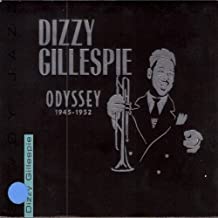
Ray Abrams was born January 23, 1920 in New York City, His younger brother was jazz drummer Lee Abrams. He first worked with Dizzy Gillespie in 1945, toured Europe with Don Redman in 1946 and was with Andy Kirk in 1947. He went back and forth between Kirk and Gillespie for decades.
Outside of his work with Gillespie he was best known for the Ray Abrams Big Band. Other bands with which he played into the early 1950s include those of Hot Lips Page, Roy Eldridge, and Slim Gaillard.
Tenor saxophonist Ray Abrams, known for his jazz and jump blues playing, passed away in July 1992.
More Posts: history,instrumental,jazz,music,saxophone