

Daily Dose Of Jazz…
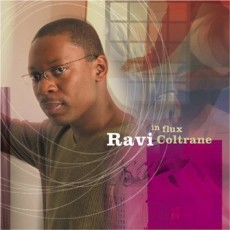
Ravi Coltrane was born August 6, 1965 in Long Island, New York to saxophonist John and pianist Alice Coltrane and was named after sitar player Ravi Shankar. Raised in Los Angeles, California, he was not yet two years old in 1967 when his father died.
Ravi graduated from El Camino Real High School in 1983 and three years later was studying music with a focus on the saxophone at the California Institute of the Arts. He worked extensively with M-Base guru Steve Coleman, who influenced his musical conception.
Coltrane has played and recorded as a sideman with Geri Allen, Kenny Barron, McCoy Tyner, Pharoah Sanders, Herbie Hancock, Carlos Santana, Stanley Clarke, Branford Marsalis and many others. In 1997, after performing on over thirty recordings as a sideman, Ravi entered the studio to record his first album as leader Moving Pictures, with drummer Jeff “Tain” Watts, bassist Lonnie Plaxico and pianist Michael Cain.
This led to extensive touring and a series of recording sessions as a leader producing his sophomore project From the Round Box, followed by Mad 6 and In Flux. He has performed in India as part of a State Department tour delegation to promote HIV/Aids awareness. He has played Monterey , Montreux, Newport and the Vienna jazz festivals, is a part of the Blue Note 7, and has worked with Renee Rosnes, Drew Gress, Luis Perdomo, E.J. Strickland, Al Jarreau, Earl Klugh, David Gilmore, Ralph Alessi and the late George Duke. Post-bop saxophonist Ravi Coltrane continues to perform, record, tour and produce.

Give A Gift Of Jazz – Share
More Posts: saxophone

Daily Dose Of Jazz…
Rickey Woodard was born August 5, 1950 in Nashville, Tennessee and picked up his first music experiences playing saxophone in the family band. He went on to attend Tennessee State University and following graduation joined the Ray Charles band, spending seven years with him.
Woodard became a member of the Clayton-Hamilton Jazz Orchestra, has recorded with Frank Capp, and is a member of Jeanine and Jimmy Cheatham’s Sweet Baby Blues Band. In 1988 he moved to Los Angeles and started playing sessions for Concord Records that soon led to a recording contract.
By 1993 Rickey embarked on a series of yearly visits to the Peterborough Jazz Club in England. There he was billed with veteran British jazz musicians such as Dick Morrissey, John Burch and Tony Archer. In 1994 he was a part of the recording session Seven Sensational Saxophones – Fujitsu-Concord 26th Jazz Festival with Jesse Davis, Gary Foster, Bill Ramsay, Ken Peplowski, Chris Potter and Frank Wess.
He recorded his debut album The Frank Capp Trio Present Rickey Woodard in 1991 and has released seven more as a leader or co-leader in the company of Joe Chambers, Eric Reed, Cedar Walton, Ernie Watts, Pete Christlieb, Gerry Wiggins, Chuck Berghofer, Tony Dumas, Roy McCurdy, James Williams, Christian McBride and Ray Brown. As a sideman he has another ten projects as a sideman working with Horace Silver, Kenny Rogers, Nnenna Freelon and Diana Krall.
Saxophonist Rickey Woodard continues to lead his own quartet, perform and tour with the Clayton-Hamilton Jazz Orchestra, The Juggernaut and The Cheathams.
Inspire A Young Mind
More Posts: saxophone
Daily Dose Of Jazz…
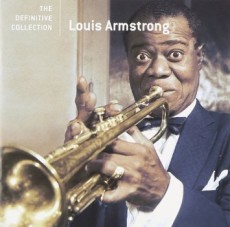
Louis Armstrong was born on August 4, 1901 in New Orleans, Louisiana and grew up in the poverty-stricken, rough neighborhood known as “The Battlefield”, which was part of the Storyville legal prostitution district. Abandoned by his father while still an infant, he and his sister lived with relatives for a period of years. He attended the Fisk School for Boys, getting his early exposure to music, worked as a paperboy, discarded food reseller, and hauled coal to the brothels and clubs and worked for a Jewish junk haulers who treated him like family.
Dropping out of school at age eleven, Louis joined a quartet of boys singing on the corner for money, and listened to the bands in Storyville. He developed his cornet playing skills by playing in the band of the New Orleans Home for Colored Waifs under the tutelage of Professor Peter Davis who instilled discipline in and provided musical training to the otherwise self-taught Armstrong. He eventually became the bandleader, they played around New Orleans and by thirteen-year-old he began drawing attention by his cornet playing, starting him on a musical career. At fourteen he got his first dance hall job at Henry Ponce’s where Black Benny became his protector and guide. He hauled coal by day and played his cornet at night.
Over the next years he played in the city’s frequent brass band parades and listened to older musicians every chance he got, learning from Bunk Johnson, Buddy Petit, Kid Ory and Joe “King” Oliver, who acted as a mentor and father figure to the young musician. He toured with Fate Marable, replaced King Oliver in Kid Ory’s band, and was second trumpet in the Tuxedo Brass Band.
1922 saw Armstrong in Chicago joining King Oliver’s Creole Jazz Band when the city was the center of the jazz universe. He was challenged to “cutting contests” by hornmen trying to displace the new phenomenon, which could blow two hundred high Cs in a row. He made his first recordings on the Gennett and Okeh labels, he met Hoagy Carmichael through his friend Bix Beiderbecke. Taking the advice of second wife Lil Harden Armstrong, he left Oliver and went to work with Fletcher Henderson in New York and developing his own style. By 1924 he switched to trumpet and his influence upon Henderson’s tenor sax soloist Coleman Hawkins, can be judged by listening to the records made by the band during this period.
During this time, Armstrong made many recordings on the side, arranged by Clarence Williams, with the Williams Blue Five pairing him with Sidney Bechet and backing Bessie Smith, Ma Rainey and Alberta Hunter. He began recording under his own name for Okeh with his famous Hot Five and Hot Seven groups Hot Five and Hot Seven groups, producing hits Potato Head Blues, Muggles and West End Blues, the music of which set the standard and the agenda for jazz for many years to come. His recording of Heebie Jeebies turned on both black and white young musicians to his new type of jazz, including a young Bing Crosby.
Over the course of his career he appeared in musical, played clubs, added vocals to his repertoire covering most famously Carmichael’s Stardust that became one of the most successful renditions. His approach to melody and phrasing was radical and evolved into scat singing. As with his trumpet playing, Armstrong’s vocal innovations served as a foundation stone for the art of jazz vocal interpretation. The uniquely gritty coloration of his voice became a musical archetype that was much imitated and endlessly impersonated.
After spending many years on the road, in 1943 Louis settled permanently in Queens, New York in 1943 in contentment with his fourth wife, Lucille. During the subsequent thirty years, he played more than three hundred gigs a year, toured Africa, Europe, and Asia under sponsorship of the US State Department earning the nickname “Ambassador Satch” and inspiring Dave Brubeck to compose his jazz musical The Real Ambassadors.
He has been honored posthumously with a Grammy Lifetime Achievement Award, won a Male Vocal Performance Grammy for Hello Dolly, has 11 recordings inducted into the Grammy Hall of Fame, the Rock and Roll Hall of Fame list his West End Blues as one of the 500 songs that shaped Rock and Roll, had a commemorative U.S. postage stamp issued, and has been inducted into six Halls of Fame, has a star on the Hollywood Walk of Fame, as well as the Louis Armstrong New Orleans International Airport, the US Open main stadium was renamed Louis Armstrong Stadium, and his Hot Five and Hot Seven recordings are now a part of the National Recording Registry in the Library of Congress.
Trumpeter and vocalist Louis Armstrong, also known as Satchmo, Dipper, Pops and the King of Jazz, passed away in his sleep of a heart attack on July 6, 1971. His honorary pallbearers included Bing Crosby, Ella Fitzgerald, Dizzy Gillespie, Pearl Bailey, Count Basie, Harry James, Frank Sinatra, Ed Sullivan, Earl Wilson, Alan King, Johnny Carson and David Frost. Peggy Lee sand The Lords Prayer, Al Hibbler sang Nobody Knows The Trouble I’ve Seen and his long-time friend Fred Robbins gave the eulogy.
Dose A Day – Blues Away
Daily Dose Of Jazz…
Ben Wolfe was born on August 3, 1962 in Baltimore, Maryland but was raised in Portland, Oregon. Early on in his career he formed a duo with Harry Connick Jr. and went on to be his musical director, recording over a dozen albums and soundtracks. He then joined the Wynton Marsalis Septet, remaining until it disbanded. This engagement was followed being an part of Diana Krall’s touring band, playing on many of her recordings, including the Grammy Award winning project When I Look In Your Eyes.
As a member of The Jazz at Lincoln Center Orchestra (JLCO), Ben has performed with Joe Henderson, Doc Cheatham, Jon Hendricks, Harry “Sweets” Edison, and Billy Higgins as well as recording with Branford Marsalis, James Moody, Eric Reed, Carl Allen, and Benny Green.
Wolfe has been awarded the 2004 New Works: Creation and Presentation Program Grant by Chamber Music America and funded through the Doris Duke Charitable Foundation. As a result he composed his extended composition Contradiction: Music for Sextet. He has also composed the score for Matthew Modine’s film short I Think I Thought.
Double bassist, composer and educator Ben Wolfe currently performs, records and teaches in the Jazz Division of the Juilliard School in New York City.
Put A Dose In Your Pocket
More Posts: bass
Daily Dose Of Jazz…
Billy Kilson was born William Earl Kilson on August 2, 1962 in Washington, DC. He started on trumpet at ten, switched to trombone at 11, then to drums at 16. He studied at the Berklee College of Music from 1980 to 1985, took private lessons from Alan Dawson during 1982-89, and then toured Europe with Walter Davis.
Kilson has played with such notable jazz musicians as Ahmad Jamal, Dianne Reeves, Greg Osby, George Duke, Steps Ahead, Tim Hagans, Terumasa Hino, Bob James, Dave Bob Belden, Kevin Mahogany, Kirk Whalum, Chris Botti, Freddie Jackson, Donald Brown and Paula Cole.
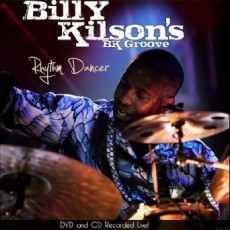
He is perhaps best known for his work with Dave Holland playing on the 1999 Grammy Award nominated album Prime Directive and his Grammy-winning 2002 release What Goes Around. He also has chops as a leader with his own quartet ensemble along comprised of James Genus and Tim Hagans. Releasing his debut compact disc in 2006 as a leader, titled Pots and Pans, it was followed by a sophomore DVD project, Rhythm Dancer, in 2012. Drummer Billy Kilson continues to record, perform and tour.
Jazz Is Global – Share
More Posts: drums