

Daily Dose Of Jazz…
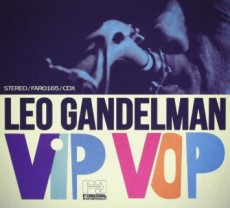
Léonardo Gandelman was born Leonardo Gandelman on August 10, 1956, in Rio de Janiero, Brazil. He spent his childhood studying classical music and by age sixteen he was a soloist with the Brazil Symphony Orchestra. He furthered his studies on saxophone, composition and arrangements at Berklee College of Music.
Returning home in 1979 he began his professional career combining Brazilian rhythms and jazz. Eight years later he launched his solo career and to date has participated in over 800 recordings.
Leo has played with Luis Santos, guest appeared in Titas’ single Telecisao and is famous for composing Brazilian telenovelas, films and series soundtracks. He has performed at Lincoln Center and festivals such as Hollywood Rock and the Montreux Festival. The Jornal do Brasil has voted him the most popular instrumental artists 15 consecutive years.
Composer, arranger and saxophonist Leo Gandelman has performed with Caetano Veloso, Chico Buarque, Milton Nascimento, Luiz Melodia, Leny Adrade, Ney Matogrosso, Joel Nascimento and Leila Pinheiro as well as with the Bahia Symphony Orchestra, the Ribeirai Preto Symphony Orchestra and the Young Orchestra of Caracas. He continues to perform, record and tour.

Take A Dose On The Road
Daily Dose Of Jazz…
Mike Davis was born on August 9, 1972 in Rosenberg, Texas not far from Houston. Mike grew up in a small Texas town not far outside of Houston called Rosenberg. Though music was in his blood from a very early age, he didn’t begin seriously playing an instrument until around age 14. His began with the bass and soon was playing in his high school big band as well as in the Symphonic band. He borrowed other instruments from the school and began to practice and experiment with clarinet, trombone, trumpet, French horn, drums and piano. Ultimately the bass was his best fit as he discovered his first great jazz album – Chick Corea’s ‘Now He Sings-Now He Sobs’.
Davis studied bass, theory and jazz with Dave Foster, Eric Late, Shelly Berg and Bruce Dudley. He played gigs in Houston with his first influential peers – Todd Harrison, Mike Wheeler, Harry Shepard, Joe LoCascio, Tony Campisi, Woody Witt, Clark Erickson, Ted Wenglisnski. In 1993 Mike began studying jazz, classical bass, arranging, composition, improvisation, table and North Indian classical music. During this time Mike performed regularly with Dave Zoller, Pete Peterson and the Collection Jazz Orchestra, Allison Wedding, Pablo Mayor and many others. He was a regular member of the bands Little Jack Melody and his Young Turks, Sol Caribe and The Great Escape. Mike also formed his original avant-garde ensemble Sand with guitarist Niclas Höglind, saxophonist Jacob Duncan and drummer Chris Michael.
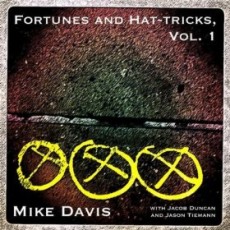
In 1998 Mike moved to New York City and focused on jazz performance playing with the likes of Lynne Arriale and Steve Davis, Cheryl Pyle, Tom Chang, Rez Abbasi, Dave Phelps, the SoHa Big Band, Jonathan Kreisberg, Dave Wood, Billy Eric and Mike Freeman. He moved into the pop rock and folk genres as a producer, editor and mixer but eventually returned to his own creative endeavors. Launching Tmpf Records he released three albums, I See Better With My Eyes Closed, It Won’t Get Dark and Fortunes and Hat-tricks, Vol. 1, as a leader of a quartet, duo and trio respectively.
Over the years bassist Mike Davis has perform and recorded with Airto Moreira, Norah Jones, Steve Gadd, Ed Thigpen, Doc Cheatham, Bobby Womack, Ellen Greene, Peter Erskine and Poncho Sanchez to name a few. He continues to compose, perform, collaborate and record.
Give The Gift Of Knowledge
More Posts: bass
Hollywood On 52nd Street
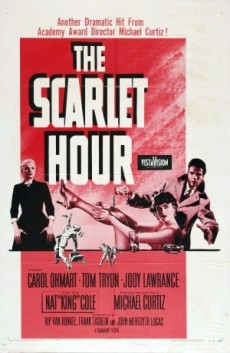
The song Never Let Me Go was composed by Jay Livingston (music) and Ray Evans (lyrics) and introduced by Nat King Cole in the 1956 crime drama film titled The Scarlet Hour.
The movie was a relatively bold experiment for a mid-1950s Paramount release. The studio expended a great deal of money on the project and enlisted the services of top-flight director Michael Curtiz and populated with a cast of young unknowns. Carol Ohmart and Tom Tryon (future novelist) star with supporting cast including Jody Lawrence, Elaine Stritch, James Gregory and Edward Binns.
The Story: Ohmart and Tryon portray Paulie and Marsh, respectively the film’s villainess and protagonist. Knowing that Marsh is hopelessly in love with her, Paulie uses him as a dupe in an upcoming jewelry heist. Only after a killing has occurred does Marsh come to his senses. Lawrence is good girl to whom Marsh eventually retreats.
Sponsored By

www.whatissuitetabu.com

Daily Dose Of jazz…
Urban Clifford “Urbie” Green was born August 8, 1926 in Mobile, Alabama and was taught the piano as a child by his mother, jazz and popular tunes from the beginning. He picked up the trombone when he was about 12 and although he listened to such trombone greats as Tommy Dorsey, J.C. Higginbotham, Jack Jenney, Jack Teagarden and Trummy Young, he was more influenced by the styles of Dizzy Gillespie, Charles Parker and Lester Young. Vocalists Perry Como and Louis Armstrong also influenced his style.
After his father died when he was 15, Green went straight into professional music, first joining the Tommy Reynolds Band and then stints with Bob Strong, Jan Savitt and Frankie Carle. While at Auburn High School he played with The Auburn Knights Orchestra, a college big band. In 1947, he joined Gene Krupa’s outfit and quickly moved up to Woody Herman’s 3rd Thundering Herd Big Band in 1950 to play with his brother, Jack.
By 1953 Urbie was in New York City quickly establishing himself as the premier trombonist in the booming recording industry and in 1954 he was voted the “New Star” trombonist in the International Critics Poll from Down Beat magazine. He was voted “Most Valuable Player” several times by the National Academy of Recording Arts and Sciences. He recorded with virtually all of the major jazz musicians of the 1950s and 1960s and led his own groups while also joining tours as a featured performer.
He collaborated with innovative producer Enoch Light for the Command and Project 3 labels, producing The Persuasive Trombone of Urbie Green and 21 Trombones, and was sideman and soloist on the album ‘s Continental by Ray Conniff in 1961. In the Seventies he began making innovations with his instrument designing a signature mouthpiece for Jet Tone and collaborated with Martin Brass on practical improvements to trombone design.
He would go on to record with Enoch Light and the Light Brigade, Dick Hyman, Maynard Ferguson and Doc Severinsen before moving over to CTI where he played more of his music and less solos with his band. He would record with Blue Mitchell, Herbie Mann, Manny Albam,, Steve Allen, Ray Bryant, Count Basie, Paul Desmond, Gil Evans, Art Farmer, Aretha Franklin, Dizzy Gillespie, Johnny Griffin, Billie Holiday, Coleman Hawkins, Milt Jackson, Bobby Hutcherson, Wes Montgomery, Mark Murphy and the list goes on and on.
By the 1980s and beyond Urbie’s recording career began a slowing down with only two live, straight jazz works; Just Friends, and Sea Jam Blues. In 1995 he was elected into the Alabama Jazz Hall of Fame and he still plays live at the Delaware Water Gap Celebration of the Arts Festival every September, just miles down the road from his home.
Put A Dose In Your Pocket
More Posts: trombone
Daily Dose Of Jazz…
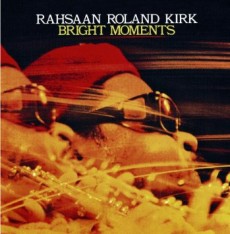
Rahsaan Roland Kirk was born Ronald Theodore Kirk on August 7, 1935 in Coumbus, Ohio and grew up in the neighborhood called Flytown. He felt compelled by a dream to transpose two letters in his first name to make Roland. He became blind at an early age as a result of poor medical treatment. In 1970 he added “Rahsaan” to his name after hearing it in a dream.
Rahsaan preferred to lead his own bands and rarely did he perform as a sideman, although he did record lead flute and solo on Soul Bossa Nova with arranger Quincy Jones in 1964, as well as drummer Roy Haynes and had notable stints with bassist Charles Mingus. His playing was generally rooted in soul jazz or hard bop but his knowledge of jazz gave him the ability to draw from ragtime to swing to free jazz. In additional to classical influences he borrowed elements from composers like Smokey Robinson and Burt Bacharach, Duke Ellington and John Coltrane.
His main instrument was the tenor saxophone and two obscure saxophones: the stritch, a straight alto sax lacking the instrument’s characteristic upturned bell and a manzello, a modified saxello soprano sax, with a larger, upturned bell. Kirk modified these instruments himself to accommodate his simultaneous playing technique. He also played flute, clarinet, harmonica, English horn, recorder and trumpet, as well as incorporating an interesting array of common items such as garden hose, alarm clocks and sirens.
At times Rahsaan would play a number of these horns at once, harmonizing with himself, or sustain a note for lengthy durations by using circular breathing or play the rare, seldom heard nose flute. Many of Kirk’s instruments were exotic or homemade, but even while playing two or three saxophones at once the music was intricate, powerful jazz with a strong feel for the blues. Politically outspoken, he would often talk about issues of the day in between songs at his concerts, such as Black history and the civil rights movement and lacing them with satire and humor. According to comedian Jay Leno, when he toured with him as his opening act, Kirk would introduce him by saying, “I want to introduce a young brother who knows the black experience and knows all about the white devils… Please welcome Jay Leno!”
In 1975, Kirk suffered a major stroke that led to partial paralysis of one side of his body. However, he continued to perform and record, modifying his instruments to enable him to play with one arm. He died from a second stroke on December 5, 1977 after performing in the Frangipani Room of the Indiana University Student Union in Bloomington, Indiana.
His influence went well beyond jazz to include such rock musicians as Jimi Hendrix, Ian Anderson of Jethro Tull, Eric Burdon and War, T.K. Kirk, Hope Clayburn, Jonny Greenwood and Ramon Lopez, all who idolized or paid tribute to, and David Jackson, George Braith and Dick Heckstall-Smith who took to playing multiple saxophones, and Steve Turre, Courtney Pine who utilizing his circular breathing during play. He left to us nearly four-dozen albums as a leader and another eleven with aforementioned Jones, Mingus and Haynes, and Tubby Hayes, Tommy Peltier, Jaki Byard and Les McCann.
Jazz Is Global – Share