

Daily Dose Of Jazz…
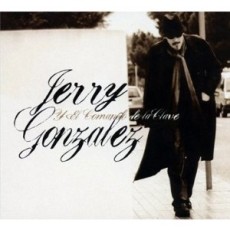
Jerry Gonzalez was born in the Bronx, New York City on June 5, 1949. Of Latin heritage, he grew up with jazz and Afro-Cuban music that left a deep impact on his musical appreciation. Listening to his father’s jazz collection he was influenced by Miles Davis, Dizzy Gillespie and Louis Armstrong along with gleaning inspiration from Tito Puente, Eddie Palmieri and Mongo Santamaria.
Studying music in junior high school, Gonzalez took up the trumpet and later the congas, continuing he formal training at New York College of Music and New York University. He began his professional career in 1963 playing with Lewellyn Mathews in New York State World’s Fair. In 1970 playing with Dizzy Gillespie, under whose tutelage he fused African based rhythms onto jazz elements seamlessly without detracting from either.
After playing with Manny Oquendo and Eddie Palmieri, Jerry created the Fort Apache Band with Andy Gonzalez (his brother), Larry Willis and Steve Berrios. A later reconfiguration and naming, Jerry Gonzalez & the Fort Apache Band became much more successful performing at European jazz festivals and subsequent recordings. Three albums later, “Rumba Para Monk” released in 1989, topped a readers’ poll in Down Beat magazine and was named the “Jazz Album Of The Year” in France by the Academie du Jazz. In 1998 they won both the industry and journalist polls in the New York Jazz Awards Latin Jazz category.
Gonzalez has played and/or collaborated with Tito Puente, McCoy Tyner, Jaco Pastorious, Chet Baker, Woody Shaw, Tony Williams, Larry Young, Freddie Hubbard, Chico O’Farill, Papo Vasquez, Ray Barretto, The Beach Boys, Chico Freeman and Paquito D’Rivera among others but his most noteworthy contribution is to Afro-Cuban jazz and a resurgence in Latin jazz in the 80s and 90s. With seventeen albums as a leader under his belt and a host of recording sessions as a sideman, since 2000, trumpeter Jerry Gonzalez has lived and played in and around jazz clubs in Madrid.
Daily Dose Of Jazz…
Oliver Edward Nelson was born on June 4, 1932 in St. Louis, Missouri. His brother played sax with Cootie Williams and his sister sang and played piano. He began playing the piano when he was six, the saxophone by eleven and by age 15 he was playing in territory bands around St. Louis. In 1950 he joined Louis Jordan’s big band, playing alto saxophone and arranging.
After military service Nelson returned to Missouri to study music composition and theory at Washington and Lincoln University graduating in 1958. He married, had a son, divorced, moved to New York City, and began playing with Erskine Hawkins and Wild Bill Davis, and arranged for the ApolloTheatre. In 1959 he briefly worked the West coast with Louie Bellson’s big band and played tenor for Quincy Jones.
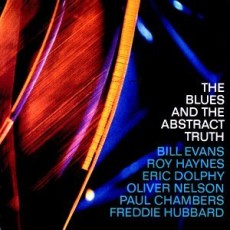
After six albums as leader between 1959 and 1961 for Prestige with Kenny Dorham, Johnny Hammond Smith, Eric Dolphy, Roy Haynes and others. Oliver’s big break came with his Impulse album The Blues and The Abstract Truth featuring his now classic standard “Stolen Moments”. Propelling him into prominence as a composer and arranger, it opened up opportunities to arrange for Cannonball Adderley, Irene Reid, Sonny Rollins, Billy Taylor, Wes Montgomery, Johnny Hodges and many others.
Moving to Los Angeles in 1967 Nelson spent a great deal of time composing for television shows like Colombo, Ironside, Bionic Woman and films like Death of a Gunfighter and Last Tango In Paris. He produced for Nancy Wilson, James Brown, the Temptations and Diana Ross.
Less well-known is the fact that Nelson composed several symphonic works, and was also deeply involved in jazz education, returning to his alma mater, Washington University, in the summer of 1969 to lead a five-week long clinic that also featured such performers as Phil Woods, Mel Lewis, Thad Jones, Sir Roland Hanna, and Ron Carter.
Oliver Nelson, saxophonist, clarinetist, pianist, arranger and composer died of a heart attack on October 28, 1975, aged 43.

Daily Dose Of Jazz…
Dakota Staton was born on June 3, 1930 in the Homewood section of Pittsburgh, Pennsylvania is also known by her Muslim name Aliyah Rabia. She studied music at the Filion School of Music. She regularly performed as a vocalist with the Joe Wespray Orchestra in the Hill district, a jazz hotspot.
Spending the next several years on the nightclub circuit she played Detroit, Indianapolis, Cleveland and St. Louis. While in New York she came to the attention of Capitol Records producer Dave Cavanaugh. Signing her, they released a series of albums that led to her winning Down Beat’s Most Promising New Comer award in 1955.
Dakota’s biggest hit was The Late, Late Show that went to #4 on the charts in 1957 garnered her international acclaim. The album was followed with In The Night with George Shearing, Dynamic and Dakota At Storyville.
In 1958, she wed Antiguan trumpeter Talib Ahmad Dawud, a Muslim and noted critic of Elijah Muhammad and by the mid-sixties relocated to England. Vocalist Dakota Staton continued to record semi-regularly, her recordings taking an increasingly strong gospel and blues influence until her death on April 10, 2007.
More Posts: vocal

Daily Dose Of Jazz…
Matthew Garrison was born June 2, 1970 in New York. The son of double bassist Jimmy Garrison, he spent the first eight years of his life immersed in a community of musicians, dancers, visual artists and poets. After the death of his father (John Coltrane’s bassist), his family relocated to Rome, Italy where he began to study piano and bass guitar.
In 1988 Matthew returned to the United States and lived with his godfather Jack Dejohnette for two years, studying intensively under him and bassist Dave Holland. In 1989 he received a full scholarship to attend Berklee College of Music in Boston. Along with his studies, he began his professional career with the likes of Gary Burton, Bob Moses, Betty Carter, Mike Gibbs and Lyle Mays to mention a few.
Garrison moved to Brooklyn, New York in 1994 and since then has performed, toured and recorded with artists such as Herbie Hancock, Whitney Houston, Joe Zawinul, Chaka Khan, Meshell Ndege Ocello, Joni Mitchell, Wayne Shorter, Jack Dejohnette, Steve Coleman, Bill Cosby, Paul Simon, Cassandra Wilson, Wallace Roney, Geri Allen, John Mclaughlin, Tito Puente, John Scofield, Pat Metheny and many others.
In 1998 Matthew founded record label and production company, GarrisonJazz Productions, through which he currently produces, promotes and markets his music. Since 2000 he has released two compact discs and a live performance DVD. He is noted for playing his signature series Fodera bass, having created and developed a pizzicato technique that uses four fingers. He continues to perform and record.
More Posts: bass
From Broadway To 52nd Street
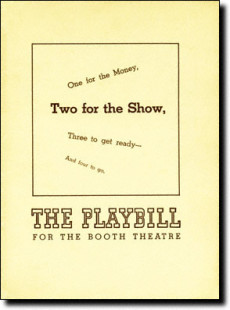
Two For The Show opened on Broadway at the Booth Theatre on February 8, 1940 and after 124 performances the curtain came down for its final descent on May 25, 1940. Directed by John Murray Anderson with the sketches directed by Joshua Logan and musical staging by Robert Alton, the original cast included later Hollywood notables as Eve Arden, Alfred Drake, Betty Hutton and Keenan Wynn.
The Story: This was a revue with several sketches being performed such as “The Age Of Innocence” and “Cookery” written by Richard Hadyn. There were two other revues in this series, all conceived and directed by John Murray Anderson: One for the Money (February 4, 1939-May 27, 1939), and Three to Make Ready (March 7, 1946-December 14, 1946). The most notable song introduced in the show was “How High The Moon” which subsequently has been recorded by many jazz artists, becoming a well-known standard
Jazz History: Bebop or bop is a style of jazz characterized by fast tempo, instrumental virtuosity and improvisation based on the combination of harmonious structure and melody. It was developed in the early to mid-1940s and first surfaced in musicians’ argot sometime in the first two years of American involvement in WWII.
The origins of the term “bebop” has been debated by numerous authorities and researchers usually stated to derive from nonsense syllables or vocables used in scat singing, and is supposed to have been first attested in 1928. However, some researchers speculate that it was a term used by Charlie Christian because it sounded like something he hummed along with his playing.Yet, Dizzy Gillespie’s version of the story relates that the audiences coined the name after hearing him scat the then-nameless tunes to his players and the press ultimately picked it up, using it as an official term: “People, when they’d wanna ask for those numbers and didn’t know the name, would ask for bebop.”
Sponsored By

www.whatissuitetabu.com