


Daily Dose Of Jazz…
Eugene Thomas Puerling was born on March 31, 1929 in Milwaukee, Wisconsin. He created and led the vocal groups The Hi-Lo’s and The Singers Unlimited. He won a Grammy Award for Best Vocal Arrangement for Two or More Voices in 1982 for his arrangement of A Nightingale Sang in Berkeley Square as performed by The Manhattan Transfer. A Latin song he arranged for Singers Unlimited, “One More Time, Chuck Corea,” inspired by Chuck Mangione and Chick Corea, has been adapted and used by marching bands, drum and bugle corps and jazz ensembles.
His vocal arrangements and chord structures were classic and instantly recognizable. In addition to the afore-mentioned he contributed to Rosemary Clooney’s TV show. His vocal arranging ability and his ability to arrange musical backing by Frank Comstock’s band and several others were widely regarded. Puerling’s innovative use of vocal harmony influenced many groups and musicians, including Take 6, The King’s Singers, The Free Design, Brian Wilson, The Manhattan Transfer, Chanticleer, and the band Glad, the latter three also commissioned him to create original arrangements for them.
Vocalist and vocal arranger Gene Puerling, whose vocal arrangements collection is being housed at The University of North Texas College of Music and Music Library, passed away on March 25, 2008.

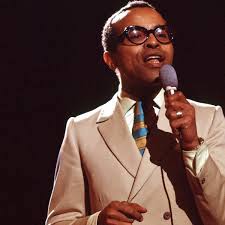
Three Wishes
Jon Hendricks told Nica what his three wishes would be when she inquired:
- “Knowledge of God.”
- “Art.”
- “Love.”
*Excerpt from Three Wishes: An Intimate Look at Jazz Greats ~ Compiled and Photographed by Pannonica de Koenigswarter

More Posts: baroness,history,instrumental,jazz,music,pannonica,three,vocal,wishes

Daily Dose Of Jazz…
Ola Onabulé was born in Islington, London, England on March 30, 1964 and at the age of seven he was sent to Lagos, Nigeria, where he spent the next ten years in school. When he was seventeen he returned to the UK to study at Millfield School, then attended law school, almost completing a three-year degree before deciding to enroll at Middlesex Polytechnic for an arts degree. While studying, he began to perform in London clubs and venues, writing and performing his own material.
Onabulé’s career spans nearly two decades, releasing his music on his own label, Rugged Ram Records, after recording for Elektra and Warner Bros. His debut album, More Soul Than Sense, was released in 1995.
He has performed internationally, performed with Germany’s WDR Big Band and the SWR Big Band and appeared with the German Film Orchestra Babelsberg in Potsdam for a concert. Ola has played the main stages of the Montreal Jazz Festival and Vancouver Jazz Festival. A return to Canada in 2010 he performed at Victoria Jazz Festival, Vancouver Jazz Festival, and the Edmonton Jazz Festival. His list of credits reads like a who’s who of bog bands and small combos and continues to grow.
More Posts: history,instrumental,jazz,music,producer,vocal bandleader
Daily Dose Of Jazz…
Kamil Běhounek was born March 29, 1916 in the Southern Bohemian section of Blatná, Czech Republic. An autodidact on accordion, having learned to play by imitating recordings and BBC broadcasts, he studied law in Prague, Czech Republic and began performing in clubs. His first recordings on solo accordion date from 1936 and in the late 1930s he worked with the Blue Music Orchestra, Rudolf Antonin Dvorsky, Jiří Traxler, and Karel Vlach.
In 1943, he was forcibly compelled by the Nazis to go to Berlin, Germany where he created arrangements for the bands of Lutz Templin and Ernst van’t Hoff. Upon returning to Czechoslovakia in 1945, he used some of these arrangements for his own band. Kamil returned to Germany the following year and continued arranging for bandleaders Adalbert Luczkowski, Willy Berking, Heinz Schönberger, and Werner Müller.
He played with his own ensemble in Bonn, Germany and, after 1948, in West Germany for American soldiers’ clubs. Between 1968 and 1977, Běhounek recorded several albums of folk music, but continued to play swing with his own groups. He wrote an autobiography, Má láska je jazz (Jazz Is My Love), which was published posthumously in 1986.
Accordionist, bandleader, arranger, composer, and film scorer Kamil Běhounek, who also occasionally played tenor saxophone, passed away on November 22, 1983 in Bonn.
More Posts: accordion,arrangr,composer,film scorer,history,instrumental,jazz,music,saxophone
Daily Dose Of Jazz…
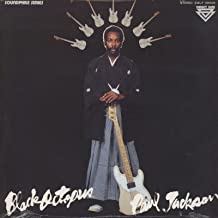
Paul Jackson was born in Oakland, California on March 28, 1947 and began playing bass at the age of nine. By age 14, he performed with the Oakland Symphony Orchestra and went on to study at the San Francisco Conservatory of Music.
He recorded five albums as a leader, eleven albums with Herbie Hancock, five with The Headhunters. He played on recording sessions with Sonny Rollins, Stanley Turrentine, Azteca, Eddie Henderson, Harvey Mason, The Pointer Sisters, Santana, Shawn Phillips, Stomu Yamashta between 1972 and 1977.
Electric bassist Paul Jackson passed away on March 18, 2021 at age 73 in a hospital near Tokyo, Japan, ten days before his 74th birthday.
More Posts: bandleader,bass,history,instrumental,music