

Daily Dose Of Jazz…
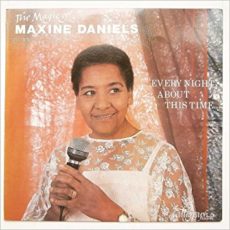
Maxine Daniels was born Gladys Lynch in Stepney, London on November 2, 1930, one of thirteen children and the elder sister of entertainer and singer Kenny Lynch. She first received recognition as a singer when she won a local talent contest, at the age of 14, in a Stepney cinema. That local recognition lead to a first singing job with a semi-professional band led by a Canning Town grocer. She then won another talent competition organized by the Daily Sketch and sponsored by bandleader Ted Heath.
A two year residency followed from 1954 to 1956 with bandleader Denny Boyce at The Orchid Room in Purley. At Boyce’s suggestion she changed her stage name and through their regular Radio Luxembourg broadcasts she gained a wider audience and the opportunity to record for the Oriole label.
Over the course of her career vocalist Maxine Daniels recorded eleven albums, and worked with Humphrey Lyttelton. She passed away on October 20, 2003 in Romford, England at the age of 72.
More Posts: vocal
Daily Dose Of Jazz…
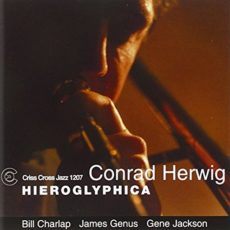
Conrad Herwig was born Lee Conrad Herwig III on November 1, 1959 in Lawton, Oklahoma. He graduated from North Texas State University in Denton, Texas, where he performed in the One O’Clock Lab Band, attended Goddard College and Queens College, CUNY.
He began his career in Clark Terry’s band in the early 1980s and has gone on to be a featured member in the Joe Henderson Sextet, Tom Harrell’s Septet and Big Band, and the Joe Lovano Nonet and featured as a soloist on the latter’s Grammy Award winning 52nd Street Themes.
He performs and records with Eddie Palmieri’s La Perfecta II and Afro-Caribbean Jazz Octet, Michel Camilo’s 3+3, the Mingus Big Band (often serving as musical director, and was an arranger on the 2007 Grammy nominated Live at the Tokyo Blue Note, the Jon Faddis Jazz Orchestra, and Jeff “Tain” Watts Family Reunion Band, among many others.
He has recorded several highly acclaimed projects in the Afro-Caribbean jazz genre, including the Grammy nominated albums the Latin Side of Joe Henderson featuring Joe Lovano for Half Note Records, the Latin Side of Wayne Shorter, Another Kind of Blue: The Latin Side of Miles Davis, and, the Latin Side of John Coltrane. Conrad has worked with Paquito D’Rivera, Dave Valentin, Eddie Palmieri, and Randy Brecker. He has been voted No. 1 Jazz Trombonist three times in the Downbeat Jazz Critics’ Poll and nominated for Trombonist of the Year by the Jazz Journalists Association on multiple occasions.
He has conducted master classes, seminars and workshops at hundreds of universities and conservatories around the world and has received performance and teaching grants from the National Endowment for the Arts. Trombonist Conrad Herwig is a professor of jazz trombone, jazz improvisation and jazz composition and arrangement at Rutgers University, was elected to the Board of Directors of the International Trombone Association and continues to compose, perform and record.

More Posts: trombone
Daily Dose Of Jazz…
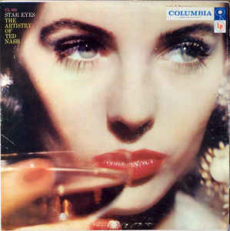
Theodore Malcolm Nash was born on October 31, 1922 in the Boston suburb of Somerville, Massachusetts. His goal was to become a classical flutist until he began playing saxophone in his early teens. His professional career began when he went on the road with a succession of dance bands, landing the solo tenor chair with the Les Brown band in 1944 where he rapidly made a name for himself.
His playing was notable for his mastery of the extreme altissimo register of the saxophone. He authored Ted Nash’s Studies in High Harmonics for Tenor and Alto Saxophone published in 1946, that is still in print.
In the late 1940s Ted became part of the thriving Hollywood movie and television recording industry. In 1956 he recorded with Paul Weston’s orchestra the hit album Day by Day, with vocals by his former colleague and close friend, Doris Day.
He was featured on The Music from Peter Gunn soundtrack album performing the bluesy, high-energy alto sax solo on the theme as well as the wistful alto sax solo on the second bridge of Dreamsville. Henry Mancini composed The Brothers Go to Mother’s from Peter Gunn as a feature for Ted and and his trombonist Dick.
From the mid 50s through the end of the Sixties he recorded sixteen albums with Georgie Auld. Henry Mancini, Elmer Bernstein, Pete Rugolo, Lalo Schifrin. Saxophone, flute and clarinet Ted Nash, who was a first-call session musician in the Hollywood recording studios, passed away on May 12, 2011.

Daily Dose Of Jazz…
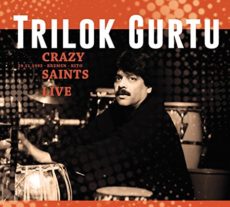
Trilok Gurtu was born in Mumbai, India on October 30, 1951 to Hindu Brahmin parents and attended Don Bosco High School. His mother, singer Shobha Gurtu, encouraged him to learn playing tabla, and he studied playing the instrument under Shah Abdul Karim. He didn’t begin playing western drum kit in the 1970s and developed an interest in jazz, and played played with Charlie Mariano, John Tchicai, Terje Rypdal, and Don Cherry.
One of Trilok’s earliest recordings was around 1977 in the record Apo-Calypso in an album of the German ethnic fusion band, Embryo. His mother also sang in that record, and later joined him in his first solo CD, Usfret. In the 1980s, Gurtu played with Swiss drummer Charly Antolini, John McLaughlin, Jonas Hellborg, Kai Eckhardt, Dominique DiPiazza and opened for Miles Davis in Berkeley, California in 1988. He went on to play and record three albums with Oregon after the death of drummer Collin Walcott. In the early 1990s he resumed his career as a solo artist and a bandleader.
In 1999, Zakir Hussain and Bill Laswell founded a musical group, Tabla Beat Science, bringing Trilok, Karsh Kale and Talvin Singh into the fold. Before going dormant in late 2003 they released three albums. He went on to record the album, Miles Gurtu, with Robert Miles, collaborate with the Arkè String Quartet and perform with Ricky Portera, Nick Beggs, Mario Marzi, Terl Bryant, John De Leo.
Percussionist, drummer and composer Trilok Gurtu has won awards from DRUM! Magazine, Carlton Television Multicultural Music Awards, Down Beat’s Critics Poll and has been nominated for the BBC Radio 3 World and continues to perform, compose, record and tour.

More Posts: drums,percussion,tabla
Daily Dose Of Jazz…
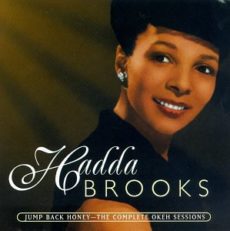
Hadda Brooks was born Hattie L. Hapgood on October 29, 1916 in Los Angeles, California. Raised in the Boyle Heights area by her parents who had migrated from the South her mother, Goldie Wright, was a doctor and her father, John Hapgood, a deputy sheriff, but it was her grandfather, who introduced her to theater and the operatic voices of Amelita Galli-Curci and Enrico Caruso. In her youth she formally studied classical music with an Italian piano instructor, Florence Bruni, with whom she trained for twenty years.
She attended the University of Chicago, later returned to Los Angeles, becoming to love the subtle comedy of black theater and vaudeville entertainer and singer Bert Williams. She began playing piano professionally in the early 1940s at a tap-dance studio owned by Hollywood choreographer and dancer Willie Covan. For ten dollars a week, she played the popular tunes of the day while Covan worked with such stars as Fred Astaire, Gene Kelly, and Shirley Temple.
Preferring ballads to boogie-woogie, Brooks worked up her style by listening to Albert Ammons, Pete Johnson, and Meade Lux Lewis records. Her first recording, the pounding Swingin’ the Boogie, for Jules Bihari’s Modern Records, was a regional hit in 1945, and her most famous song Out of the Blue, the title track to the film of the same name she appeared in on the recommendation of Benny Goodman.
She went on to begin singing with the encouragement Charlie Barnet, and recorded her first vocal recording You Won’t Let Me Go, played the small part of a lounge piano player in films, and was the second Black woman to host her own television show in 1957 with The Hadda Brooks Show after The Hazel Scott Show on DuMont in 1950. She toured Europe, Australia
In the 1970s, she commuted to Europe for performances in nightclubs and festivals, but performed rarely in the United States, living for many years in Australia and Hawaii. Retiring from music for sixteen years, she resurfaced to open Perino’s in Los Angeles and clubs in San Francisco and New York City as well as resuming her recording career. She continued appearing in films throughout the rest of her career, received the Pioneer Award from the Smithsonian and the Los Angeles Music Awards honored her with the Lifetime Achievement Award.
Pianist, vocalist and composer Hadda Brooks, who got her name from Jules Bihari, passed away Los Angeles, following open-heart surgery at age 86 on November 21, 2002.
