

Daily Dose Of Jazz…
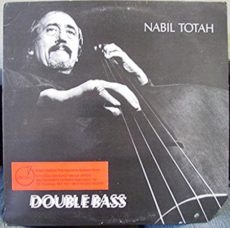
Knobby Totah was born Nabil Marshall Totah on April 5, 1930 in Ramallah, Palestine. He emigrated to the United States in 1944 and began playing the bass in 1953. He first worked in Japan with Toshiko Akiyoshi and Hampton Hawes in 1953 and ‘54, then with Bobby Scott , Johnny Smith and with Charlie Parker, Gene Krupa, Woody Herman and Eddie Costa.
From 1956 he played with Zoot Sims and Al Cohn, with whom he played with until 1959. Around 1957 Knobby performed with Tal Farlow, Bobby Jaspar and George Wallington. From 1958-1961 he worked with Herbie Mann and with Slide Hampton, then with Bobby Hackett, Teddy Wilson, Stephanie Nakasian, Johnnie Ray and with Gene Krupa through the Sixties and in 1973, played on his last album.
Totah recorded two trio albums as a leader in the mid-Eighties and late Nineties, working with Mike Longo and Ray Mosca, in addition to his recording and performing as a sideman.
Double bassist Knobby Totah passed away on June 7, 2012 in York, Pennsylvania.
Sponsored By


#preserving genius
More Posts: bass

Daily Dose Of Jazz…
Allan Harris was born on April 4, 1956 in Brooklyn, New York and was surrounded by music. His mother was a classical pianist, his aunt an opera singer who later turned to the blues. His aunt caught the attention of music producer Clarence Williams, who made Bessie Smith famous and he became a regular dinner guest bringing others with him like Louis Armstrong. This musical influence helped him choose the life of a musician early on especially when his mother insisted he sing Blue Velvet at school at the age of eight.
Harris has sung and recorded with Cyrus Chestnut, Bill Charlap, Eric Reed, Benny Green, Bruce Barth, Takana Miyamoto and Tommy Flanagan. He has toured Europe, Scandinavia and Israel, and has performed with the New York Voices, James Morrison, as well as a live recording with Jon Faddis and the Big Band de Lausanne. He has worked with Cassandra Wilson, Wynton Marsalis, Abbey Lincoln, Charenee Wade, Cyrille Aimée and an eight-piece band including bassist Mimi Jones.
He has recorded numerous CDs in tribute to Nat King Cole, Billy Strayhorn and the Black cowboys of the West. Allan’s recordings have featured Ray Brown, Mark Whitfield, Eric Reed, Clark Terry, Claudio Roditi and Nestor Torres. He has become Tony Bennett’s favorite new singer.
As an educator Harris is a master clinician and teacher and has taught master classes at JAS Aspen Academy working alongside Christian McBride and Loren Schoenberg, Berklee School of Music, The Jazz Vocal Coalition, City College’s Aaron Davis Hall, and Lausanne, Switzerland’s Jazz Music School, to name a few. He has sat on the Kennedy Center panel to choose the next U.S. Jazz Ambassador and has judged the Thelonious Monk Awards Vocal Competition.
Vocalist, guitarist, and songwriter Allan Harris, whose album Cross That River was widely covered for its perspective on issues of ethnicity in the American western expansion and was the subject of a 2006 story on National Public Radio program All Things Considered, continues to perform, record and tour.

#preserving genius
More Posts: vocal
Daily Dose Of Jazz…
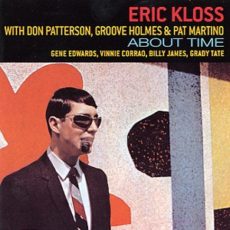
Eric Kloss was born on April 3, 1949 in Greenville, Pennsylvania near Pittsburgh. Blind from birth he attended the Western Pennsylvania School for the Blind, which was run by his father. At 10 he started learning to play the alto saxophone, and two years later he was playing in nightclubs with professional musicians such as Bobby Negri, Charles Bell, and Sonny Stitt. By the age of 16 he had recorded his debut album, Introducing Eric Kloss on the Prestige label in 1965 with Don Patterson and Pat Martino.
His third album as a leader saw him enlist the talents of musicians over twice his age: Jaki Byard, Richard Davis, and Alan Dawson. He continued recording and performing while a student at Duquesne University and being a fan of Elvis Presley and the Ventures, Kloss was attracted to the growth of jazz fusion in the 1960s and ’70s. He would eventually play with fusion musicians Chick Corea, Dave Holland, and Jack DeJohnette.
Eric also collaborated with Richie Cole and Gil Goldstein, and did sessions with Cedar Walton, Jimmy Owens, Kenny Barron, Booker Ervin, Barry Miles, and Terry Silverlight.
In the 1980s, he taught at Rutgers University, then Duquesne and Carnegie Mellon. He collaborated with his vocalist wife Candee in a group called Quiet Fire. Alto saxophonist Eric Kloss has performed and recorded rarely since the 1980s due to health problems.
Sponsored By
Voices From The Community
#preserving genius
More Posts: saxophone
Daily Dose Of Jazz…
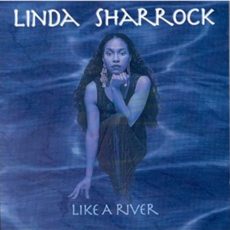
Linda Sharrock was born Linda Chambers on April 2, 1947 in Philadelphia, Pennsylvania and began singing in church choirs as a child. Interested in both folk music and jazz, she studied art while in college and became interested in avant-garde music.
She performed with Pharoah Sanders in the mid-1960s and late in 1966 she married Sonny Sharrock and professionally began using the spelling Lynda. She worked with him and Sanders into the early 1970s, as well as with Herbie Mann.
One of her best-known performances is on the 1969 Sonny Sharrock album Black Woman, released on Vortex Records. She toured Istanbul, Turkey in 1973 and recorded with Joe Bonner in 1974. After her divorce in 1978 she returned to using Linda, though she kept his surname.
A move to Vienna, Austria saw Sharrock working with Franz Koglmann, Eric Watson, and Wolfgang Puschnig well into the 1990s. She worked with ensembles such as the Pat Brothers, Red Sun, and AM4 in the 1980s, and with Harry Pepl in 1992.
Suffering a stroke in 2009 which left her partially disabled and aphasic, she briefly withdrew from the scene before returning in 2012. Since then the avant-garde and free jazz vocalist Linda Sharrock has appeared and recorded in France, Austria, the United Kingdom, the Netherlands, Slovenia, with various ensembles under the Linda Sharrock Network label.
Sponsored By

www.whatissuitetabu.com
#preserving genius
More Posts: vocal
Daily Dose Of Jazz…
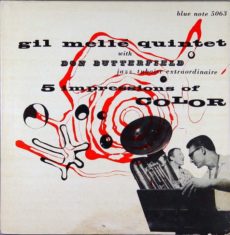
Don Butterfield was born on April 1, 1923 in Centralia, Washington and though he wanted to play trumpet in high school, the band director assigned him to tuba instead. After serving in the U.S. Military from 1942-46 he went on to study the instrument at the Juilliard School.
Butterfield started his professional career in the late 1940s playing for the CBS and NBC radio networks. He played in orchestras, including the American Symphony and on albums by Jackie Gleason until he became a full time member at the Radio City Music Hall.
By the 1950s, Don had switched to jazz, backing such artists as Dizzy Gillespie, Frank Sinatra, Charles Mingus, Rahsaan Roland Kirk, Jimmy Smith, and Moondog. He fronted his own sextet for a 1955 album on Atlantic Records and played the 1958 Newport Jazz Festival.
The mid 1960s saw him taking a temporary, nearly unpaid, position conducting an amateur group of musicians known as the Gloria Concert Band, located in upstate New Jersey. In the Seventies he worked as a session musician playing on recordings for a variety of artists, and on television and film soundtracks, including The Godfather Part II.
As a sideman he recorded with Cannonball Adderley, Nat Adderley, David Amram, Bob Brookmeyer, Kenny Burrell, Donald Byrd, Teddy Charles, Jimmy Cleveland, Bill Evans, Art Farmer, Maynard Ferguson, Dizzy Gillespie, Jimmy Heath, Roland Kirk, John Lewis, Arif Mardin, Gil Mellé, Charles Mingus, Modern Jazz Quartet, James Moody, Wes Montgomery, Lee Morgan, Oliver Nelson, Oscar Peterson, Sonny Rollins, Lalo Schifrin, Jimmy Smith, Billy Taylor, Clark Terry, The Thad Jones / Mel Lewis Orchestra and Stanley Turrentine
Suffering a stroke in 2005 left him unable to no longer play the tuba and on November 27, 2006 tubist Don Butterfield passed away in Clifton, New Jersey from a stroke-related illness.
Sponsored By

Bronze Lens
#preserving genius
More Posts: tuba