

Daily Dose Of Jazz…
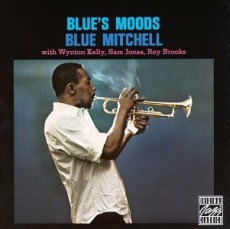
Blue Mitchell was born Richard Allen Mitchell on March 13, 1930 and was raised in Miami, Florida. He didn’t begin playing trumpet until high school, where he received his nickname “Blue”. In the years following he played in the rhythm and blues bands of Paul Williams, Earl Bostic and Chuck Willis but upon returning to Miami caught the ear of Cannonball Adderley, with whom he recorded in 1958 for Riverside.
He joined the Horace Silver Quintet playing alongside Junior Cook, Gene Taylor and Roy Brooks until 1964 and then formed his own band replacing Silver with Chick Corea an ailing Brooks with Al Foster. By 1969 Mitchell disbanded the group and joined Ray Charles, touring till ’71.
This stint was followed by Jazz Blues Fusion with John Mayall and throughout the seventies he recorded and worked as a session player, performed with Louis Bellson, Bill Holman, Lou Donaldson, Grant Green, Philly Joe Jones, Jackie McLean, Dexter Gordon, Hank Mobley and a host of other major players.
On May 21, 1979 the multi-faceted trumpeter Blue Mitchell, who delivered a light and swinging tone and known for his jazz, rhythm and blues, passed away from complications of cancer at age 49 in Los Angeles, California.

More Posts: trumpet
Daily Dose Of Jazz…
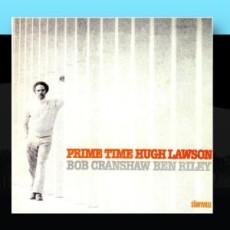
Hugh Lawson was born on March 12, 1935 in Detroit, Michigan. Inspired by Bud Powell, Hampton Hawes and Bill Evans he gained recognition for his more than ten year association with Yusef Lateef during the late ‘50s. During the Sixties he would record with Harry “Sweets” Edison, Roy Brooks and again with Lateef on several sessions.
During the Lawson performed with “The Piano Choir”, a group of several pianists including Stanley Cowell, and Harold Mabern. He went on to tour with Charles Mingus, record with Charlie Rouse, George Adams and as a leader, recording Prime Time, Colour, Jazzcraft Studio recording 1977-78, Beat-EP and Constellations.
Pianist Hugh Lawson was diagnosed with colon cancer and succumbed one day before his 62nd birthday on March 11, 1997 in White Plains, New York.
More Posts: piano
Daily Dose Of Jazz…
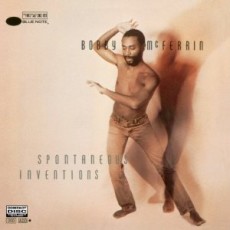
Robert “Bobby” McFerrin, Jr. was born March 11, 1950 in Manhattan, New York to the late Metropolitan Opera baritone Robert McFerrin and Broadway singer Sara Cooper. He spent his childhood surrounded by jazz, blues, R&B, classical, pop and world music, playing in jazz and cabaret bands until the age of twenty-seven.
Developing a vocal technique that switches rapidly and fluidly between normal and falsetto registers to create polyphonic effects, McFerrin performs both the main melody and the accompanying parts of songs. His use of percussive effects with his voice and tapping on his chest compliments his ability to overtone singing.
In 1984 McFerrin released his first solo album The Voice without accompaniment or overdubbing but he came to worldwide prominence with his 1988 hit “Don’t Worry, Be Happy” that garnered him two Grammys for Song and Record of the Year.
The ten-time Grammy winning vocalist and conductor has collaborated with Chick Corea, Herbie Hancock, Joe Zawinul, Tony Williams and Yo-Yo Ma. In addition he has lent his voice to the Cosby Show, to film and the 1989 Oscar winning documentary Common Threads: Stories from the Quilt in which his ten-person Voicestra was featured.
He is the creative chair of the Saint Paul Chamber Orchestra and has been a guest conductor for symphonies and philharmonics in San Francisco, New York, Chicago, Cleveland, Philadelphia, Los Angeles, Vienna and London. He has performed with comedian Robin Williams, consorted with the Muppets, interpreted Beatles songs and demonstrated with audience participation the power of pentatonic scale that became a viral Internet phenomenon.
Bobby McFerrin defies convention and categorization as he draws from all genres to showcase his matchless improvisational skill with an ability to create new vocabularies on the fly as he continues to explore and discover new territory in music.

More Posts: vocal
Daily Dose Of Jazz…
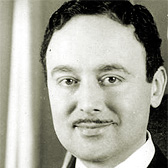
Peter DeRose was born on March 10, 1900 in New York City and as a boy exhibited a gift for music. His older sister taught him to play piano but composing was his true love and by 18 had published his first song. After high school he worked as a music store stock clerk but his successful 1920 composition “When You’re Gone, I Won’t Forget” led him to a job with Italian music publisher G. Ricordi & Company.
In 1923 he met his soon to be wife May Singhi Breen and the duet of piano and ukulele became popular entertainment on NBC’s musical radio show “Sweethearts of the Air” which ran for sixteen years. The show also offered a spotlight for DeRose to introduce many of his compositions.
Collaborating with lyricists Charles Tobias, Al Stillman, Carl Sigman and Billy Hill some of his best known works were “Somebody Loves Me”, Wagon Wheels, Rain, Lamp Is Low, On A Little Street In Singapore and Deep Purple. His songs have been performed by the likes of Bing Crosby, Paul Robeson, Ella Fitzgerald, Frank Sinatra, Johnny Mathis, Sarah Vaughan and Duke Ellington among others.
He wrote religious sheet music; composed for the 1941 Ice Capades show and ventured into Hollywood scoring music for several motion pictures. In 1970 he was inducted into the Songwriters Hall Of Fame.
The Hall of Fame composer of jazz and pop during the Tin Pan Alley era, composer Peter DeRose passed away on April 23, 1953 in his hometown of New York City.
More Posts: composer
From Broadway To 52nd Street
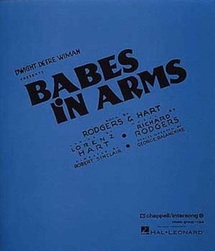
Babes In Arms opened at the Shubert Theatre on April 14, 1937 and ran for two hundred and eighty-nine performances. The musical starred Mitzi Green (Billie Smith), Ray Heatherton (Valentine “Val” LaMar), Alfred Drake and the Nicholas Brothers.
The music composed by Richard Rodgers and the lyrics were provided by Lorenz Hart and from their score arose five songs that are jazz standards – I Wish I Were In Love Again, Johnny One Note, The Lady Is A Tramp, and Where Or When.
The musicals most famous and recorded composition, My Funny Valentine, in which Billie sings to Val first poking fun at some of Valentine’s characteristics but ultimately affirming that he makes her smile and that she doesn’t want him to change.
The Story: With a threat of being assigned to a work farm, the children of traveling vaudevillians band together to mount a musical revue. The show wins critical acclaim but loses money. So the children are sent to the farm. They are rescued when a French aviator on a transatlantic flight, makes an emergency landing on the farm, coming to their aid.
Jazz History: In the 1930s swing jazz emerged as a dominant form in American music, in which some virtuoso soloists became as famous as the bandleaders. Key figures in developing the “big” jazz band included bandleaders and arrangers Count Basie, Cab Calloway, Jimmy and Tommy Dorsey, Duke Ellington, Benny Goodman, Fletcher Henderson, Earl Hines, Glenn Miller and Artie Shaw.
Ellington and his band members composed numerous swing era hits that have become standards: “It Don’t Mean A Thing (If It Ain’t Got That Swing), Sophisticated Lady, Caravan were among them. Also during this period trumpeter, bandleader and singer Louis Armstrong was a much-imitated innovator of early jazz.
More Posts: broadway