

Requisites
The Trio ~ The Oscar Peterson Trio | By Eddie Carter
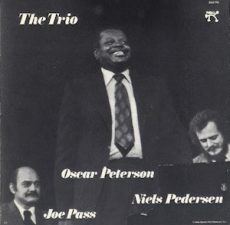
This morning’s record from the library is a live album featuring three jazz giants. The Trio (Pablo Records 2310 701) is aptly named because it captures Oscar Peterson on piano, Joe Pass on guitar, and Niels-Henning Ørsted Pedersen on bass in performance during three nights at the Chicago jazz club, London House. What makes this album unique is the exceptional chemistry between each musician. Oscar Peterson’s virtuosic piano playing, Joe Pass’s innovative guitar techniques, and Niels-Henning Ørsted Pedersen’s melodic bass lines all shine through in this album. My copy is the 1973 U.S. Stereo release.
Side One starts with the first of two tunes by Oscar Peterson. Blues Etude begins at a brisk clip, with Joe and Niels-Henning firing on all cylinders before Oscar joins them for the melody. Oscar reveals his broad range in the song’s only solo, enhanced by Joe and Niels-Henning’s accompaniment. Chicago Blues is a delicious dish of soul food beginning with a lengthy piano introduction ahead of the trio’s slow-paced melody. Oscar opens with a tasty invitation for everyone to come to the table. Joe takes charge with a delicious second course next. Oscar adds another scrumptious dish to the meal, and then Niels-Henning provides the final course with a succulent solo preceding a luscious ending.
Side Two opens with Easy Listening Blues by Nadine Robinson. The trio gets things started with a polite melody. Oscar begins the song’s only solo with a warm caress of the keys, creating a beautiful musical landscape. Meanwhile, Joe and Niels-Henning tail him closely until the theme’s restatement and conclusion. Come Sunday is a beautiful jazz standard by Duke Ellington that becomes the sole showcase of Joe Pass. The guitarist approaches the theme and song’s only solo with a simple directness, resulting in a wonderful expression of incredible beauty culminating with a tender ending and appreciative applause from the audience.
Secret Love by Sammy Fain and Paul Francis Webster is a lively tune that will have you tapping your toes from the trio’s opening ensemble. Oscar is up first with a happy groove that makes a lasting impression on the listener. Joe steps up next and gives a splendid statement; then Oscar adds a few final comments ahead of the theme’s reprise and the audience’s approval. Norman Granz produced The Trio, and it’s unknown who supervised the live recording. However, the album’s sound quality is excellent with a soundstage that transports the listener to the London House audience as the trio is performing.
If you’re discovering the music of Oscar Peterson and are in the mood for a live album where you become part of the live audience at the London House. I invite you to check out The Trio by The Oscar Peterson Trio the next time you visit your favorite record store. It’s a fantastic album that captures three of the most renowned musicians at the top of their game. The Trio is a title highly recommended for a spot in your library, as it not only showcases the individual brilliance of each musician but also their exceptional chemistry, making it a must-have for any jazz enthusiast!
~ Come Sunday – Source: JazzStandards.com
~ Secret Love – Source: Wikipedia.org
© 2024 by Edward Thomas Carter

More Posts: bass,choice,classic,collectible,collector,guitar,history,instrumental,jazz,music,piano
Requisites
Pianism ~ The Michel Petrucciani Trio | By Eddie Carter
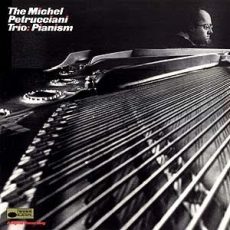
This morning’s record from the library is an overlooked gem by French pianist Michel Petrucciani. Pianism (Blue Note BT-85124) is his twelfth release as a leader, and it marks his debut with the prestigious label. Recorded just days before his twenty-third birthday, the album captures the trio’s energy they exhibited during a six-week, thirty-two concert tour from Munich to Martinique. Michel Petrucciani, on the Steinway grand piano, is joined by bandmates Palle Danielsson on bass and Eliot Zigmund on drums. Petrucciani composed four of the album’s tunes, and my copy is the 1986 U.S. Stereo release.
Side One of Pianism opens with The Prayer, a poignant tune that chronicles Michel’s and his sweetheart Eugenia’s transition from a lively house with friends to a single home owned by Eliot Zigmund that they lovingly maintained. The track commences with a mesmerizing solo introduction that seamlessly evolves into the trio’s comforting theme. Michel crafts a tapestry of hauntingly sensitive and lyrical notes. Palle follows with a delicately tender interpretation before they reunite to conclude the song softly. Our Tune, a composition that holds a special place in Michel’s heart, picks up the tempo for the threesome’s upbeat melody. He reveals his love and affection for Eugenia in the first solo. Palle takes over for an assertive interpretation. Eliot shares the finale with the pianist until the agile reprise dissolves.
Face’s Face is dedicated to the couple’s pure-blooded Afghan hound. The pianist’s introduction is playful, leading to the trio’s aggressive theme. Michel sets the tone with a brisk performance. Palle fuels the second reading with a dazzling display; then, Michel and Eliot exchange riffs preceding the theme’s restatement and close. The first of two standards, Night and Day by Cole Porter, gets Side Two underway with a breathtaking introduction by Michel that grows into the ensemble’s lively melody. Michel takes off like a rocket shooting skyward on the opening statement. Palle keeps things moving in the second presentation. Eliot gives his drums a vigorous workout before the spotlight returns to Michel for the climax.
Here’s That Rainy Day by Jimmy Van Heusen and Johnny Burke opens with a gorgeous introduction by Michel. Palle and Eliot join him for a relaxed, easy-going theme. Michel starts the proceedings with a beautifully tender interpretation. Palle comes in next for a very pretty performance while Eliot cushions the gentle groove for Michel’s return to take the song out softly. The album’s final track is a catchy tune titled Regina. It’s named for the Brazilian singer, Elis Regina and the trio’s introduction sets the scene for an infectious, danceable melody. Michel opens the solos with a sincerely beautiful performance. Palle feeds off his energy with a compelling reading that flows to the pianist’s return for a few last thoughts preceding the theme’s restatement and fade out.
Mike Berniker produced Pianism, and Mike Moran was the recording engineer of this digital release. The album’s sound quality is outstanding, with a stunning soundstage that really shines on a quality audio system with excellent fidelity. The record is also quiet until the music begins. Despite suffering from a genetic spinal disease that caused brittle bones and resulted in his inability to grow tall, Michel Petrucciani was one of the most accomplished pianists in jazz. He performed live over one hundred times twice in two years despite being in constant pain, a testament to his passion and dedication to his craft. In addition to recording twenty-five albums as a leader, Petrucciani also recorded with Steve Grossman, Charles Lloyd, Joe Lovano, and The Manhattan Project.
He was interviewed regularly and appeared on television quite a few times. Michel died from a pulmonary infection on January 6, 1999, shortly after his thirty-sixth birthday. But his music continues to inspire and captivate jazz fans and is an absolute joy to listen to. If you’re in the mood for a musical journey, I wholeheartedly recommend exploring Pianism by The Michel Petrucciani Trio on your next record shopping trip. It’s not just a terrific addition to your jazz library but also a perfect gateway to his discography that can be enjoyed endlessly!
~ Here’s That Rainy Day, Night and Day – Source: JazzStandards.com
© 2024 by Edward Thomas Carter
More Posts: choice,classic,collectible,collector,history,instrumental,jazz,music,piano
Requisites
Seven Steps To Heaven ~ Miles Davis | By Eddie Carter
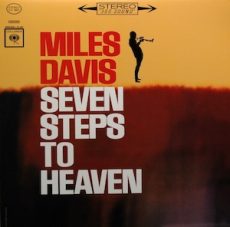
This morning’s album from the library is a hidden gem in Miles Davis’s extensive discography. In 1962, his quintet was undergoing a significant transition. Hank Mobley departed to pursue a solo career, and the musical trio of Kelly, Chambers, and Cobb would soon become one of the most celebrated in jazz. Seven Steps To Heaven (Columbia CL 2051/CS 8851) is a product of two sessions by the trumpeter at Columbia’s New York and Los Angeles studios. His supporting cast includes George Coleman (tracks: A2, B1, B3) on tenor sax, Victor Feldman (A1, A3, B2), Herbie Hancock (A2, B1, B3) on piano, Ron Carter on bass, Frank Butler (A1, A3, B2), and Anthony Williams (A2, B1, B3) on drums. My copy is the original 1963 U.S. Stereo release.
Side One starts with Basin Street Blues by Spencer Williams. The first of three quartet performances opens with the foursome expressing the song’s softer emotions in the melody, featuring Miles using a mute. He sustains the gentle mood in the first solo before picking up the pace for a delightful conclusion. Victor gets into something good in a delightful reading ahead of the quartet, easing back into the theme. Seven Steps To Heaven by Miles Davis and Victor Feldman is off to the races from the rhythm section’s introduction to the quintet’s quick melody. Miles kicks off the solos, wailing, and then George swings vigorously into the second statement. Herbie takes an exhilarating turn next, preceding the reprise and close.
I Fall In Love Too Easily by Jule Styne and Sammy Cahn first appeared in the 1945 musical comedy Anchors Aweigh. Miles is back on the muted trumpet for the quartet’s tenderness and warmth during the melody. The leader’s opening statement is reflective yet quite beautiful. Victor expresses great care and thoughtfulness in the second solo until Miles returns to deliver a gorgeous climax. So Near, So Far by Tony Crombie and Benny Green kicks off the second side with the quintet’s medium theme. Miles gets things started on the open horn. George picks up the baton and really shines in the following presentation. Herbie has the final word and delivers a terrific performance into the ensemble regrouping for the closing chorus.
Baby, Won’t You Please Come Home by Charles Warfield and Clarence Williams is a blues song from 1919 that brings Miles back on the muted trumpet. Victor opens with a solo introduction ahead of the quartet’s touching melody. The trumpeter opens with a delicately tender interpretation; then Victor brings the solos to a close into the foursome’s thoughtfully graceful ending. Victor Feldman’s Joshua turns the temperature up one final time. Miles’s fingers snap the quintet to attention for the song’s lively theme. Miles steps up first in the spotlight with an enthusiastic performance. George takes over to deliver long, flowing lines that are equally satisfying. Herbie wraps things up with a festive finale that hits a perfect groove into the quintet’s reprise and completion.
Teo Macero produced Seven Steps To Heaven, although it’s unknown who recorded both sessions. It doesn’t matter, however, because this is a terrific recording with a crisp, detailed soundstage that sparkles. It is the first time George, Herbie, Ron, and Tony have recorded with Miles. George wouldn’t make another studio album with Miles, but appears on three live albums with this group, ‘Four’ & More, Miles Davis In Europe and My Funny Valentine. Hancock, Carter, and Williams formed the nucleus of Miles’s second great quintet and would remain with him for the next five years.
Victor turned down Miles’s invitation to join his quintet because he was a successful West Coast session musician, so he and Frank remained in California. If you’re in the mood for an excellent album of ballads and uptempo tunes and are a fan of Miles Davis from the early sixties, I highly recommend checking out Seven Steps To Heaven. It’s a stellar album that not only gives a glimpse into what was to come from The Second Great Miles Davis Quintet but also stands on its own as a title worthy of any jazz lover’s library. You’ll find it a rewarding addition to your collection, and I’m confident it will bring you hours of musical enjoyment.
~ ‘Four’ & More (Columbia CL 2453/CS 9253), Miles Davis In Europe (Columbia CL 2183/CS 8983), My Funny Valentine (Columbia CL 2306/CS 9106) – Source: Discogs.com ~ Baby, Won’t You Please Come Home, Basin Street Blues, I Fall In Love Too Easily – Source: JazzStandards.com © 2024 by Edward Thomas Carter
More Posts: choice,classic,collectible,collector,history,instrumental,jazz,music,trumpet
Requisites
Cannonball Enroute ~ Julian “Cannonball” Adderley | By Eddie Carter
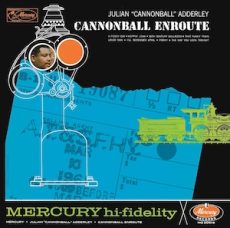
The weather outside was frightful because it was raining hard here in Atlanta. After the sun returned, it became a perfect time to hear the smooth alto sax of Julian “Cannonball” Adderley. He enters this morning’s spotlight with a 1961 album, Cannonball Enroute (Mercury Records MG 20616), backed by his quintet of Nat Adderley on cornet, Junior Mance on piano, Sam Jones on bass, and Jimmy Cobb on drums. My copy is the original U.S. Mono release. A Foggy Day by George and Ira Gershwin opens the album. The quintet starts at a medium beat, setting the stage for Cannonball’s lead solo. Nat picks up the pace in a muted reading until his brother returns to lead the ensemble out.
Hoppin’ John by Nat Adderley takes off with Junior’s speedy introduction ahead of the ensemble’s quick melody. Cannonball ignites the opening solo with a furious charge. Nat responds with plenty to say next. Junior follows with a rapid reading, and Jimmy shares the finale with the front line before the quintet makes a quick exit. 18th Century Ballroom by Nat Adderley and Ray Bryant begins with the ensemble’s pretty melody. Nat opens with a solo that’s quite compelling. Cannonball follows with a superb, articulate statement, then Junior gets the last word in an excellent reading leading back to the closing chorus and finale.
The group takes a trip aboard That Funky Train by Nat Adderley next. Sam and Jimmy get the train rolling with their introduction to the group’s theme. Sam has the first solo and walks with conviction. Junior is next with a very down-home presentation. Nat brings up the rear with a muted finale ahead of the reprise, and the rhythm section slowly dissolves into nothingness. Lover Man (Oh, Where Can You Be) by Jimmy Davis, Roger Ramirez and Jimmy Sherman starts Side Two with a solo showcase for Cannonball. The ensemble begins the introduction before the altoist steps in to deliver a tender melody and the song’s only statement until the group wraps it up.
I’ll Remember April by Don Raye, Gene De Paul, and Pat Johnson begins briskly with Jimmy’s introduction ahead of the quintet’s theme. Cannonball gets things going with a swift opening statement. Nat follows with a heated reading; then Junior takes over for a sparkling solo preceding the group’s return for the close. Porky by Cannonball and Nat Adderley is a fun tune that begins with the front line’s collective melody in a medium setting. Nat swings comfortably into the first interpretation; then Sam takes a relaxing turn in the following reading. Cannonball completes the solos with an attractive piece before the closing chorus ends with a Dixieland flavor.
The Way You Look Tonight by Dorothy Kern and Jerome Kern starts with Junior’s introduction to the quintet’s speedy melody. Cannonball surges into the lead solo like a whirlwind, and then Nat makes a blistering statement. Junior steps up next with an accelerated performance, and Jimmy engages in a brief exchange with both horns into the theme’s restatement and climax. It’s unknown who produced the session or who the recording engineer was, but the album’s sound quality is excellent with a clear soundstage.
Cannonball Enroute was Adderley’s fifth Mercury release and his third with this group. The quintet worked well as a cohesive unit but lasted only two years. He would return in 1959 with a new quintet after a brief time with Miles Davis that would become his most successful. If you’re a new or seasoned fan of Julian “Cannonball” Adderley and are in the mood for a wonderful hard bop album, I offer for your consideration, Cannonball Enroute on your next record shopping trip. It’s a great, if overlooked, album in his large discography that’s worth every penny for a spot in your library!
~ Cannonball’s Sharpshooters (Mercury Records MG 20531/SR 60208), Sophisticated Swing (EmArcy MG 36110) – Source: Discogs.com
~ A Foggy Day, I’ll Remember April, Lover Man (Oh, Where Can You Be), The Way You Look Tonight – Source: JazzStandards.com
© 2024 by Edward Thomas Carter
More Posts: choice,classic,collectible,collector,history,instrumental,jazz,music,saxophone
Requisites
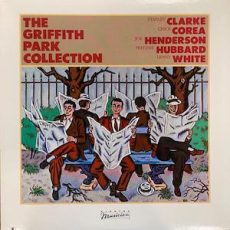
The Griffith Park Collection ~ Stanley Clarke, Chick Corea, Joe Henderson, Freddie Hubbard, Lenny White | By Eddie Carter
This morning’s record from the library unveils a unique jazz collaboration. The Griffith Park Collection (Elektra Musician E1-60025) is the second of two studio albums recorded over four days with an all-star ensemble: Freddie Hubbard on flugelhorn (tracks: A3, B3) and trumpet (A1, A2, B1), Joe Henderson on tenor sax (A1 to A3, B1, B3), Chick Corea on piano, Stanley Clarke on upright bass, and Lenny White on drums. Their first record was Echoes of An Era, an album of jazz standards with Chaka Khan. This was a rare reunion for Corea, Clarke, and White, who had not played together since they were members of Return to Forever. My copy is the 1982 U.S. Stereo release.
The opener is L’s Bop by Lenny White. The quintet’s lively theme takes off at a brisk pace, leading to Joe’s swinging opening solo. Freddie maintains the vigorous intensity in the second reading; then Chick skillfully navigates the third statement into a short exchange with Lenny until the theme’s reprise and fade out. The pace slows down slightly for Why Wait by Stanley Clarke, a medium-tempo blues that opens with the ensemble’s theme. Joe gets this grooving affair going in the first solo. Freddie answers him with an exceptional performance; then Chick provides the exclamation point preceding the group’s return for the closing chorus and exit.
October Ballade by Chick Corea begins with the pianist’s soothing introduction ahead of Freddie’s tender melody. Joe has the first solo and builds each chorus gently with deep emotion until Chick takes over for a brief, lovely interpretation. The quintet wraps up things with a poignantly touching reprise and finale. Side Two gets underway with Happy Times by Freddie Hubbard, a cheerful tune that the group takes to heart in the theme. Joe greets the opening statement joyfully, and then Freddie comes in for a bright and bubbly solo. Chick adds to the festive atmosphere in the second interpretation. Lenny delivers a finale that is quite enjoyable before the close.
Remember, by Steve Swallow is a beautiful waltz that opens with the trio’s thoughtfully polite introduction and theme. Chick carefully cultivates the lead solo with delicate notes. Stanley’s reply is an affectionately warm interpretation as Lenny’s drums softly compliment him until the ensemble’s theme restatement. Guernica by Lenny White is a musical portrait of Pablo Picasso’s Spanish Civil War painting. It is a haunting song and the album’s most adventurous tune with a melancholy theme. Joe begins the opening solo with an airy, nostalgic tone. Freddie emerges next with a breathtaking reading; then Chick delivers an enthusiastic statement preceding the group’s return for the climax.
Lenny White produced The Griffith Park Collection and Bernie Kirsh was the recording engineer. The album’s sound quality is good, with a softer soundstage in the highs, midrange, and bass. At just under forty minutes, it is a hidden gem that flows with a beat and does not disappoint. If you are in the mood for an excellent album with remarkable chemistry and exceptional performances. In that case, I invite you to check out The Griffith Park Collection by Stanley Clarke, Chick Corea, Joe Henderson, Freddie Hubbard, and Lenny White on your next record shopping trip. It is a wonderful album that I highly recommend for your library, and I am sure it will reward your purchase for years to come!
~ Echoes of An Era (Elektra E1-60021) – Source: Discogs.com © 2024 by Edward Thomas Carter
More Posts: bass,choice,classic,collectible,collector,drums,history,instrumental,jazz,music,piano,saxophone,trumpet