


Requisites
The Lost Melody ~ Joe Bonner Quartet | By Eddie Carter
The Joe Bonner Quartet begins this morning’s discussion with their 1987 release, The Lost Melody (SteepleChase Records SCS-1227). It was the pianist’s sixth album for Nils Winther’s label and ninth as a leader. Joe was born in Rocky Mount, North Carolina and attended Virginia State College. His style was Hard-Bop and Modal, and he learned from the musicians he worked with. Bonner’s influences include Art Tatum and McCoy Tyner, and his resume includes playing with several jazz greats. On this date, Bob Rockwell on tenor sax, Jesper Lundgaard on bass, and Jukkis Uotila on drums complete the ensemble. My copy is the original European Stereo album.
You and The Night and The Music, by Arthur Schwartz and Howard Dietz, kicks off Side One at a breakneck pace, with Bob unleashing a jolt of energy in the melody and first solo. Joe maintains the fierce intensity in the following performance; next, Jukkis closes with a short workout into the theme’s brisk ending. Easy Living by Ralph Rainger and Leo Robin begins with Bonner’s gentle introduction, segueing into the group’s lovely theme. Bob opens with an exceptionally beautiful interpretation. Joe continues to cast a spell over the listener in the second solo. Bob returns to add a few more thoughts ahead of a gorgeous climax.
Vibeke, the first of three tunes by Joe Bonner, brings the tempo upward for the ensemble’s medium theme. Rockwell and Bonner effectively demonstrate their excellent playing in the first two statements. Things take an adventurous turn when the saxophonist becomes more exploratory in a second solo before the theme’s restatement. Side Two opens with the title tune. The Lost Melody is a pretty ballad by the pianist that he introduces softly. Bob enriches the opening chorus and song’s opening solo with sensitivity and warmth; Joe comes in next and gets to the song’s heart with an elegantly tender performance leading to the finale.
The Song Is You by Jerome Kern and Oscar Hammerstein II comes from their 1932 musical Music In The Air. The quartet flies out of the gate with a speedy melody. Bob blows blistering notes in the first reading; then Joe is off to the races next. Bob reappears for a rapid exchange with Jukkis, preceding the climax. The album wraps up with Bonner’s Manuella, with the foursome taking it easy on the melody. The leader glides comfortably into the opening statement. Rockwell follows with a bluesy tone in the second reading. Lundgaard keeps the groove flowing in his only interpretation until the group slowly dissolves into nothingness.
Nils Winther produced The Lost Melody, and Flemming Rasmussen was the man behind the dials of this digital recording. The album’s sound quality is excellent, with a wide soundstage and excellent dynamics. It’s also a superb pressing that’s drop-dead quiet. I wasn’t aware of Joe Bonner until this album, but I’m delighted I’ve discovered him and will look for his other releases. If you’re a jazz piano fan like me and are in the mood for Hard-Bop, I invite you to seek out The Lost Melody by The Joe Bonner Quartet on your next record hunt. It’s an enjoyable way to begin your journey into his music and a terrific album that should not be missed for a spot in your library!
~ Easy Living, The Song Is You, You and The Night and The Music – Source: JazzStandards.com ~ Joe Bonner – Source: Wikipedia.org © 2023 by Edward Thomas Carter

More Posts: choice,classic,collectible,collector,history,instrumental,jazz,music,piano
Requisites
Prancin’ ~ Louis Smith Quintet | By Eddie Carter
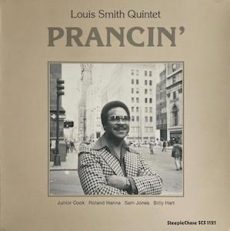
The Louis Smith Quintet provides this morning’s subject with their 1979 album, Prancin’ (SteepleChase Records SCS 1121). It was Smith’s second release for the label and his fourth as a leader. This session also marks a reunion with Junior Cook, who he played with briefly in The Horace Silver Quintet twenty-one years earlier. Their only recorded appearance together is on Blue Lights, Volumes 1 and 2 by Kenny Burrell. Here, Louis Smith is featured on flugelhorn (tracks: A2, B2) and trumpet (A1, A3, B1, B3), alongside Junior Cook on tenor sax, Roland Hanna on piano, Sam Jones on bass and Billy Hart on drums. My copy is the original Danish Stereo album.
One For Nils, Smith’s first of five originals, is a tune written for producer and label founder Nils Winther. The quintet sets the beat in its opening chorus. Louis gets right to the point first; then Junior comes in with a smooth, relaxed reading. Roland feeds the finale with fresh ideas ahead of the theme’s reprise and exit. Chanson De Louise is Smith’s beautiful tribute to his wife, Harriet Louise. Hanna introduces this ballad softly, leading to a delicately tender theme by Smith and Cook. The leader’s opening solo is affectionate and touching; next, Hanna provides serene beauty to a short statement into the ensemble’s gentle ending.
Ryan’s Groove is dedicated to a friend and fellow teaching colleague and takes off from the quintet’s rousing theme. Junior gets things off to a sizzling start; then Louis slices through the second reading like a hot knife through butter. Roland comes in next, followed by Sam’s brisk bass, leading to the climax. The title tune, Prancin’, starts Side Two with Hanna’s introduction segueing into the group’s lively melody. In the opening solo, Cook immediately gets the listener’s attention; then Smith keeps the temperature up in the following statement. Hanna makes the third solo come alive with a nice, happy feeling. Hart closes with a quick exchange between both horns preceding the finish.
I Can’t Get Started by Vernon Duke and Ira Gershwin is one of the timeless jazz standards. Louis is the only horn, and the rhythm section works in perfect symmetry on the opening chorus. The leader’s flugelhorn brings out the song’s lyrical beauty in a gorgeous interpretation that’s the icing on the cake into a gentle conclusion. Fats is Smith’s tribute to trumpeter Theodore “Fats” Navarro. The album’s closer gets off to a good start with the front line’s introduction and melody. Hanna, Cook, Smith, and Jones give four solos that provide a perfect exclamation point to this enjoyable blowing session.
Nils Winther produced Prancin’, and Elvin Campbell was the recording engineer. The album sounds incredible from start to finish. It has a breathtaking soundstage that brings the musicians to your listening room with exceptional clarity. The record is also a great pressing that’s silent until the music starts. Louis was an equally excellent composer, as the tunes here demonstrate. If you’re in the mood for Hard-Bop and Modal Jazz, I offer Prancin’ by The Louis Smith Quintet for your consideration on your next record shopping trip. It’s a terrific album with tight musicianship that hits it out of the park and is an absolute delight!
~ Blue Lights, Volume 1 (Blue Note BLP 1596/BST 81596), Blue Lights, Volume 2 (Blue Note BLP 1597/BST 81597) – Source: Discogs.com ~ I Can’t Get Started – Source: JazzStandards.com © 2023 by Edward Thomas Carter

More Posts: choice,classic,collectible,collector,flugelhorn,history,instrumental,jazz,music

Requisites
Groovin’ ~ Idrees Sulieman, Per Goldschmidt, Horace Parlan, Mads Vinding, Billy Hart | By Eddie Carter
It happened like this; I’d recently been revisiting several SteepleChase albums in my library. One of those titles led me to this morning’s discussion. Groovin’ (SteepleChase Records SCS 1218) is a 1985 straight-ahead-blowing session. It was the third album Idrees Sulieman recorded for the Danish label and was made five days before his sixty-second birthday. I’ve enjoyed the trumpeter’s playing since hearing him on Tenor and Flute, The Cats, and The Hawk Flies High. Here, he’s working with Per Goldschmidt on baritone sax (tracks: A1, A3, B1, B3) and tenor sax (A2, B2), Horace Parlan on piano, Mads Vinding on bass, and Billy Hart on drums. My copy is the original 1986 Danish Stereo album.
Groovin’ High by Dizzy Gillespie starts the first side with the quintet’s collective melody at a relaxing beat. Idrees gets things going with a delightful solo. Per comes next with an effectively carefree reading. Horace’s following statement is as refreshing as a cool drink on a muggy day. Mads delivers an inspired interpretation next; Billy closes with an interesting exchange with the front line into the ending theme. Tell Me What’s Your Name is a pretty tune by Kathe Laursen that begins with a delicate melody by Sulieman, who Goldschmidt joins as it unfolds. The two horns work together to give warmth and tenderness in the song’s only solo, which draws to a conclusion in a gentle climax.
If I Only Knew, the first of two tunes by Idrees Sulieman, closes Side One. Billy’s brief introduction brings the song to life, segueing into the medium melody. Mads goes to work first, then Idrees shows off his gentle side. Horace states his case with graceful lines next; then Per delivers a warm, friendly and intimate finale leading to the theme’s restatement. Lipstick by Kathe Laursen continues the ensemble’s medium groove with a collective melody. Sulieman sets the stage on the first statement, then Parlan offers an equally significant reading. Sulieman shares a few thoughts with Hart in the finale preceding the closing chorus.
The ensemble takes a stroll to The Center of Copenhagen next. Idrees Sulieman’s second original begins with the group’s theme in unison. Idrees and Per provide the spotlight in an entertaining exchange, then Horace delivers a captivating closer ahead of the quintet’s reprise and exit. Per Goldschmidt’s Happy Ending finishes the album on a lively note with the group’s spirited melody. Sulieman takes off first with a lightning-fast interpretation, followed by Goldschmidt, who’s equally quick in the second reading. Hart has a vigorous conversation with the front line ahead of the reprise and the song’s climax.
Nils Winther produced Groovin’, and Ole Hansen was the recording engineer of this digital recording. The album has an excellent soundstage with exceptionally clear fidelity that brings the musicians to your listening room. The record is also incredibly quiet until the music starts. I happily recommend Groovin’ on your next record hunt if you’re in the mood for jazz to help you unwind after a busy day or week. It’s a hidden treasure with a stellar lineup; Idrees Sulieman, Per Goldschmidt, Horace Parlan, Mads Vinding and Billy Hart. Every tune is a pleasure to hear, and it’s a very enjoyable album I’m sure you’ll be glad to have in your library!
~ Tenor and Flute (Riverside RLP 12-240), The Cats (New Jazz NJLP 8217), The Hawk Flies High (Riverside RLP 12-233) – Source: Discogs.com ~ Groovin’ High – Source: JazzStandards.com ~ © 2023 by Edward Thomas Carter
More Posts: choice,classic,collectible,collector,history,instrumental,jazz,music,trumpet
Requisites
SURF RIDE | ART PEPPER
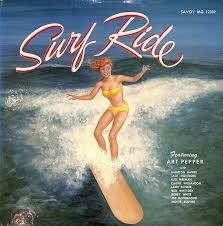
Saxophonist Art Pepper made his debut recording session of Surf Ride in Los Angeles, California on March 4, 1952, when he recorded tracks 4-6 on the album. Subsequent recording sessions took place on March 29, 1953 when he recorded tracks 1-3 and then on August 25, 1954 recording tracks 7-12. The three sessions resulted in the completion of the twelve takes that ultimately made it to the album.
The album was produced by Ozzie Cadena and originally released as a 12 inch LP on the Savoy label in 1956. The liner notes were written by Yasukuni Terashima and the cover offers a clear though slightly too wholesome California motif to be considered for an addition to the cheesy Fifties Batchelor Collection of “girls on covers “, though the redhead in bikini helps.
TRACKLIST | 37:25 All compositions by Art Pepper except where noted.-
- Tickle Toe (Lester Young) – 2:55
- Chili Pepper – 3:00
- Susie the Poodle – 3:14
- Brown Gold – 2:26
- Holiday Flight – 3:1
- Surf Ride – 2:54
- Straight Life – 2:52
- Cinnamon – 3:11
- Thyme Time – 3:30
- The Way You Look Tonight (Dorothy Fields, Jerome Kern) – 3:48
- Nutmeg – 3:15
- Art’s Oregano – 3:08
- Art Pepper – alto saxophone
- Jack Montrose – tenor saxophone (tracks 7-12)
- Russ Freeman (tracks 1-3), Hampton Hawes (tracks 4-6), Claude Williamson (tracks 7-12) – piano
- Monty Budwig (tracks 7-12), Joe Mondragon (tracks 4-6), Bob Whitlock (tracks 1-3) – bass
- Larry Bunker (tracks 4-12), Bobby White (tracks 1-3) – drums
More Posts: choice,classic,collectible,collector,history,instrumental,jazz,music,saxophone
Requisites
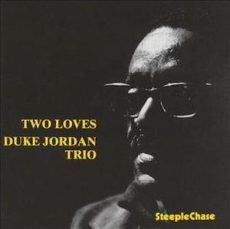
Two Loves is an album led by pianist Duke Jordan recorded on November 25th and December 2, 1973, at Sound Track in Copenhagen, Denmark. My Old Flame, Wait And See, and I’ll Remember April was recorded during the December session. The album was released the following year in 1974 on the Danish label, SteepleChase.
The producer was Nils Winther, the engineer was Ole Hansen, the liner notes were written by Roland Baggenæs and the photography, design, and cover was taken and created by Lissa Winther.
A bebopper of the first generation, this album is evidence of Jordan’s gentle touch, his simply constructed chords, and his preference for medium tempos.
Track List | 40:55 ~ 62:27 with CD Bonus Tracks-
- Subway Inn – 8:11
- My Old Flame (Sam Coslow, Arthur Johnston) – 8:45
- Blue Monk (Thelonious Monk) – 5:14
- Two Loves – 3:05
- Embraceable You (George Gershwin, Ira Gershwin) – 7:15
- Wait And See – 2:44
- I’ll Remember April (Gene de Paul, Patricia Johnston, Don Raye) – 5:34
- Lady Dingbat – 4:08
- Jordu – 5:19
- Duke Jordan – piano
- Mads Vinding – bass
- Ed Thigpen – drums
More Posts: choice,classic,collectible,collector,history,instrumental,jazz,music,piano