

Requisites
Can’t See For Lookin’ ~ Red Garland | By Eddie Carter
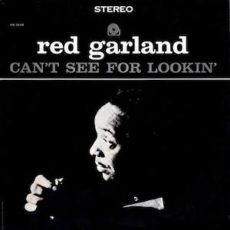
I was in the mood for some nice soothing music to enjoy after dinner a few nights ago when I came across this morning’s choice from the library by Red Garland. Can’t See For Lookin’ (Prestige PRLP 7276/PRST 7276) is his twelfth album and was recorded in 1958 but not released until 1963. William “Red” Garland was born in Dallas, Texas, and began playing the clarinet and alto sax before taking up the piano. He became famous in The Miles Davis Quintet from 1955 to 1958 and was well versed in the styles of Bebop, Hard-Bop, and straight-ahead jazz. After leaving Miles, he formed a trio and has recorded albums with Arnett Cobb, John Coltrane, Curtis Fuller, Jackie McLean, Charlie Parker, Art Pepper, Sonny Rollins, and Phil Woods. Here, he’s joined by Paul Chambers on bass and Art Taylor on drums. My copy used in this report is the 1972 US Stereo reissue (Prestige PRT-7276) by Fantasy Records.
Side One starts with a pretty song from the forties, I Can’t See For Lookin’ by Nadine Robinson and Dock Stanford. The trio begins an enchanting collective melody then Red glides into the first solo with a gracious amount of warmth and elegant simplicity. Paul walks through the second statement with a dreamy, rich tone revealing some intimate thoughts ahead of the trio’s delightful ending. Soon by George and Ira Gershwin began as a show tune from the musical, Strike Up The Band (1927). The ensemble gets things underway with a lively theme that’s passionate, enthusiastic, and extremely confident. Garland gives a stunning account on the opening solo with an energy that tweaks some new insights out of this old warhorse. Chambers makes his mark on the second reading with a showcase of incisively nostalgic ideas, and Taylor becomes a friendly sparring partner to the pianist on the closing statement.
Side Two opens with Blackout, a tune from the pen of Avery Parrish and Sammy Lowe beginning with an easy, caressing style by the ensemble on the melody. Red steps up first, establishing a nice momentum with a gorgeous opening statement. Paul approaches the next interpretation with great sensitivity and delicacy. Red returns to share a polite conversation with Art on the closing reading into a tender exit. Castle Rock by Al Sears brings the trio back to a brisk beat on the melody in unison. Garland leads off the opening statement with a light and nimble performance, then Chambers cooks up a tasty treat of cool jazz on the second solo. Taylor enters the spotlight last with Garland in a brief exchange into the closing chorus and happy ending.
Can’t See For Lookin’ was supervised by Prestige founder Bob Weinstock and Rudy Van Gelder was the man behind the dials. Both men are at the top of their game with a tremendous soundstage and incredible definition of each instrument. The piano has an amazing sound, and the bass and drums are perfectly balanced as if we’re in the studio while the musicians are recording. Red Garland recorded forty-six albums as a leader and was always good regardless of the setting or bandmates he appeared with. His career lasted over forty years and he continued recording until he suffered a heart attack, passing away on April 23, 1984, at age sixty. If you’re a Hard-Bop fan, enjoy Red Garland or jazz piano, I submit for your consideration, Can’t See For Lookin’. It’s thirty-five minutes of great music that you can file under “T” for terrific and perfect to enjoy while relaxing!
~ Soon – Source: Wikipedia.org © 2021 by Edward Thomas Carter

More Posts: <!-- wp:paragraph --> <p><strong>choice,classic,collectible,collector,history,instrumental,jazz,music,piano
Requisites
John Jenkins, Cliff Jordan, Bobby Timmons | By Eddie Carter
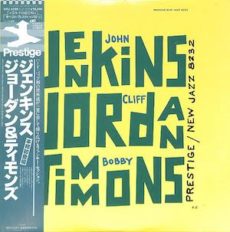
I begin this morning’s discussion with the 1960 collaborative album, Jenkins, Jordan, and Timmons (New Jazz NJLP 8232) by John Jenkins, Clifford Jordan, and Bobby Timmons. Joining them on this date are Wilbur Ware on bass and Dannie Richmond on drums. My copy used in this report is the 1981 Japanese Mono reissue by Victor Musical Industries (New Jazz SMJ-6299). John Jenkins’ approach to Hard-Bop and standards on the alto sax was distinctively tasteful. His solos always showed respect and affection for the tunes he played, and he could bring imaginatively unique lines even to well-worn standards. His other album as a leader is the self-titled release, John Jenkins (1957). Clifford Jordan’s interpretations on the tenor sax were the perfect characterization of his sound, sometimes growling, sometimes purring, but always with a formidable technique and a passionately assertive tone. Here, Jordan is in great form with another horn to joust with.
Pianist Bobby Timmons was one of the most talented yet neglected figures in the annals of Jazz. He composed two songs that are etched in the minds of many Jazz fans, Dat Dere, a mainstay in the early days of The Cannonball Adderley Quintet and Moanin’ that became a huge hit for The Jazz Messengers. Timmons appeared on the landmark album, Art Blakey and The Jazz Messengers (1958). On this date, he approaches each tune with a melodic and rhapsodic touch that’s irresistible. Wilbur Ware was an extraordinary soloist on the bowed bass; he possessed a beautiful sound that could be fat, resonant, and fluid without any loss of body on any of the songs he played. Dannie Richmond is best known for his many albums with Charles Mingus, he’s a very pleasant surprise on this record with an energetic liveliness in his playing. He also recorded with many jazz greats including George Adams, Pepper Adams, Chet Baker, Ted Curson, Booker Ervin, Duke Jordan, Herbie Nichols, Horace Parlan, and Don Pullen.
Clifford Jordan’s Cliff’s Edge starts Side One at midtempo with both saxes flexing their muscles in unison on the opening chorus. Cliff is up first with a very satisfying opening solo at an easy, unhurried pace. John continues the conversation with a pleasant zest on the second performance. Bobby tells his story last with a charming interpretation that comes across effectively anchored by Wilbur and Dannie’s support into the quintet’s ending. Up next is the 1946 jazz standard Tenderly by Walter Gross and Jack Lawrence. Timmons opens the song with a soothing introduction, then Jordan steps up first for a deeply compassionate melody and an opening statement exhibiting sensitive delicacy. Timmons comes in next, gently caressing each note of an exceptionally tasteful interpretation. Ware deftly captures the song’s subtle mood on a gorgeously warm solo, followed by Jenkins who concludes the readings and the song with a beautifully tender interpretation.
The first of two tunes from Jenkins’ pen, Princess begins with a collective mid-tempo groove. John starts the opening solo with an articulate tone dispensing absolute joy. Cliff takes the listener for a comfortable joyride on the next statement. Bobby is consistently inventive on the closing performance preceding the quintet’s exit. Side Two starts with Soft Talk by Julian Priester, an energized swinger from the start of the ensemble’s electrically charged theme. Jenkins speaks first to start this scintillating conversation with an aggressive fierceness. Jordan continues the dialogue, making every note count with high voltage power. Jenkins and Jordan soar to great heights in an invigorating exchange over the next few verses. Timmons adds his voice to the discussion next on a heated reading, then Ware walks briskly on an abbreviated statement. Richmond has the last word with energetic drumming in an exciting conversation between both saxes into the reprise and abrupt climax.
Jenkins’ Blue Jay is a laid-back midtempo blues that begins with an unaccompanied lively introduction by Ware, segueing into the quintet’s collective theme. John starts the soloing with an easy-going opening statement. Clifford responds with a marvelous interpretation. Bobby cruises into the third reading with a strong beat and Wilbur steps last into the spotlight for a concise comment that flows effortlessly to the ensemble’s closing chorus and finale. The remastering of Rudy Van Gelder’s original recording has been superbly recreated by Victor Musical Industries with all five instruments full of body, presence, and a vibrant soundstage. If you enjoy good Hard-Bop and are a fan of John Jenkins, Cliff Jordan, and Bobby Timmons, I offer for your consideration, Jenkins, Jordan, and Timmons. An excellent album that in my opinion, no library should be without!
~ Art Blakey and The Jazz Messengers (Blue Note BLP 4003/BST 84003), John Jenkins (Blue Note BLP 1573), Them Dirty Blues (Riverside RLP 12-322/RLP 1170) – Source: Discogs.com ~ Tenderly – Source: JazzStandards.com © 2021 by Edward Thomas Carter
More Posts: choice,classic,collectible,collector,history,instrumental,jazz,music,piano,saxophone
Requisites
View Post
Impressions ~ Buck Hill Quartet | By Eddie Carter
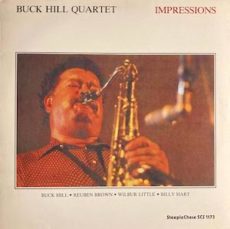
The Buck Hill Quartet steps into the spotlight for this morning’s discussion with the second of two live albums from The North Sea Jazz Festival. Impressions (SteepleChase Records SCS 1173) is a 1983 release that was recorded on July 11 & 12 during the quartet’s 1981 performance. The remainder of their concert appears on Easy To Love (1982). The tenor saxophonist is working again with Reuben Brown on piano, Wilbur Little on bass, and Billy Hart on drums. Buck began his professional career in 1943 while working as a mailman in Washington D.C. He’s collaborated with Charlie Byrd, Miles Davis, Dizzy Gillespie, Shirley Horn, Alan Houser, Max Roach, Shirley Scott, and Sonny Stitt, and was also proficient on the clarinet and soprano sax. My copy used in this report is the 1983 Netherlands Stereo album sharing the Danish catalog number.
Side One begins with the jazz standard, Alone Together by Arthur Schwartz, and Howard Dietz. It was written in 1932 and began life as a show tune in the Broadway musical, Flying Colors. The quartet takes off with a brisk workout on the melody. Buck swings swiftly into the opening statement. Reuben speaks his peace next vigorously. Billy has a brief conversation with both soloists, then generates some heat on the closer into the reprise and exit. Hill makes a few announcements anchored by just the piano, then the group travels to Penn Station, a medium-paced blues by Reuben Brown. The ensemble comes into the station leisurely on the melody. Brown starts the soloing with a comfortable groove. Hill emanates a funky, down-home feeling on the second statement. Little sparkles on the third reading with a thoroughly relaxed performance into piano and tenor sharing an exchange before the closing chorus.
Side Two gets underway with Yesterdays by Jerome Kern and Otto Harbach. The trio makes a brief introduction, then Buck begins the opening chorus at midtempo. He turns the temperature up with a scintillating reading of concentrated heat. Reuben starts the next statement at a slow pace, then proceeds to an aggressive workout. Wilbur wraps up the solos with a concise comment ahead of the ensemble’s climax. John Coltrane’s Impressions ends the set on an uptempo note with the foursome swinging from the opening notes of the high-spirited melody. Buck and Reuben are the featured soloists and Brown energetically prances through the first solo with authority. Hill delivers the final word with an intense interpretation of astonishing voracity and electrically charged passion leading to the quartet’s exit and crowd’s ovation.
Impressions was produced by Nils Winther and Ronald Prent was the recording engineer on this album and its companion, Easy To Love. The sound is stunning throughout the album and the record is quiet until the music starts. Buck Hill was a tremendous talent on the tenor sax that could swing hard in an uptempo setting but could also show his tender side with a gorgeous tone on a ballad or standard. A tribute mural of him playing his sax in his mailman uniform by artist Joe Pagac resides at 1925 14th Street, NW in Washington, D.C. He passed away at age ninety on March 20, 2017. If you’re just discovering the music of Buck Hill and enjoy the tenor sax, I invite you to check out Impressions by The Buck Hill Quartet. It’s an album that’s sure to make you smile and if you’re already a fan should make a welcome addition to your jazz library!
>~ Easy To Love (SteepleChase Records SCS-1160) – Source: Discogs.com
~ Alone Together, Yesterdays – Source: JazzStandards.com
~ Impressions – Source: Wikipedia.org
© 2021 by Edward Thomas Carter
More Posts: choice,classic,collectible,collector,history,instrumental,jazz,music,saxophone

Requisites
Up at Minton’s, Volume 1 ~ Stanley Turrentine | By Eddie Carter
My introduction to tenor saxophonist Stanley Turrentine began in 1963 with two albums by Jimmy Smith, Midnight Special (1961), and Back at The Chicken Shack (1963). Anyone who’s listened to either record knows Turrentine possessed some serious Soul-Jazz chops. He impressed me so much that I wanted to hear more from him. Up At Minton’s, Volume 1 (Blue Note BLP 4069/BST 84069) follows his debut, Look Out (1960), and documents his first live performances at Minton’s Playhouse. Sharing the stage with Turrentine are Horace Parlan on piano, Grant Green on guitar, George Tucker on bass, and Al Harewood on drums. My copy used in this report is the 2011 Analogue Productions 45-rpm two-record Stereo audiophile reissue (AP-84069/BST-84069).
Record One opens with But Not For Me by George, and Ira Gershwin. It first appeared in the musical Girl Crazy, and the quintet’s rendition is exciting from the opening chorus. Stanley is sincere and warm as he begins the first solo but quickly evolves into a rhythmic romp of fire and fury. Grant is equally spirited on the second statement and Horace dispels plenty of energy on a few heated choruses, showing he can swing as hard as his bandmates. Stanley’s Time, an original by the saxophonist starts Side Two at a medium tempo. The rhythm section begins a brief dialogue on the introduction before Turrentine emerges with a relaxing melody. Green is up first with a crisply constructed solo, then the leader explores some interesting avenues on the next reading. Tucker follows with the first of two statements that swing with ease. Parlan provides a remarkable interpretation next, and Stanley adds a brisk footnote on the finale preceding the close.
Record Two begins with a trip to Broadway by Wilbur H. Bird, Teddy McRae, and Henri Woode. The quintet turns the heat up on this swinger with a lively theme. Grant takes the first spot with aggressive fierceness. Stanley steps in next with an enthusiastic performance that receives a well-deserved round of applause from the crowd at its conclusion. Horace makes the piano sizzle next with a hard-hitting attack by his fingers. Stanley and Grant take turns in a vigorous exchange with Al who sparkles like a gem into the ensemble’s ending. The finale is Yesterdays by Jerome Kern and Otto Harbach. The trio starts with a brief introduction, then Stanley’s melody and opening solo are silky smooth. Grant weaves an unforgettable spell of inspiration on the next interpretation and Horace counters with a blissful reading that swings easy. George steps into the spotlight last for a beautifully relaxed performance ahead of Stanley reprising the melody into a calm, serene ending.
Rudy Van Gelder made the original recording, and this reissue was remastered by Kevin Gray and Steve Hoffman of AcousTech Mastering. Both records produce an incredible soundstage with amazing clarity that brings the instruments alive and places the listener in the Minton Playhouse crowd. You not only hear the musicians but the crowd as well and a few glasses tinkling during each song. The music on all four sides is superb and with this lineup, how could it not be? The cover is glossy, but not a gatefold; both records reside in the same opening. The one issue that concerns me is the sleeve doesn’t appear to be sturdy enough to manage the records behind the album cover in outer sleeves to reduce wear to the opening, seams, and spine. If you’re a fan of live jazz and are looking for an album that’s beautifully recorded and engineered, I submit for your consideration, Up at Minton’s, Volume 1 by Stanley Turrentine. It’s a great introduction to his music and a splendid listening experience that not only leaves the crowd satisfied but the listener as well!
~ Back at The Chicken Shack (Blue Note BLP 4117/BST 84117), Look Out (Blue Note BLP 4039/BST 84039), Midnight Special (Blue Note BLP 4078/BST 84078) – Source: Discogs.com ~ But Not For Me, Yesterdays – Source: JazzStandards.com ~ Broadway – Source: Wikipedia.org © 2021 by Edward Thomas Carter
Requisites
Good Gravy ~ Teddy Edwards Quartet | By Eddie Carter
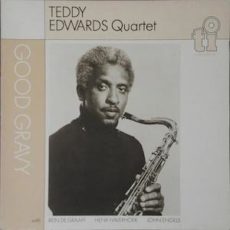
I’ve been a fan of Teddy Edwards for many years, and he’s become one of my favorite tenor saxophonists. This morning’s choice from the library is a recent acquisition taking us to The Bimhuis Concert Hall in Amsterdam for a live performance to enjoy some Good Gravy (Timeless SJP 139) by The Teddy Edwards Quartet. Teddy was born in Jackson, Mississippi, and began playing the alto sax and clarinet at an early age, before taking up the tenor sax. He first played with trombonist Ernie Fields, and his first recording was a 1947 date with Dexter Gordon. Teddy also played and recorded with some of the greatest musicians in jazz, resulting in an extensive discography as a leader and sideman. The supporting cast is a marvelous Dutch trio, Rein De Graaff on piano, Henk Haverhoek on bass, and John Engels on drums. My copy used in this report is the 1984 Netherlands Stereo album.
Lady Be Good aka Oh, Lady Be Good by George and Ira Gershwin is from the Broadway musical of the same name. The trio opens Side One with a pleasant introduction, segueing into a collective bluesy theme that swings soulfully. Teddy takes the first spot at an easy speed then turns the tempo up for some down-home country cooking. Rein heightens the excitement on the second reading with cat-like precision. Teddy makes a few final comments before the group’s closing theme and enthusiastic ovation from the crowd. Oleo by Sonny Rollins begins with a brief dialogue between the tenor sax and piano, then accelerates quickly into the ensemble’s melody. Edwards takes flight first with an aggressive lead solo. De Graaff dispenses an elevated level of energy next, and Engels shares a vigorous exchange with Edwards before having a moment in the spotlight.
Georgia aka Georgia on My Mind is a classic standard by Hoagy Carmichael and Stuart Gorrell. It became the official state song after Ray Charles’ indelible rendition. A brief trio introduction opens the way for Teddy’s delicately gentle melody. He then delivers a beautiful opening solo that’s warm, full-toned, and sensuous. Rein speaks softly and reflectively on the next statement, then Teddy restates the melody with a touch of romantic lyricism into the smartly executed ending. Good Gravy, a mid tempo blues by Edwards was first heard on his 1961 album, and the ensemble starts the opening chorus leisurely. Edwards kicks off the first interpretation cheerfully. De Graaff steps into the second statement with a relaxing reading. Haverhoek makes a profound impression on his first solo ahead of the reprise, introductions of the group, and a few humorous announcements by Edwards.
Good Gravy was produced by Timeless Records founder, Wim Wigt, and recorded by Henk Elzinga. I was extremely impressed with the sound quality of this live recording. It has an exquisite soundstage that’s clear as fine crystal, and this record is silent until the music starts. You’re not just listening to the musicians playing, you’re in the Bimhuis audience watching the quartet’s performance, and they swing on all the cuts. If you’re a fan of Teddy Edwards, I invite you to check out Good Gravy on your next hunt for vinyl treasure. It’s an enjoyable live session that knocks it out of the park and deserves to be better known!
~ Good Gravy (Contemporary Records M 3592/S 7592); The Foremost! (Onyx #201) – Source: Discogs.com >~ Oh, Lady Be Good, Oleo, Georgia on My Mind – Source: JazzStandards.com © 2021 by Edward Thomas Carter
More Posts: choice,classic,collectible,collector,history,instrumental,jazz,music,saxophone