

Daily Dose Of Jazz…
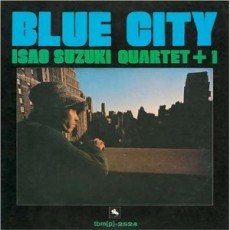
Isao Suzuki: From Tearful Awakening to Jazz Mastery
On January 3, 1933, in the bustling heart of Tokyo, a future jazz legend was born—though Isao Suzuki wouldn’t discover his destiny until years later.
A Moment That Changed Everything
As a college student, Suzuki attended a concert that would alter the course of his life. When he heard the masterful bass lines of Milt Hinton flowing through the venue, something profound stirred within him. Moved to tears by the instrument’s soulful voice, he knew what he had to do. He asked his mother for what seemed like an unusual gift: a double bass.
Fortune smiled on the young musician—his ability to read music became his passport to rapid progress. Within months, he was skilled enough to land his first professional gig at a Tokyo strip club. In 1950s Japan, these venues were unexpected incubators of jazz talent, regularly employing skilled musicians to create the soundtrack for their shows.
Learning from the Americans
Suzuki’s big break came when he joined a group led by Tony Tekiseira, an American G.I. guitarist stationed in Tokyo. Over four transformative years, he absorbed everything he could from the American musicians who passed through, building both his chops and his confidence night after night.
By 1960, Suzuki had become a sought-after player in Tokyo’s jazz scene. He performed with drummer George Kawaguchi’s Big Four (featuring special guest Sadao Watanabe) and joined clarinetist Tony Scott’s band, which eventually evolved into the Hidehiko Matsumoto Quartet. When the group played at the first World Jazz Festival in 1964, Suzuki found himself meeting his heroes: Miles Davis, Wynton Kelly, and most significantly, the legendary bassist Paul Chambers—a connection that deepened his understanding of his instrument.
Crossing the Pacific
The mid-1960s saw Suzuki working with the Sadao Watanabe Quartet before he became bandleader of the house ensemble at Tokyo’s Five Spot. There, he backed or performed alongside visiting luminaries like Oscar Peterson, Horace Silver, Wynton Kelly, and Art Blakey. When Blakey invited him to join the Jazz Messengers in 1970, Suzuki didn’t hesitate—he packed his bass and headed to New York.
That pivotal year in America reads like a jazz musician’s dream: Suzuki worked and recorded with Thelonious Monk, Charles Mingus, Ella Fitzgerald, Bobby Timmons, Jim Hall, Ron Carter, Sun Ra, and countless others. He was living inside the music he’d once cried over as a college student.
Full Circle: A Master Returns Home
When Suzuki returned to Japan, he brought with him a wealth of experience and a mission. He performed and recorded with Brazilian guitar master Baden Powell and continued pushing the boundaries of his art. Over the decades, he evolved into something far greater than “just” a bassist—he became a multi-instrumentalist, composer, arranger, producer, bandleader, and eventually, a revered grand master of jazz.
Perhaps most remarkably, Suzuki never stopped nurturing the next generation. Through his band Oma Sound, he has consistently enlisted young musicians, mentoring them while keeping his own sound vibrantly progressive and contemporary. The college student who once wept at the beauty of a bass solo has spent a lifetime ensuring that jazz in Japan remains alive, innovative, and deeply felt—just as it was on that transformative day when he first heard Milt Hinton play.
Today, Isao Suzuki’s legacy continues to resonate, proving that one moment of musical revelation can echo across decades and continents.
More Posts: bandleader,bass,history,instrumental,jazz,music

Daily Dose Of Jazz…
Chris Potter: A Jazz Journey from Chicago to the World Stage
Born on New Year’s Day 1971 in Chicago, Illinois, Chris Potter discovered his musical calling early in life. Though he spent his formative years in Columbia, South Carolina, his extraordinary talent knew no boundaries. A natural prodigy, young Chris explored multiple instruments—mastering both guitar and piano—before finding his true voice in the saxophone.
By age 13, Potter was already holding his own on professional jazz stages, captivating local audiences with his precocious gifts. His passion for the music led him to New York City, where he honed his craft at two prestigious institutions: the New School and the Manhattan School of Music.
A Distinguished Career
As a bandleader, Potter has released more than a dozen critically acclaimed albums, earning recognition from the most discerning voices in jazz. His work has landed in the top ten lists of Jazziz and Slate magazines, as well as The New York Times—a testament to his artistic vision and technical brilliance.
Equally impressive is his work as a collaborator. Potter has shared stages and recording studios with an extraordinary roster of jazz legends, including Patricia Barber, Kenny Werner, Marian McPartland, Red Rodney, Paul Motian, Adam Rogers, the Mingus Big Band, Ray Brown, Dave Holland, James Moody, and Joanne Brackeen—just to name a few.
Today, Chris Potter continues to enchant audiences worldwide as a saxophonist (both alto and tenor), multi-instrumentalist, and composer, constantly touring, performing, and recording new music that pushes the boundaries of contemporary jazz.
More Posts: bandleader,history,instrumental,jazz,music,saxophone
Daily Dose Of Jazz…
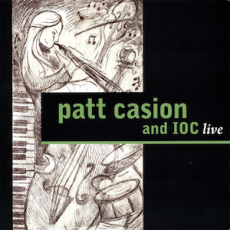
Patt Casion was born Patt Spears on December 31, 1963 in the Monterey Peninsula, California and grew up in Marina where she learned to play music while at church. It was there she started building her musical chops that led to her attending Berklee College of Music in Boston, Massachusetts, where one of her classmates was Lalah Hathaway, daughter of Donny Hathaway.
Opportunity gave way to her playing local gigs and recording two albums and took her to many places around the world, one was as a member of the Church of God Christ International Orchestra based in Memphis, Tennessee.
Soprano saxophonist Patt Casion, who after a two year battle with cancer, died on December 31, 2017 at Community Hospital of the Monterey Peninsula at the age of 55.

More Posts: bandleader,history,instrumental,jazz,music,saxophone
Daily Dose Of Jazz…
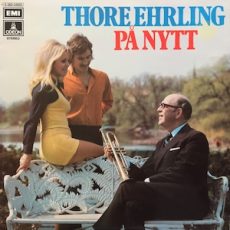
Thore Ehrling was born December 29, 1912 in Stockholm, Sweden and played with the Frank Vernon Ensemble from 1930 to 1934. At the same time he studied at the Royal Swedish Academy of Music.
From 1935 to 1938 he played under Håkan von Eichwald and did arrangement and composition work on the side. He started his own ensemble in 1938, which grew into a big band in the nineteen years it was active. This group played popular music and jazz, recorded frequently, and played often on Swedish radio.
The group featured many sidemen who went on to become prominent on the Swedish jazz scene, such as Uffe Baadh and Carl-Henrik Norin, and accompanied popular Swedish singers such as Inger Berggren and Lily Berglund.
Trumpeter, composer and bandleader Thore Ehrling, who led jazz and popular music ensembles, died in Stockholm, Sweden on October 21, 1994.
More Posts: bandleader,composer,history,instrumental,jazz,music,trumpet

DEE DEE BRIDGEWATER & BILL CHRLAP
Two of the most highly respected figures in the world of Jazz — Dee Dee Bridgewater and Bill Charlap — document their critically acclaimed, sold out live concerts on their first collaborative album, Elemental. Bridgewater and Charlap curate a repetoire that only they can present: exploring the deep understanding of Jazz Tradition alongside impecable phrasing and a once-in-a-generation dynamic range, brining a level of sophistication that is sure to be considered a masterpiece for generations to come.
Cover: $45.76 ~ $61.21
More Posts: adventure,bandleader,club,genius,instrumental,jazz,music,piano,preserving,travel,vocal