

The Quarantined Jazz Voyager
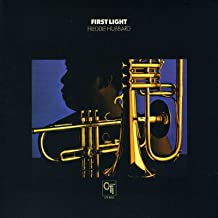
With a surge in Covid cases after Thanksgiving travel, I am doubling down on maintaining my social distancing and wearing my mask when I have to go out, otherwise, I remain in quarantine. From the shelves of my jazz collection, I am placing on the turntable the 1971 recording of First Light by trumpeter Freddie Hubbard, his third release on Creed Taylor’s CTI label.
The string arrangements are by conductor Don Sebesky and features performances by Herbie Hancock, Eric Gale, George Benson, Ron Carter, Jack DeJohnette, Airto Moreira, and Richard Wyands. The album is part of a trilogy including his two previous records at the time, Red Clay and Straight Life. First Light won the 1972 Grammy Award for Best Jazz Performance by a Group.
TRACKS | 42:55- First Light (Hubbard) ~ 11:05
- Uncle Albert/Admiral Halsey (McCartney, McCartney) ~ 8:17
- Moment to Moment (Mancini, Mercer) ~ 5:43
- Yesterday’s Dreams (Martin, Sebesky) ~ 3:55
- Lonely Town [from On the Town] (Bernstein, Comden, Green) ~ 7:00
- Fantasy in D” (Walton) ~ 6:55
- Freddie Hubbard – trumpet, flugelhorn
- Jack DeJohnette – drums
- Ron Carter – bass
- Richard Wyands – piano
- George Benson – guitar
- Airto Moreira – percussion
- Herbie Hancock – Fender Rhodes piano
- Phil Kraus – vibraphone
- Hubert Laws – flute
- Wally Kane – flute, bassoon
- George Marge – flute, clarinet
- Romeo Penque – flute, English horn, oboe, clarinet
- Jane Taylor – bassoon
- Ray Alonge – French horn
- James Buffington – French horn
- Margaret Ross – harp
- David Nadien – violin
- Paul Gershman – violin
- Emanuel Green – violin
- Harold Kohon – violin
- Joe Malin – violin
- Gene Orloff – violin
- Matthew Raimondi – violin
- Tosha Samaroff – violin
- Irving Spice – violin
- Alfred Brown – viola
- Emanuel Vardi – viola
- Charles McCracken – cello
- George Ricci – cello
You all know I will be back flying around the globe just as soon as the world becomes safe again from this pandemic. In the meantime, stay safe and healthy.

More Posts: choice,classic,collectible,collector,history,instrumental,jazz,music,trumpet
Requisites
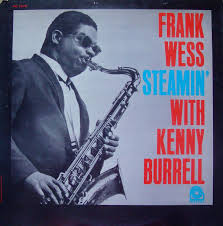
I begin this morning’s discussion with a 1963 reissue of an album originally released in 1957 titled After Hours (Prestige 7118), one of the label’s excellent jam session records. Steamin’ (Prestige PRST 7278) features an all-star group led by Frank Wess on flute, tenor sax, and Kenny Burrell on guitar. Joining them are Thad Jones on trumpet, Mal Waldron on piano, Paul Chambers on bass, and Art Taylor on drums. Waldron composed all four tunes on the album, and my copy used for this report is the 1963 Mono reissue (Prestige PRLP 7278).
Steamin’ begins Side One with a swinging introduction by Art. Both horns present the melody in unison with Thad on the muted trumpet. Frank opens with an aggressive performance, then Kenny takes over for a hard-swinging reading. Thad creates a volcanic eruption on the third interpretation, and Frank takes a second solo, this time on flute and at breakneck speed. Wess and Jones take a few spirited riffs before Walton zips through the next reading. Taylor punctuates the final statement with a stinging bite in a momentary spotlight before the ensemble takes the song out quickly.
Blue Jelly begins at a laid-back pace, gradually ascending to midtempo as the sextet states the opening chorus. Jones solos first, his ideas flowing freely to a slowly unfolding beat. Thad, Kenny, and Frank (on flute) exchange short riffs, then Burrell settles into a comfortable tempo for the second solo. The three instruments repeat, then Wess serves up a stylish dish of blues. Walton follows the next exchange with a very satisfying statement. Chambers speaks easily on the finale with great skill ahead of the close. Count One opens Side Two and the sextet gets right to work with a lightly swinging introduction by Cedar. Thad and Frank wail on the melody and everyone gets solo space except Art who keeps things in check with a driving backbeat. Frank begins the opening statement with skillful dexterity, and Thad soars on the second solo with a riveting presence. Kenny engages the ear delightfully on the next reading, then Cedar continues the bopping beat with an insistent swing. Paul accentuates the final interpretation with two short verses that are flawless.
The album closes with a trip down an Empty Street at a slow, easy tempo opening with a wistful introduction in unison. Jones leads the opening march on the muted trumpet, and the first solo by Burrell is superbly interpreted with a soothing timbre and sensitivity. Wess follows on flute with a thoughtfully pleasant reading that’s one of the most beautiful moments on the album. Jones sounds each note of the next performance tenderly and with the utmost clarity. Walton comes in next with a dreamlike, poignant presentation of sensual beauty, and Chambers wraps up the record with a rather beautiful and deeply moving interpretation before the sextet reassembles for the reprise and coda. Although, Steamin’ is credited to Frank Wess and Kenny Burrell, this album and its original title After Hours should have been released under Mal Waldron’s name in my opinion. His spirit pervades these four tunes with incredible passion and perfect pacing in his playing, complemented by the rhythmic energy and consummate musicianship of his bandmates.
That issue aside, Steamin’ serves as an excellent starting point for those who are just discovering the music of Mal Waldron or the other albums by the group who was also known as The Prestige All-Stars. The album has a brilliant soundstage across the highs, midrange, and low end that places you in the studio alongside the musicians as they’re playing. If you’re a fan of Hard-Bop and enjoy a good jam session, I invite you to audition Steamin’ by Frank Wess with Kenny Burrell or After Hours by The Prestige All-Stars. Either version should make a welcome addition to any fan’s library!
© 2020 by Edward Thomas Carter
More Posts: choice,classic,collectible,collector,flute,history,instrumental,jazz,music,saxophone
Requisites
Inner Urge ~ Joe Henderson | By Eddie Carter
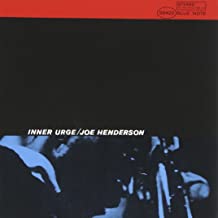
Superb artistry is the name of the game whenever one listens to the music of Joe Henderson. A proficiently skilled bandleader, composer, and tenor saxophonist who made some of his most important jazz contributions as a leader and sideman recording for Blue Note from 1963 to 1968. The subject of this morning’s discussion is his 1965 album, Inner Urge (BLP 4189/BST 84189). Here, he leads an outstanding quartet session with McCoy Tyner on piano, Bob Cranshaw on bass, and Elvin Jones on drums. My copy used in this report is the 2019 Music Matters Jazz SRX Stereo reissue (MMBST-84189).
The album opens with Inner Urge, a swiftly paced composition that cooks from the first notes of the melody. The walloping tones of Cranshaw’s bass start the soloing with an impressive presentation. The leader charges into the next reading enthusiastically. Tyner takes no prisoners as he slices through the third solo vigorously. Jones shows off his musical gifts with a breathless dash, then Henderson adds a few more soulful explorations preceding the song’s climax.
Isotope is a lightly swinging blues by the saxophonist paying a compliment to pianist Thelonious Monk and the humor in his music. The quartet begins with a distinctive angularity as Joe leads them on the theme. Henderson’s opening solo is excitingly direct and incisive. McCoy illustrates his ability to swing with lots of energy next, then Elvin puts together a remarkable performance for the finale, exchanging sprightly thoughts with Joe into the reprise and ending.
El Barrio, Henderson’s third original starts Side Two with the distinguished character of a Spanish influence due to him growing up in an international neighborhood in Lima, Ohio. Utilizing two chords, B major and C major 7 with a Flamenco flavor to build the melody, Joe makes one of his most adventurous, personal statements through a rich palette of colors and moods on the unaccompanied introduction and lead solo. McCoy draws the listener into the magical rapport of the trio on the next interpretation with a noteworthy performance capturing the breathtaking beauty of the tune with uncompromising honesty.
You Know I Care is a very pretty ballad by Duke Pearson. The composer recorded the song two years later on the album, Honeybuns. The quartet introduces the song elegantly. Joe begins the opening solo with a quiet fire exhibiting a great deal of passion. McCoy follows with a short solo that’s incisive, subtle, and very easy on the ear thanks to the tender warmth of Bob’s bass and Elvin’s delicate command of the brushes. The album ends on an upbeat note with Night and Day, the 1932 jazz standard by Cole Porter. It’s one of his most recorded songs and made its debut in the Broadway musical, Gay Divorce. The quartet’s brisk melody puts the listener in a happy frame of mind, riding down the highway on a warm sunny day with the top down and music rocking. Henderson steps up first with a scintillating solo of dynamic energy. Tyner follows, keeping things moving with a convincing workout on the piano. Joe wraps up the album with a few more sweet sounds into a swinging fadeout and fitting end to this very satisfying album.
The remastering of Rudy Van Gelder’s original analog tapes was done by Kevin Gray and Ron Rambach at Cohearant Audio, and the reissue was pressed at Record Technologies, Inc. Their work here is an amazing sit-down and listening experience with a wide soundstage that’s accurately recreated throughout the treble, midrange, and bass. If you’re a fan of Joe Henderson, Post-Bop or Modal Jazz, and don’t already own an original Mono or Stereo LP, or Liberty reissue, I submit for your consideration the SRX 33 1/3 LP of Inner Urge by Joe Henderson. It’s a delightful album of straight-ahead jazz at its best by one of the quintessential tenor men, and a title that would be a great addition to any LP library!
~ Honeybuns (Atlantic 3002/SD 3002) – Source: Discogs.com ~ Night and Day – JazzStandards.com, Wikipedia.org © 2020 by Edward Thomas Carter
More Posts: choice,classic,collectible,collector,history,instrumental,jazz,music,saxophone
Requisites
A Tribute To Cannonball – Don Byas and Bud Powell | By Eddie Carter
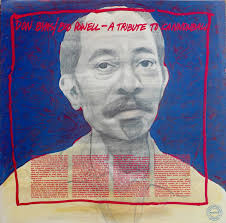
This next album from the library was recorded in 1961 but remained shelved until its release in 1979, four years after the death of the musician it honors. A Tribute To Cannonball (Columbia Contemporary Master Series JC 35755) brings together Don Byas on tenor sax and Bud Powell on piano for a program of standards and two original tunes. Completing the ensemble are Idrees Sulieman (tracks: A5, B1, B2, B4) on trumpet, Pierre Michelot on bass, and Kenny Clarke on drums. My copy used in this report is the 1979 US Stereo album.
The quartet begins Side One with the Cole Porter classic, Just One of Those Things that made its debut in the 1935 musical comedy, Jubilee. The trio opens with a scintillating conversation in the opening chorus. Don adds some fierce dialogue on the second verse, then continues traveling at breakneck speed on the first solo. Bud’s nimble fingers fly over the keys at a brisk pace on the finale towards the quartet’s enthusiastic ending.
Jackie My Little Cat is a pretty ballad by Pierre Michelot that slows the tone to a softer tempo. From the first phrase of the elegantly tranquil theme, the quartet creates a warmly affectionate atmosphere for Byas who infuses the lead statement with tasteful subtlety. Powell also produces a reading of extraordinary tenderness that compliments the rhythm section’s graceful groundwork into a sensuous finale. Cherokee, also known as Indian Love Song, was written in 1938 by Ray Noble as the first movement of his five-part Indian Suite. It became a hit for bandleader Charlie Barnet in 1939 and a jazz standard after Charlie Parker’s blistering rendition in 1941 with The Kansas City Band. The song begins with a brisk duet by Don and Pierre on the introduction, then proceeds with a lightning-fast melody. Byas begins his first solo with a sizzling performance, then Powell flexes his muscles with incredible virility. The saxophonist is completely energized on the closer with fiery intensity before the out-chorus.
I Remember Clifford by Benny Golson is a 1957 jazz standard honoring Clifford Brown who perished in an auto accident the year before with pianist Richie Powell and his wife Nancy. It became a huge hit for Golson after appearing on the albums, Jazz Lab and Lee Morgan, Volume 3 (1957), and Jon Hendricks wrote lyrics for it the same year. The quartet is beautifully disciplined on the melody, and Don taps a well of serenity, bringing out the most intimate feelings in every note of the lead solo. Bud closes with a warmly affectionate reading leading to a tender finale. Good Bait is by Tadd Dameron and Count Basie and was written in 1944. It became a significant part of Basie’s repertoire and Idrees Sulieman makes his first appearance. Kenny’s drums make the introduction, and the front line leads the quintet to establish the melody. Don starts the solos with long, flowing tenor phrases. Idrees follows with a fierce flow of notes from his trumpet. Bud comes next with a deliciously spry statement. Pierre makes a brief reading with an unrestrained flow of bass lines in between a few final remarks by both horns.
Side Two starts with the 1960 jazz standard, Jeannine by Duke Pearson. A brief workout by Clarke introduces the tune, segueing into the ensemble’s medium-fast melody. Don digs into the lead statement with a smoldering groove of vibrant verses. Idrees’ sentimental choruses on the second solo are tightly voiced and executed smoothly. Bud flies high on the third reading with a muscular drive. Kenny delivers a satisfying finale before the horns return to drive Jeannine home. All The Things You Are by Jerome Kern and Oscar Hammerstein II was originally written in 1939 for the unsuccessful Broadway musical Very Warm For May that year. The song survived, becoming one of Kern’s most cherished and recorded compositions. Byas and Sulieman exchange a peppy dialogue with the trio on the melody. Idrees says something special with a firm tone on the first solo. Don delivers the next message confidently in an authoritative manner. Bud also displays his virtuosity in an invigorating reading. Both horns split the next few choruses and Clarke provides a passionate showcase on a brief statement ahead of the coda.
Let me stop for a moment to describe this next tune. On the Side Two label, track three is listed as Jackie by pianist Hampton Hawes. It isn’t Hawes’ tune at all, it’s actually an alternate take of Pierre Michelot’s Jackie My Little Cat. Like the song on Side One, it’s a quartet piece with Byas and Powell as the featured soloists. After a beautiful theme statement, Don delivers an absolutely gorgeous opening solo. Bud follows with a haunting melodic interpretation ahead of the compassionate climax. The album ends with the second original by bassist Michelot, Myth is a cheery little tune full of fun and good spirits as evident by the sprightly introduction by the trio, ahead of the front line’s opening chorus. Byas starts the solos with a compelling performance that holds your attention from start to finish. Sulieman follows with a beautifully articulated presentation. Powell swings with exhilarating verses on the closing statement that bounces happily to the superb foundation by Michelot and Clarke.
A Tribute To Cannonball was produced by Cannonball Adderley and the engineer was Russ Payne who worked on many other Columbia LP’s. The music is excellent, and the sound quality is superb with the musicians surrounding your sweet spot providing some amazing jazz. The only issue I have with this album has nothing to do with the music, but the cover design. To read the liner notes by Gary Giddins, you need a high wattage light bulb or a well-lighted room because the words are small and dark blue on a red background. This is particularly notable on the back cover where the picture of Bud Powell is. Whoever thought this was a good idea, I hope they’ve never been allowed to design another record cover. That issue aside, I hope you’ll seek out A Tribute To Cannonball by Don Byas & Bud Powell on your next vinyl hunt. If you’re a fan of Hard-Bop, it’s an overlooked jewel that’s worthy of your consideration for a spot on your shelf!
~ Jazz Lab (Columbia CL 988); Lee Morgan, Volume 3 (Blue Note BLP 1557) – Source: Discogs.com
~ Cherokee, Indian Love Song, I Remember Clifford, All The Things You Are – Source: JazzStandards.com
~ Just One of Those Things – https://www.youtube.com/watch?v=9Gg0Md1geMw ~ Jackie My Little Cat – https://www.youtube.com/watch?v=9JmZCGKjrc0 © 2020 by Edward Thomas Carter
More Posts: choice,classic,collectible,collector,history,instrumental,jazz,music,piano,saxophone

Requisites
Tenor and Flute ~ Bobby Jaspar | By Eddie Carter
Bobby Jaspar steps into the spotlight for this morning’s discussion with his 1957 album, Tenor and Flute (Riverside RLP 12-240). I first heard him on two records he made with Herbie Mann, Flute Flight, and Flute Soufflé (1957). Bobby was born in Liège, Belgium, and began playing the piano at eleven and the clarinet at sixteen. He later switched to the flute and tenor saxophone, and in 1950 began working with French pianists Henri Renaud and Bernard Peiffer. Jaspar was also a member of the Bop Shops band and played and recorded with Toshiko Akiyoshi, Chet Baker, Kenny Burrell, Donald Byrd, John Coltrane, Miles Davis, Milt Jackson, J.J. Johnson, Hank Jones, John Rae, and Wynton Kelly. He was married to jazz pianist and singer Blossom Dearie. His supporting cast is Idrees Sulieman on trumpet (tracks: A1, B1, B2), George Wallington on piano, Wilbur Little on bass, and Elvin Jones on drums. My copy used in this report is the 1976 Japanese Mono reissue (Riverside SMJ-6156M).
The opener, Seven Up is Bobby’s easy blowing vehicle beginning with everyone laid-back on the melody. Idrees starts the song in a nice happy mood on the first interpretation, then Bobby takes over for an outstanding solo as solid as the Rock of Gibraltar. George follows with some carefree cruising that’s a treat for the ears and Wilbur is rhythmically infectious on a short statement ahead of the ensemble’s breezy climax.
Jaspar changes to flute for My Old Flame, written in 1934 by Arthur Johnston and Sam Coslow. It appeared in the film, Belle of The Nineties that year. He embraces the jazz standard lovingly on the melody and paints a compassionate portrait on the opening statement. The second presentation by Wallington is tenderly expressed, then the leader gives a second performance that’s delicately pretty and Jones offers some beautifully shaped brushwork on the closer ahead of a tranquil ending.
Bobby returns to tenor sax for a spirited quartet rendition of All of You, Cole Porter’s 1954 jazz standard that first appeared in the 1955 Broadway musical, and 1957 film, Silk Stockings. The quartet gives a lift to this timeless classic with a briskly paced theme treatment. The saxophonist displays a lively intensity on the lead solo, then George adds a bouncy effervescence to the second reading. Wilbur and Elvin split the third statement for a short, incisive comment, followed by Bobby and Elvin who guide us into the reprise with an expressive exchange. Idrees Sulieman’s Doublemint is an energetic companion to his blues, Juicy Fruit, heard on The Hawk Flies High (1957). It opens Side Two with a collective infectious melody. Jaspar cooks vivaciously on the first statement, then Sulieman breaks into a robust reading. Wallington moves in next for a scintillating solo and Jones finds something good to say on the closing chorus sharing notes with the front line.
George Wallington wrote the final two tunes on Tenor and Flute beginning with his tenderly passionate ballad, Before Dawn. It starts slowly with a breathtakingly beautiful theme by Bobby and the rhythm section. Jaspar then creates a mood of ecstasy on the first performance, then Idrees delivers a fine solo punctuated with delicate lyricism. George follows, sharing a brief moment of intimacy before Bobby adds a few additional affectionate remarks preceding the ensemble’s sultry coda.
Jaspar and the rhythm section take Sweet Blanche for a brisk ride on the finale with the leader back on flute. The quartet opens with a cheerfully pleasant theme and Jaspar excels with vigorous flair on the first interpretation. Wallington heads into the second reading expressing considerable delight, then Jaspar and Jones take us home sparring with each other into a satisfying climax. Tenor and Flute was produced by Orrin Keepnews, and the man behind the dials was Jack Higgins.
I was pleasantly surprised with the sound quality, the instruments produce an exceptional soundstage across the highs, midrange, and low end that’s right on the money. The analog Mono transfer by Victor Musical Industries from the original tapes has been gorgeously remastered and transports the listener to the studio alongside the musicians during the session. During 1961 & 1962, Jaspar formed a quintet with guitarist René Thomas and performed in a series of concerts and several recordings including appearing on Chet Is Back (1962). He passed away from a heart attack at age thirty-seven on February 28, 1963. I’ve enjoyed listening to this album and am happy to have it in my library. If you aren’t familiar with Bobby Jaspar, are a fan of Hard-Bop or tenor sax, I hope you’ll seek Tenor and Flute out during your next vinyl hunt. It’s a perfect album to get into jazz and the music is sure to make you tap your foot!
~ Chet Is Back (RCA Victor PML-10307); Flute Flight (Prestige PRLP 7124); Flute Soufflé (Prestige PRLP 7101); The Hawk Flies High (Riverside RLP 12-233) – Source: Discogs.com
~ My Old Flame ~ Source: JazzStandards.com ~ All of You, Bobby Jaspar ~ Source: Wikipedia.org © 2020 by Edward Thomas Carter
More Posts: choice,classic,collectible,collector,flute,history,instrumental,jazz,music,saxophone