


Jazz Poems
COLTRANE, SYEEDA’S SONG FLUTE
For M & P.R.
When I came across it on the
piano it reminded me of her,
because it sounded like a
happy, child’s song.
COLTRANE
To Marilyn, to Peter,
playing , making things: the walls, the stairs,
the attics, bright nests in nests;
the slow, light, grave unstitching of lies,
opening, stinking, letting in air
you bear yourselves in, become your own mother
and father
your own child.
You lying closer.
You going along. Days.
The strobe-lit wheel stops dead
once, twice in a life: old-fashioned rays:
and then all the rest of the time pulls blur,
only you remember it more, playing.
Listening here in the late quiet you can think
great things of us all, I think we will all, Coltrane,
meet speechless and easy in Heaven, our names
known and forgotten, all dearest, all come
giant-stepping
out into some wide, light, merciful mind.
John
Coltrane, 40, gone
right through the floorboards,
up to the shins, up to the eyes,
closed over,
Syeeda’s happy, child’s song
left up here, playing.
JEAN VALENTINEfrom Jazz Poems ~ Selected and Edited by Kevin Young

More Posts: book,classic,collectible,history,jazz,library,poet
Requisites
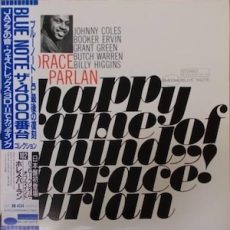
Happy Frame of Mind ~ Horace Parlan | By Eddie Carter
Horace Parlan has always been one of my favorite pianists, and this morning’s record from the library is a 1963 recording session that remained shelved until 1976. Happy Frame of Mind (Blue Note BST 84134) is a sextet date that was initially released as a two-record set by Booker Ervin. It finally hit the stores a decade later with its original cover and catalog number. The supporting cast is a stellar one: Johnny Coles on trumpet, Booker Ervin on tenor sax, Grant Green on guitar, Butch Warren on bass, and Billy Higgins on drums. My copy is the 1991 Toshiba EMI Japanese Stereo reissue sharing the original catalog number.
Side One opens with Home Is Africa by Ronnie Boykins. Butch and Billy get things started ahead of the ensemble’s haunting melody. Johnny is up first with a relaxing reading; then Booker gives a gorgeous solo. Grant makes an effective contribution next. Horace gives the song’s most inventive improvisation before the sextet’s closing chorus ends as it begins. A Tune For Richard by Booker Ervin gets busy with Billy’s lively introduction to the ensemble’s brisk melody. Johnny leads the charge, then Booker takes flight next. Grant delivers the third message effectively, and Horace ends with a spirited interpretation preceding the theme’s restatement and close.
Back From The Gig by Horace Parlan is the pianist’s reference to returning home from a particularly difficult gig, and the sextet begins with an easygoing melody. Horace’s opening solo flows with feeling, then Grant builds a perfect melodic line in the following reading. Booker follows with a statement that’s warm and heartfelt, and Butch takes over for a tender finale leading back to the climax. Dexi by Johnny Coles begins Side Two at a brisk clip with a quick melody into Johnny’s opening solo that sets the table. Booker is given considerable space for an impressive statement next. Horace follows with a soulful interpretation, and Grant takes a quick turn, preceding the quick reprise and fadeout.
Kucheza Blues by Randy Weston maintains an upbeat pace with the trio’s introduction to the front line’s jaunty theme. Horace leads the way with a refreshing solo. Booker follows, fueling the second statement with enthusiastic choruses. Johnny sinks his teeth into the third reading, and Butch walks swiftly toward the closing chorus and fade out. Horace’s Happy Frame of Mind is a happy rocker that the sextet has fun in the melody. Grant takes the lead and beautifully executes the first solo. Horace follows with a thoroughly enjoyable reading. Booker improvises freely in the third spot; then Johnny shares the finale with Billy before the sextet returns to take it out.
Alfred Lion produced the initial session, and Rudy Van Gelder was the recording engineer. The reissue’s sound quality is superb, with a vivid soundstage that brings the musicians to your listening room with excellent fidelity. Happy Frame of Mind is an overlooked jewel in Horace Parlan’s discography. If you’re a fan of Horace Parlan and don’t own the two-record set, Back From The Gig, I invite you to seek out Happy Frame of Mind on your next record shopping trip. It’s a wonderful album with a stellar supporting cast that I hope more jazz fans will discover!
~ Back From The Gig (The Blue Note Reissue Series BN-LA488-H2) – Source: Discogs.com © 2024 by Edward Thomas Carter
More Posts: choice,classic,collectible,collector,history,instrumental,jazz,music,piano
Jazz Poems
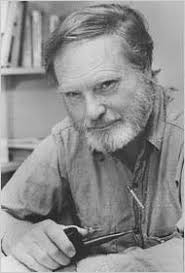
BILLIE HOLIDAY
Here lies a lady. Day was her double pain,
Pride and compassion equally gone wrong.
At night she sang, “Do you conceive my song?”
And answered in her torn voice, “Don’t explain.”
HAYDEN CARRUTHfrom Jazz Poems ~ Selected and Edited by Kevin Young
More Posts: book,classic,collectible,history,jazz,library,poet
Requisites
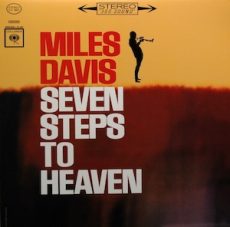
Seven Steps To Heaven ~ Miles Davis | By Eddie Carter
This morning’s album from the library is a hidden gem in Miles Davis’s extensive discography. In 1962, his quintet was undergoing a significant transition. Hank Mobley departed to pursue a solo career, and the musical trio of Kelly, Chambers, and Cobb would soon become one of the most celebrated in jazz. Seven Steps To Heaven (Columbia CL 2051/CS 8851) is a product of two sessions by the trumpeter at Columbia’s New York and Los Angeles studios. His supporting cast includes George Coleman (tracks: A2, B1, B3) on tenor sax, Victor Feldman (A1, A3, B2), Herbie Hancock (A2, B1, B3) on piano, Ron Carter on bass, Frank Butler (A1, A3, B2), and Anthony Williams (A2, B1, B3) on drums. My copy is the original 1963 U.S. Stereo release.
Side One starts with Basin Street Blues by Spencer Williams. The first of three quartet performances opens with the foursome expressing the song’s softer emotions in the melody, featuring Miles using a mute. He sustains the gentle mood in the first solo before picking up the pace for a delightful conclusion. Victor gets into something good in a delightful reading ahead of the quartet, easing back into the theme. Seven Steps To Heaven by Miles Davis and Victor Feldman is off to the races from the rhythm section’s introduction to the quintet’s quick melody. Miles kicks off the solos, wailing, and then George swings vigorously into the second statement. Herbie takes an exhilarating turn next, preceding the reprise and close.
I Fall In Love Too Easily by Jule Styne and Sammy Cahn first appeared in the 1945 musical comedy Anchors Aweigh. Miles is back on the muted trumpet for the quartet’s tenderness and warmth during the melody. The leader’s opening statement is reflective yet quite beautiful. Victor expresses great care and thoughtfulness in the second solo until Miles returns to deliver a gorgeous climax. So Near, So Far by Tony Crombie and Benny Green kicks off the second side with the quintet’s medium theme. Miles gets things started on the open horn. George picks up the baton and really shines in the following presentation. Herbie has the final word and delivers a terrific performance into the ensemble regrouping for the closing chorus.
Baby, Won’t You Please Come Home by Charles Warfield and Clarence Williams is a blues song from 1919 that brings Miles back on the muted trumpet. Victor opens with a solo introduction ahead of the quartet’s touching melody. The trumpeter opens with a delicately tender interpretation; then Victor brings the solos to a close into the foursome’s thoughtfully graceful ending. Victor Feldman’s Joshua turns the temperature up one final time. Miles’s fingers snap the quintet to attention for the song’s lively theme. Miles steps up first in the spotlight with an enthusiastic performance. George takes over to deliver long, flowing lines that are equally satisfying. Herbie wraps things up with a festive finale that hits a perfect groove into the quintet’s reprise and completion.
Teo Macero produced Seven Steps To Heaven, although it’s unknown who recorded both sessions. It doesn’t matter, however, because this is a terrific recording with a crisp, detailed soundstage that sparkles. It is the first time George, Herbie, Ron, and Tony have recorded with Miles. George wouldn’t make another studio album with Miles, but appears on three live albums with this group, ‘Four’ & More, Miles Davis In Europe and My Funny Valentine. Hancock, Carter, and Williams formed the nucleus of Miles’s second great quintet and would remain with him for the next five years.
Victor turned down Miles’s invitation to join his quintet because he was a successful West Coast session musician, so he and Frank remained in California. If you’re in the mood for an excellent album of ballads and uptempo tunes and are a fan of Miles Davis from the early sixties, I highly recommend checking out Seven Steps To Heaven. It’s a stellar album that not only gives a glimpse into what was to come from The Second Great Miles Davis Quintet but also stands on its own as a title worthy of any jazz lover’s library. You’ll find it a rewarding addition to your collection, and I’m confident it will bring you hours of musical enjoyment.
~ ‘Four’ & More (Columbia CL 2453/CS 9253), Miles Davis In Europe (Columbia CL 2183/CS 8983), My Funny Valentine (Columbia CL 2306/CS 9106) – Source: Discogs.com ~ Baby, Won’t You Please Come Home, Basin Street Blues, I Fall In Love Too Easily – Source: JazzStandards.com © 2024 by Edward Thomas Carter
More Posts: choice,classic,collectible,collector,history,instrumental,jazz,music,trumpet

Jazz Poems
MUSIC FOR HOMEMADE INSTRUMENTS
improvising with Douglas Ewart
I dug your artless, I dug you out. Did you re-do? You dug me less, art. You dug, less do art. You dug me, less art. Did you re-do? If I left art out, you dug. My artless dug-out. You dug, let art out. Did you re-do, dug-out canoe? Easy as a porkpie piper-led cinch. Easy as a baby bounce. Hop on pot, tin pan man. Original abstract, didyou re-do it? Betting on shy cargo, strutting dimpled low-cal strumpets employ a hipster to blow up the native formica. Then divide efficiency on hairnets,flukes, faux saxons. You dug me out, didn’t you? Did you re-do? Ever curtained to experiment with strumpet strutting. Now curtains to milk laboratory. Desecrated flukes & panics displayed by mute politicians all over this whirly-gig. Hey, you dug! Art lasts. Did you re-do? Well-known mocker of lurching unused brains, tribal & lustrous diddlysquats, Latin dimension crepe paper & muscular stacks. Curtains for perky strumpets strutting with mites in the twilight of their origami funkier purses. Artless, you dig. Did you re-do? For patting wood at flatland, thanks. For bamboozled flukes at Bama, my seedy medication. Thanks for my name in the yoohoo. Continental camp-out, percolating throughout the whirly-gig on faux saxon flukes. You dig art, didn’t you? Did you re-do?
Harryette Mullen
from Jazz Poems ~ Selected and Edited by Kevin Young
More Posts: book,classic,collectible,history,jazz,library,poet