

Three Wishes
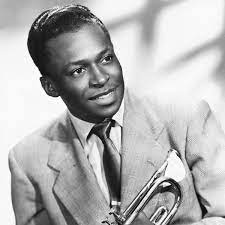
Pannonica asked Miles Davis if he had three wishes bestowed upon him what would his answers be and he replied simply with:
- “To be white.”
*Excerpt from Three Wishes: An Intimate Look at Jazz Greats ~ Compiled and Photographed by Pannonica de Koenigswarter

More Posts: baroness,history,instrumental,jazz,music,pannonica,three,trumpet,wishes
Daily Dose Of Jazz…
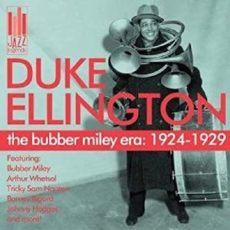
Joe “Tricky Sam” Nanton was born Joseph Irish Nanton on February 1, 1904 in New York City, New York to British West Indies immigrant parents. He began playing professionally in Washington, D.C. with bands led by Cliff Jackson and banjoist Elmer Snowden.
1923 saw him working with Frazier’s Harmony Five for a year then again with Snowden. At 22 Nanton discovered his niche in Duke Ellington’s Orchestra, when he reluctantly took the place of his friend Charlie Irvis in 1926, anchoring the trombone section with Lawrence Brown. He remained with Ellington until his early death.
Nanton was one of the great pioneers of the plunger mute after hearing trumpeter Johnny Dunn use a plunger, and realized he could have a similar effect on his trombone. Along with Ellington’s trumpeter Bubber Miley, he is largely responsible for creating the characteristic Wah-wah, or wa-wa, effect. Their highly expressive growl and plunger sounds were the main ingredient in the band’s early “jungle” sound, that evolved during the band’s late 1920s engagement at Harlem’s Cotton Club.
Trombonist Tricky Sam Nanton who was amajor soloist with the Duke Ellington Orchestra, transitioned from a stroke on July 20, 1946 in San Francisco, California while touring with the orchestra.
More Posts: history,instrumental,jazz,music,trombone
Daily Dose Of Jazz…
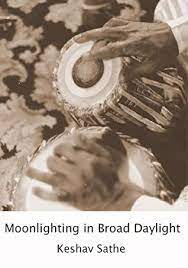
Keshav Sathe was born on January 31, 1928 in Bombay, India and began his professional career in 1951, working with a local Indian vocalist Kelkar. Moving to the United Kingdom in 1956 he joined the Asian Music Circle, a pool of London-based Indian musicians run by former political activist Ayana Deva Angadi. His first contact with jazz was in 1961 while working with Indian sitarist Bhaskar Chandavarkar and harmonica virtuoso Larry Adler.
In 1965 Sathe began his Indo Jazz Fusion performances and recordings with John Mayer and Joe Harriott, a musical relationship that lasted until 1970. In 1967 he was invited with his trio to join the trio of jazz pianist Irène Schweizer together with Barney Willen, Mani Neumeier, Uli Trepte and Manfred Schoof.
From 1970~73 he worked and toured with Julie Felix and Danny Thompson. Through Danny, in 1974, he joined the John Renbourn Group touring UK, Europe and the United States. They produced records, including A Maid in Bedlam, Enchanted Garden and Live in America.
In the 1980s, Sathe formed a group with Tony Roberts and dancer Shobhana Jeyasingh, touring the UK and Northern Ireland. With the singer Alisha Sufit and the group, he made the record Magic Carpet. From 1965 to 1993 he regularly accompanied the late singer/dancer Surya Kumari in recitals and teaching workshops. He appears on Suns of Arqa’s live album Musical Revue which was recorded in Manchester in 1982.
In addition, he has made numerous incidental recordings, worked for television, radio, and taught tabla until 2003. Tablaist Keshav Sathe, best known for his contributions to the Indo-jazz fusion genre, transitioned on January 18, 2012.
More Posts: bandleader,history,instrumental,jazz,music,tabla
Requisites
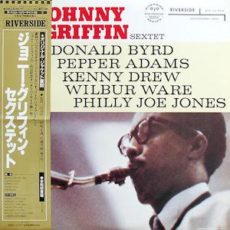
Johnny Griffin Sextet | By Eddie Carter
This morning’s discussion is the 1958 album, Johnny Griffin Sextet (Riverside RLP 12-264). Griffin began his career in the forties, playing the alto sax until joining Lionel Hampton’s Orchestra after graduating high school. Hampton urged him to play the tenor sax, and he did in the band until 1947. Johnny also played with Art Blakey, The Kenny Clarke-Francy Boland Big Band, Eddie “Lockjaw” Davis, and Thelonious Monk.
He made three albums for Blue Note and recorded for a variety of labels as a leader and sideman. Griff was nicknamed The Little Giant for his diminutive size but possessed a robust sound that produced riveting solos effortlessly. Donald Byrd on trumpet, Pepper Adams on baritone sax, Kenny Drew on piano, Wilbur Ware on bass, and Philly Joe Jones on drums complete the sextet. My copy used in this report is the 1974 Japanese Mono reissue (Riverside SMJ 6285) by Victor Musical Industries.
Side One opens with Stix’ Trix by Wilbur Campbell. A lively introduction by Philly precedes the ensemble’s feisty opening chorus. Kenny takes the first solo and gives a vigorously spirited performance. Pepper states his case on the second reading, then Donald follows in fine form on the next statement. Philly picks up the baton with some exciting brushwork, and Johnny gives a vivacious finale into the sextet’s reprise and conclusion.
What’s New? by Bob Haggart and Johnny Burke begins with a thoughtfully tender introduction and gentle melody by Griff. The saxophonist’s opening solo is beautifully constructed and poignant. Byrd and Adams split the next chorus with two pensive performances. Drew executes an elegant touch on the next interpretation, then Griffin returns for a few more intimate thoughts before ending with a sultry, seductive exit.
The first side ends with Dizzy Gillespie’s tribute to Woody Herman, Woody ‘n’ You. It starts with a lively conversation between Johnny and Philly. The rhythm section joins them for a cheerfully spirited theme, then Wilbur kicks off the solos with a rousing unaccompanied reading. Kenny delivers a dynamic performance on the next statement. Griff is up next with an interpretation that swings soulfully, and Philly generates an electrical charge ahead of the ensemble’s vigorous closing chorus.
Johnny G.G. by John Hines opens Side Two at a laid-back tempo for the sextet’s melody. Drew is up first with a smoothly flowing solo, then Griff carries the easygoing mood to a delightfully satisfying close. Byrd approaches the third reading with thoughtful construction and fluid lines. Adams delivers the next statement free and easy. Ware has a wonderful thing going into the closing chorus after sharing a final thought with Griff.
The finale is Catharsis, an upbeat swinger by Johnny Griffin that begins with a brisk collective theme and allows everyone solo space. Pepper takes off with rapturous enthusiasm on the opening statement. Donald creates an exuberant reading next. Kenny follows with a solo that’s like the cherry and cream on top of a succulent, tasty sundae. Johnny and Wilbur share the spotlight again on the next interpretation, then Philly has a short exchange with the front line leading to the closing chorus.
Johnny Griffin Sextet was originally recorded by Jack Higgins at Reeves Sound Studios, and the remastering by Victor Musical Industries has a spectacular soundstage. If you’re in the mood for a superb blowing session, I invite you to audition Johnny Griffin Sextet for a spot in your library. It’s forty-two minutes of some of the best Hard-Bop you’ll hear on a turntable and an enjoyable album I highly recommend!
~ A Blowing Session (Blue Note BLP 1559), Introducing Johnny Griffin (Blue Note BLP 1533/BST 81533), The Congregation (Blue Note BLP 1580) – Source: Discogs.com ~ Woody ‘n’ You, What’s New? – Source: JazzStandards.com © 2022 by Edward Thomas Carter

More Posts: choice,classic,collectible,collector,history,instrumental,jazz,music,saxophone
Daily Dose Of Jazz…
Sam Allen was born in Middleport, Ohio on January 30, 1909 and beginning at the age of seven started playing the piano. By 10 he accompanied silent films on piano in movie theaters, allowing him to sit and extemporize as the action unfolded on screen. Over the next few years he absorbed plenty of slapstick hi-jinx and derring-do from the Hollywood sagas he accompanied.
1928 saw the 19 year old Sam moving to New York City where he joined Herbert Cowans’s band at the Rockland Palace. It wasn’t too long after the move before he moved back to Ohio, where he played with saxophonist Alex Jackson through 1930.
He joined James P. Johnson’s orchestra as a second pianist absorbing the intense chords in the scores that required two pianos. For amuch of the ’30s, he played with the dance band of Teddy Hill including a European tour. In the 1940s he had one of his most musically satisfying collaborations as piano man in the sometimes rowdy combo of violinist Stuff Smith. Playing in the hyper-drive bebop of Dizzy Gillespie, and then the shenanigans as pianist for the madcap jive jazz duo Slim Gaillard & Slam Stewart.
As the Fifties approached he relocated to Washington, shifting gears from touring sideman to stay-at-home featured soloist. He then headed for California where he settled into the Oakland jazz scene, often accompanying the fine singer Billie Heywood. Pianist Sam Allen transitioned at the age of 63 in April 1963.
More Posts: history,instrumental,jazz,music,piano