

Daily Dose Of Jazz…
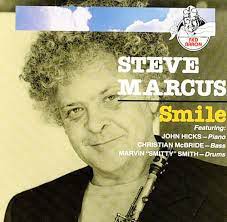
Steve Marcus was born September 18, 1939 in The Bronx, New York, and studied at the Berklee College of Music in Boston, Massachusetts between 1959 and 1961. He gained experience playing in the bands of Stan Kenton, Herbie Mann and Larry Coryell from 1963 to 1973.
His debut album as a leader included an arrangement of the Beatles’ song, Tomorrow Never Knows, which also was the album’s title. He worked with jazz drummer Buddy Rich for the last twelve years of the drummer’s life. After Rich died, Marcus led the band and renamed it Buddy’s Buddies.
Saxophonist Steve Marcus transitioned on September 25, 2005 in New Hope, Pennsylvania. He was 66.

More Posts: bandleader,history,instrumental,jazz,music,saxophone
Daily Dose Of Jazz…
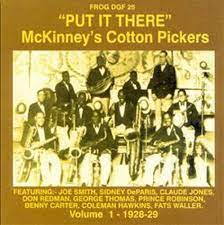
Bill McKinney was born William McKinney on September 17, 1895 in Cynthiana, Kentucky. Early in his career he worked as a drummer in a circus band until he was inducted into the Army in World War I. After service, he settled in Springfield, Ohio where he took over leadership of the Synco Jazz Band.
After hiring drummer Cuba Austin, McKinney worked as leader and business manager. After touring the U.S. Midwest, they got a residency at the Arcadia Ballroom in Detroit, Michigan in 1926. While there, they were heard by bandleader and music promoter Jean Goldkette, who arranged a more lucrative home base for the band in Detroit’s Graystone Ballroom. The band was renamed McKinney’s Cotton Pickers.
During the Great Depression the band broke up in 1934 and Bill led and played with a dance band in Boston, Massachusetts for a time. From 1937 on McKinney managed a Detroit Cafe with a dance floor and live bands who McKinney booked, while booking bands for other locations on the side.
Drummer Bill McKinney retired in the 1950s and spent his last years in his childhood hometown of Cynthiana, where he transitioned on October 14, 1969 at 74.
More Posts: bandleader,drums,history,instrumental,jazz,manager,music
Daily Dose Of Jazz…
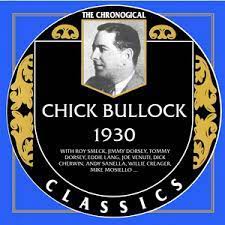
Charles Bullock, known in the industry as Chick, was born on September 16, 1898 in Montana to immigrants from England.. He belonged to a select group of mostly freelance vocalists who sang the vocal refrains on hundreds of New York sessions, which included Smith Ballew, Scrappy Lambert, Irving Kaufman, Arthur Fields, and Dick Robertson. Some of these vocalists were also musicians leading bands, but their singing was more often featured.
Though he began his career in vaudeville and sang in movie palaces, he rarely performed live because his face was disfigured due to an eye disease. His career as a studio musician took off in the late 1920s, and in the 1930s he sang with musicians such as Duke Ellington, Luis Russell, Cab Calloway, Bunny Berigan, Bill Coleman, Jack Teagarden, Tommy Dorsey, Jimmy Dorsey, Joe Venuti, and Eddie Lang.
Bullock’s recordings proved so popular that he used pseudonyms for some recordings, including the name Sleepy Hall. However, in the 1940s the World War II recording ban essentially ended Bullock’s career and he quit the music business in 1942. He moved to California in 1946 and took up real estate, opening his own company.
Chick was mostly associated with the ARC group of labels including Melotone, Perfect, Banner, Oriole, and Romeo. Many of his records were issued under the name Chick Bullock and his Levee Loungers.
Jazz and dance band vocalist Chick Bullock, who recorded some 500 tunes over the course of his career, transitioned on September 15, 1981, in California at the age of 82.
More Posts: bandleader,history,instrumental,jazz,music,vocal
Daily Dose Of Jazz…
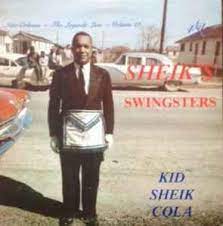
George Colar, better known as Kid Sheik or Kid Sheik Cola, was born on September 15, 1908 in New Orleans, Louisiana. In his youth he started playing blues piano around 1920, but took up trumpet after being inspired by and taking lessons from Wooden Joe Nicholas and Chris Kelly for whom he sat in from time to time. During this period he briefly had a band of his own.
In the Thirties he played second trumpet with Buddy Petit, marched with Kid René’s band and from 1952 was a member of the Eureka Brass Band. He worked with George Lewis in the mid-1940s. His Gin Mill Blues is considered a nice fish fries boogie.
Over the years, Kid Sheik performed with many jazz notables, including Harold Dejan’s Olympia Brass Band and Louis Armstrong. By the 1960s he had his own band. He was still blowing strong in New Orleans in 1970.
Kid Sheik was the subject of the official New Orleans Jazz & Heritage Festival poster in 1990. He is featured in a 35mm twelve-minute black and white film directed by Frank Decola titled The Cradle Is Rocking, a copy of which is in the Folkstreams Collection in the Southern Folklife Collection of the Wilson Library at the University of North Carolina in Chapel Hill.
He is most associated with Dixieland jazz and was a long-term performer with the Preservation Hall Jazz Band. In his later years, he married pianist Sadie Goodson. Trumpeter Kid Sheik Cola, who got his nickname from his chic style of dress, transitioned on November 7, 1996.
More Posts: bandleader,composer,history,instrumental,jazz,music,trumpet
Daily Dose Of Jazz…
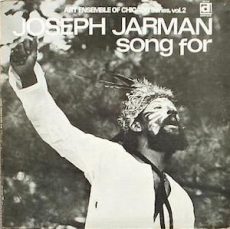
Joseph Jarman was born on September 14, 1937 in Pine Bluff, Arkansas, and grew up in Chicago, Illinois. At DuSable High School, he studied drums with Walter Dyett, switching to saxophone and clarinet when he joined the United States Army after graduation. During his time there, he was part of the 11th Airborne Division Band for a year.
After his discharge in 1958, Jarman attended Wilson Junior College, where he met bassist Malachi Favors Maghostut and saxophonists Roscoe Mitchell, Henry Threadgill, and Anthony Braxton. These men would often perform long jam sessions at the suggestion of their professor, Richard Wang. Mitchell introduced Jarman to pianist Muhal Richard Abrams, and Jarman, Mitchell, and Maghostut joined Abrams’ Experimental Band, a private, non-performing ensemble, when that group was founded in 1961. The same group of musicians along with Fred Anderson and Phil Cohran went on to found the Association for the Advancement of Creative Musicians (AACM) in 1965,.
His solo recording career began at this time, putting together a sextet, however, Jarman disbanded the group in 1969 after the passing of two members. He had joined Mitchell, Maghostut and Lester Bowie in the Roscoe Mitchell Art Ensemble which would eventually become known as the Art Ensemble of Chicago. The group was known for being costumed on stage for different reasons.
The group moved to Paris in 1969, and lived there for many years in a commune that included Steve McCall, the drummer who went on to form the jazz trio Air. Moving back to Chicago in the 1970s, Joseph lived in a musicians’ building in Hyde Park, with Malachi Favors as his roommate. In 1983, he moved to Brooklyn, New York.
Jarman left the Ensemble until 1993 to focus on his spiritual practice, and didn’t return to music until 1996, releasing two albums and then joining a trio with Myra Melford in Chicago, which would eventually be called Equal Interest.
Along with the saxophone and clarinet, Jarman also played (and recorded on) nearly every member of the woodwind family, as well as a wide variety of percussion instruments. Aside from his work with relatively traditional jazz line-ups, he also composed for larger orchestras and created multimedia pieces for musicians and dancers.
Saxophonist, composer, and poet Joseph Jarman transitioned from respiratory failure at the Lillian Booth Actors Home in Englewood, New Jersey on January 9, 2019. He was 81.
More Posts: bandleader,composer,history,instrumental,jazz,music,poet,saxophone