

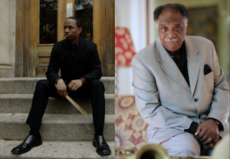
WILLIE JONES TRIO FEATURING HOUSTON PERSON
Willie Jones III:
With an unparalleled style of rhythmic expression, drummer Willie Jones III is one of the world’s leading jazz drummers. In addition to honoring his monumental influences – the late greats Philly Joe Jones, Art Blakey and Billy Higgins – Jones’ bold articulation and constantly innovative sense of swing are results of his life-long musical experience.
Born in Los Angeles, California on June 8, 1968, Jones’ earliest exposure to music was through his father, Willie Jones II, an accomplished and notable jazz pianist, who offered guidance and inspiration to his gifted son. Dedicated to the further development of his skills, the younger Jones spent the next few years working diligently with acclaimed drummers and music instructors and began performing with distinguished musicians by the time he was in his teens. He completed his academic training after receiving a full scholarship to the California Institute of the Arts where he studied under the tutelage of the legendary Albert “Tootie” Heath. Before he was a semifinalist in the 1992 Thelonious Monk Jazz Drum Competition, Jones co-founded jazz band Black Note. Influenced by the rich soulful energy of the West Coast bop movement, Black Note’s hard-swing sound propelled them to first place in the prestigious John Coltrane Young Artist Competition in 1991.
Near the end of 1994, while Jones was reaching for a higher level of drumming dexterity, he gained the privilege of playing sideman to the renowned vibist Milt Jackson, where Jones learned the importance of pacing and sensitivity. Meanwhile, his musical career continued to unfold.
From 1998-2005, Jones was a member of Roy Hargrove’s Quintet and is featured on Roy Hargrove’s CD releases on Verve: Moment To Moment, Hard Groove, Nothing Serious and RH Factor’s Distractions. Jones can be heard on a host of recordings including Kurt Elling’s GRAMMY® nominated Night Moves (Concord) and Eric Reed’s Here (Max Jazz). Jones has worked with Sonny Rollins, Ernestine Anderson, Bobby Hutcherson, Wynton Marsalis, Cedar Walton, Frank Wess, the Dizzy Gillespie All-Star Big Band, Houston Person, Billy Childs, Eric Reed, Ryan Kisor, Eric Alexander, Bill Charlap, Michael Brecker, Herbie Hancock and Hank Jones.
Houston Person:
Houston Person, born in Newberry, South Carolina in 1934, is the natural heir to the Boss Tenor crown worn so long and so well by Gene Ammons. In the more than twenty-five years that he has been a working bandleader, Person has taken his music to most points on the globe. A travelling Jazzman in an era that has found that particular species a veritable rara avis, Person does it all himself. He books his own tours, hunts up the new clubs, has the phone number of every major concert promoter on each continent and produces his own albums: truly the vertically integrated Jazzman.
If, given all this, he played mediocre tenor it would be easy to forgive him. But he doesn’t – he plays damn good tenor and it keeps getting better. One of the last proponents of the big sound, his tone has gotten bigger even as his delivery has mellowed and rounded out. And, of course, with Person you are likely to hear almost anything in terms of repertoire. He has recorded disco and gospel, pop and r&b in addition to his natural Jazz but beyond that he has an enormous and ever changing book. Nothing pedestrian or everyday for Person!
He grew up in Florence, S.C., studied at the state college there, was later named to the school’s Hall of Fame in 1999, and continued his studies at Hartt College of Music in Hartford, CT. Earlier, in the U.S. Air Force, he played with Don Ellis, Eddie Harris, Cedar Walton, and Leo Wright. Contrary to popular belief, he was never married to the late singer Etta Jones, but did spend many years as her musical partner, recording, performing and touring.
Although he has performed in the hard bop and swing genres, he is most experienced in and best known for his work in soul Jazz. Person is also known for his distinctive sassy sound and his expressive style of playing. He received the Eubie Blake Jazz Award in 1982.
He has more than 75 albums under his own name on Prestige, Westbound, Mercury, Savoy, Muse, and is currently with High Note Records. He has recorded with Charles Brown, Charles Earland, Lena Horne, Etta Jones, Lou Rawls, Horace Silver, Dakota Staton, and more.
Houston has deffine ideas about Jazz: “Well, it’s uplifting and important. And a release and a relief. That’s what it is, Jazz, so called Jazz, to me. It’s important that it’s relaxing. Something that when the end of the day comes, after a hard and frustrating day out in the world, that relieves you. Relaxes you and makes you feel good.” Person adds that all he wants is to give people “good solid melodies with some improvisation and plenty of blues feel.” He smiles, “You always want that dance feeling there, that happy, happy feeling.”
More Posts: adventure,club,drums,genius,jazz,music,preserving,saxophone,travel
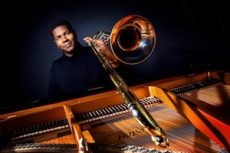
JAVIER NERO JAZZ ORCHESTRA
The Javier Nero Jazz Orchestra is a fresh and dynamic big band performing all original music and modern arrangements of jazz standards.
Dr. Javier Nero is an award-winning jazz trombonist, composer, arranger, and educator whose musicianship has received significant recognition. Currently based in Baltimore, MD, Javier is busy as both a bandleader and sideman in the greater DMV area. His classical training and versatility have enabled him to perform in various styles and genres alike, ranging from small jazz combos, to symphony orchestras. Dr. Nero’s compositions and arrangements have also earned various awards and accolades including Downbeat Magazine’s Student Music Awards, participation in the Betty Carter Jazz Ahead Program, and the Banff Centre’s international workshop in jazz and creative music. Dr. Nero has also recently joined the faculty of the Peabody Conservatory at Johns Hopkins University as the jazz trombone and arranging and harmony teacher.
Streaming: $15.00 + fees
More Posts: adventure,club,genius,jazz,music,orchestra,preserving,travel
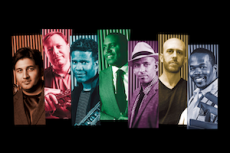
SFJAZZ COLLECTIVE
Founded by SFJAZZ in 2004, the SFJAZZ Collective is an all-star ensemble and composer’s workshop that represents what’s happening now in jazz, celebrating its 20th Anniversary in 2024.
Since the beginning, the Collective’s mission has been to perform newly commissioned pieces by each member and fresh arrangements of works by modern masters. Through this pioneering approach, simultaneously honoring music’s greatest figures while championing jazz’s up-to-the-minute directions, the SFJAZZ Collective embodies SFJAZZ’s commitment to jazz as a living, ever-relevant art form.
To celebrate two decades as a working ensemble, the supergroup will perform a landmark Anniversary program that both honors the history of the group and looks ahead to its future. In tribute to the artists who have been honored by the Collective over its 20-year history, as well as the world-class composers who have been a part of the ensemble, the band will revisit past original compositions and arrangements from its innovative repertoire, updated and re-imagined by this singular lineup of jazz masters. Additionally, the band will emphasize the spirit of its name by collectively composing a new suite dedicated to and inspired by the history of the ensemble.
Chris Potter ~ music director & saxophone
David Sánchez ~ saxophone
Mike Rodriguez ~ trumpet
Warren Wolf ~ vibraphone
Edward Simon ~ piano
Matt Brewer ~ bass
Kendrick Scott ~ drum
Streaming: $15.00 + fees
Saturday Showtimes:
Sunday Showtimes:
More Posts: adventure,bass,club,drums,genius,jazz,music,piano,preserving,saxophone,travel,trumpet,vibraphone
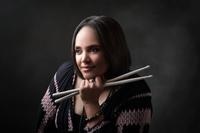
TERRI LYNE CARRINGTON | NEW STANDARDS
With technical wizardry and profound creativity, NEA Jazz Master, Terri Lyne Carrington, has become one of the giants of today’s jazz music. A three-time Grammy Award-winning drummer, composer, producer, and educator, Carrington began her professional career at only ten years old and received a full scholarship to Berklee College of Music at the age of 11. She is the first female artist to ever win the Grammy Award for Best Jazz Instrumental Album, which she received for her 2013 work, “Money Jungle: Provocative in Blue.”
Over the four-decade-plus span of her career, she has played with Herbie Hancock, Wayne Shorter, Lester Bowie, Cassandra Wilson, Dianne Reeves, Stan Getz, Al Jarreau, John Scofield, Pharoah Sanders, and Esperanza Spalding among countless other jazz luminaries. The critically acclaimed 2019 release, “Waiting Game”, from Terri Lyne Carrington + Social Science earned the esteemed Edison Award for music and a Grammy nomination.
The Band:
Terri Lyne Carrington (drums & bandleader)
Kris Davis (piano)
Matthew Stevens (guitar)
Isaac Coyle (bass)
Christiana Hunte (dancer)
Christie Dashiell (vocals)
Streaming: $15.00 + $2.05 fee
Saturday Showtimes: 6:00pm | 8.30pm
Sunday Showtimes: 5:00pm | 7:30pm
More Posts: adventure,club,drums,genius,jazz,music,preserving,travel
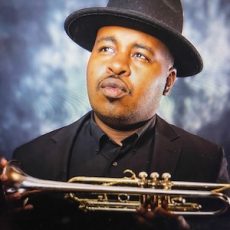
MICHAEL CRUSE
Michael Cruse is a trumpeter and singer, nd the Middle School Jazz Academy Band Director for Jazz at Lincoln Center. Michael has performed and studied with jazz greats such as Roy Hargrove, Les McCann, JD Allen, Terence Blanchard, Javon Jackson, Lew Soloff, Wynton Marsalis, Delfeayo Marsalis, Jason Marsalis, John Fedchock, Fareed Haque, Vince DiMartino, Gail Wynters, Byron Stripling, Jeff Hamilton, John Von Ohlen, and Kevin Harris.
Michael has also performed in several groups for Bootsy Collins, KeKe Wyatt, Keisha Cole, Mike Phillips, Chantae Cann, Damian Sneed, Marc Broussard, and Clyde Brown (Drifters). Michael was also a part of the filming of “Miles Ahead” and portrayed NYC-based trumpeter and recording artist, Ernie Royal, starring Don Cheadle as Miles Davis (r. April 2016), as well as filming for HBO’s Lovecraft Country, released 2020.
More Posts: adventure,club,genius,jazz,music,preserving,travel,trumpet