

The Quarantined Jazz Voyager
As cities begin to open back up I am remaining vigilant in my social distancing and trust you are doing the same. Wary of large groups or crowded public transportation, I am staying to my schedule of grocery, doctor visits, home.
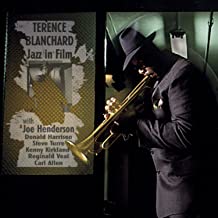
I’ve selected Jazz in Film, a studio album by trumpeter Terence Blanchard released on March 2, 1999 on Sony Records. The recording was split into two sessions, the first on March 17~18, 1998 at Signet Soundelux in Los Angeles, Californiaand the second on April 7, 1998 at Clinton Recording Studios, Studio B, New York City.
The album was meant to be a portrait of jazz in cinema history, a way to chronicle the evolution of jazz score from the late 1940s to present day. It featured highly influential themes from classics like Anatomy of a Murder, Taxi Driver and seminal noir The Man With the Golden Arm. Blanchard has carved out a little space for himself, revisiting one of his compositions written for Spike Lee’s Clockers.
The album features an all-star lineup backed by a string orchestra arranged by Blanchard. Steven Mercurio and J.A.C. Redford were the conductors for the sessions.
Track Listing | 68:19- A Streetcar Named Desire (Alex North) ~ 7:55
- Chinatown (Jerry Goldsmith) ~ 8:23
- The Subterraneans (André Previn) ~ 9:08
- Anatomy of a Murder (Duke Ellingtn) ~ 8:25
- The Pawnbroker (Quincy Jones) ~ 7:02
- Taxi Driver (Bernard Herrmann) ~ 7:12
- Degas’ Racing World (Ellington) ~ 7:57
- Man With The Golden Arm (Elmer Bernstein) ~ 4:13
- Clockers (Terence Blanchard) ~ 8:01
- Terence Blanchard – trumpet, arranger
- Joe Henderson – tenor saxophone (3, 6, 7, 8, 9)
- Steve Turre – trombone (1, 4, 8)
- Donald Harrison – alto sax (1, 4, 5)
- Kenny Kirkland – piano
- Reginald Veal – bass
- Carl Allen – drums

More Posts: adventure,album,club,genius,jazz,museum,music,preserving,restaurant,travel,trumpet
Daily Dose Of Jazz…
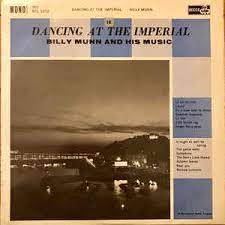
Billy Munn was born William on May 12, 1911 in Glasgow, Scotland. He studied at the Athenaeum School of Music before moving to London, England and joining the band of Jack Hylton from 1929 to 1936.
During the Thirties he played on recordings with Spike Hughes and Benny Carter. Following these engagements Billy then played with Sydney Lipton from 1936 to 1940, and concomitantly played with Louis Armstrong and Coleman Hawkins on their tours of England, as well as with Wingy Manone in the United States.
He played with Stephane Grappelli in 1943 and George Chisholm in 1944, then led his own ensemble at the Orchid Room in Mayfair from 1945 to 1948. He co-founded the BBC program Jazz Club in the 1940s with producer Mark White and clarinettist Harry Parry.
From 1948 to 1949, Munn directed the Maurice Winnick Orchestra at Ciro’s club in London, England and subsequently led the house band at the Imperial Hotel in the seaside resort town of Torquay, England for three decades, from 1949 to 1979. He recorded several times with this group. After 1979 he played solo, mostly locally in Torquay.
Pianist and arranger Billy Munn passed away on May 2, 2000 in Ayrshire, Scotland, a few days shy of his 89th birthday.

More Posts: arranger,bandleader,history,instrumental,jazz,music,piano
Three Wishes
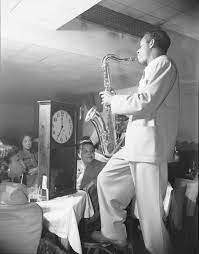
The Baroness made an inquiry of Kermit “Scotty” Scott of his three wishes were he given them and he responded with just one:
- “I wish I could get on a good recording date.”
*Excerpt from Three Wishes: An Intimate Look at Jazz Greats ~ Compiled and Photographed by Pannonica de Koenigswarter

More Posts: baroness,history,instrumental,jazz,music,pannonica,saxophone,three,wishes
Daily Dose Of Jazz…
Frederick Roach was born on May 11, 1931 in The Bronx, New York. He made his record debut in 1960 with saxophonist Ike Quebec on the albums Heavy Soul and It Might as Well Be Spring and played with Willis Jackson.
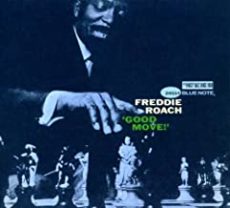
>From 1962-64 he recorded five albums as a leader for the Blue Note Records label. He also recorded with Donald Byrd on the album I’m Tryin’ to Get Home. His original writing, steady basslines, and highly musical fleet-fingered right hand set him apart.
1966-67 saw Freddie recording three more albums as a leader for Prestige Records, which are in a more commercial vein than his Blue Note dates. He left the music business in 1970 and became involved in theater, playwriting and film.
Roach was a soulful organist, certainly influenced by Jimmy Smith, but with a distinct sound and a quite original concept, which was perhaps best heard on “Good Move” for Blue Note. His Blue Note albums are critically acclaimed
Soul jazz Hammond B3 organist Freddie Roach, who moved to California for the film industry, suffered a heart attack and passed away on October 3, 1980.
More Posts: bandleader,composer,history,instrumental,jazz,music,organ
Daily Dose Of Jazz…
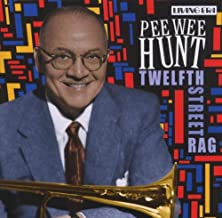
Pee Wee Hunt was born Walter Gerhardt Hunt on May 10, 1907 in Mount Healthy, Ohio. He developed a musical interest at an early age, as his mother played the banjo and his father played violin. As a teenager he was a banjoist with a local band while he was attending college at Ohio State University where he majored in electrical engineering. During his college years he switched from banjo to trombone, and graduated from the Cincinnati Conservatory of Music. He joined Jean Goldkette’s Orchestra in 1928.
Hunt was the co-founder and featured trombonist with the Casa Loma Orchestra, but he left the group in 1943 to work as a Hollywood radio disc jockey before joining the Merchant Marine near the end of World War II. Returning to the West Coast music scene in 1946, his Twelfth Street Rag was a three million-selling, number one hit in 1948. His second million-selling disc was Oh! in 1953. He was satirized as Pee Wee Runt and his All-Flea Dixieland Band in Tex Avery’s animated MGM cartoon Dixieland Droopy in 1954.
Trombonist, vocalist and bandleader Pee Wee Hunt passed away on June 22, 1979 at age 72 after a long illness in Plymouth, Massachusetts
More Posts: bandleader,history,instrumental,jazz,music,trombone,vocal