

Daily Dose Of Jazz…
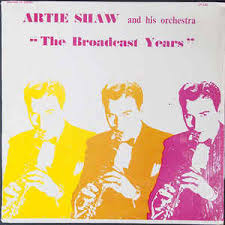
Bernard Privin was born of Jewish ancestry on February 12, 1919 in New York City. An autodidact on trumpet, he played professionally while in his teens. When he was 13, he bought a trumpet the day after he heard Louis Armstrong perform.
In 1937 Berniee became a member of Harry Reser’s band, and in the same year also worked with Bunny Berigan and Tommy Dorsey. The following year, he joined the Artie Shaw Orchestra, and then worked with Charlie Barnet, Mal Hallett, and Benny Goodman. Drafted in 1943 Bernie played from 1943 to 1946 with the Glenn Miller Army Air Force Band in Europe.
Returning to the United States, he worked with Goodman once more, then became a staff musician for radio and television, working with NBC and then CBS, the latter well into the 1960s. Concomitantly he played as a session musician, especially with Goodman throughout the 1950s, as well as for musicians such as Sy Oliver and Al Caiola.
Privin played frequently in Europe from the Sixties onward, playing in Sweden multiple times in the decade, and was a member of the Tommy Dorsey Orchestra, under the direction of Warren Covington and Pee Wee Erwin, for tours of Europe in the mid-1970s. He was a member of the New York Jazz Repertory Company when it toured the Soviet Union in 1975.
Trumpeter Bernie Privin passed away on October 8, 1999 in the city of his birth.

More Posts: history,instrumental,jazz,music,trumpet

Conversations About Jazz & Other Distractions
Conversations About Jazz Celebrates LOVE
in Pre-Valentine’s Show on February 11
Hammonds House Digital invites you and your Valentine to join us for Conversations About Jazz & Other Distractions hosted by former jazz radio host and founder of Notorious Jazz, Carl Anthony. On Thursday, February 11 at 7:30 pm (EST), Carl and his guests: Sweet Lu Olutosin, Nicole Henry, and Tony Hightower will discuss and share music around the theme of celebrating love. It’s sure to be a lively and romantic evening! Conversations About Jazz comes out twice a month – on the second and fourth Thursdays. The program is free and will stream on Hammonds House Museum’s Facebook and YouTube channels. For more information about upcoming virtual events visit hammondshouse.org.
Atlanta-based internationally acclaimed Jazz vocalist and recording artist Sweet Lu Olutosin’s music consistently displays a unique and energetic creativity. As a youngster Sweet Lu’s goal was to be an uninhibited singer using a mix of jazz, blues, and gospel to make music with the message of soulful, spiritual healing. This goal remains as he channels everything from Al Jarreau, Joe Williams, Lou Rawls, Eddie Jefferson, and John Lee Hooker in his performances creating his own unique vocal style. Sweet Lu’s latest Grammy-contending release, “Meet me at the Crossroads,” debuted at number four on the Billboard Jazz Albums Charts, just behind Gregory Porter and Norah Jones. During its next three weeks, it rose to number one on the Billboard Traditional Jazz Albums Charts. For more information: sweetlumusic.com.
Since her debut in 2004, Nicole Henry has established herself as one of the jazz world’s most esteemed performers, possessing a potent combination of dynamic vocal abilities, impeccable phrasing, and emotional resonance. Her passionate, soulful voice has earned her a Soul Train Award for Best Traditional Jazz Performance and three Top 10 U.S. Billboard and HMV Japan jazz albums. Heralded by The New York Times, The Japan Times, Jazz Times, Essence and more, she tells real stories through unparalleled interpretations of repertoire from the American Songbook, classic and contemporary jazz, popular standards, blues, and originals. She has recorded with some of today’s musical greats including Kirk Whalum, Julian Lage, Gerald Clayton and Gil Goldstein. In 2019, Ms. Henry returned to the theatrical stage and garnered critical praise in the musical The Bodyguard. For more information: nicolehenry.com.
The art of cool has been wayward since artists like Nat King Cole, Frank Sinatra, Mel Tormé, Miles Davis and John Coltrane left the scene. As represented by these legends of jazz, cool is a state of mind, an attitude of confidence in one’s craft. Jazz artist Tony Hightower encompasses a new age of cool that is part homage and part regeneration. He emulates the timelessness of the classics without the kitsch and injects his own interpretations. His Grammy-nominated release, “The New Standard,” is a nod to the sounds of big band and vocal jazz, a sonic bridge between contemporary and purist forms. Working with The HC3 and The Good Times Brass Band on the album, he maintained the deep, historical roots, neat vocal styling, multipiece instrumentation, scat, and swing elements of jazz. For more information: tonyhightowerstandard.com.
Hammonds House Museum is generously supported by the Fulton County Board of Commissioners, Fulton County Arts and Culture, the City of Atlanta Mayor’s Office of Cultural Affairs, The Community Foundation for Greater Atlanta, The National Performance Network, AT&T and WarnerMedia.
Hammonds House Museum’s mission is to celebrate and share the cultural diversity and important legacy of artists of African descent. The museum is the former residence of the late Dr. Otis Thrash Hammonds, a prominent Atlanta physician and a passionate arts patron. A 501(c)3 organization which opened in 1988, Hammonds House Museum boasts a permanent collection of more than 450 works including art by Romare Bearden, Robert S. Duncanson, Benny Andrews, Elizabeth Catlett, Jacob Lawrence, Hale Woodruff, Amalia Amaki, Radcliffe Bailey and Kojo Griffin. In addition to featuring art from their collection, the museum offers new exhibitions, artist talks, workshops, concerts, poetry readings, arts education programs, and other cultural events throughout the year.
Located in a beautiful Victorian home in Atlanta’s historic West End, Hammonds House Museum is a cultural treasure and a unique venue. During the COVID-19 pandemic, they continue to observe CDC guidelines, but look forward to welcoming in-person visitors soon! For more information about upcoming virtual events, and to see how you can support their mission and programming, visit their website: hammondshouse.org.
MEDIA: For more information, contact Karen Hatchett at Hatchett PR, karen@hatchettpr.com.
More Posts: conversations,history,instrumental,jazz,musicians,vocal

The Quarantined Jazz Voyager
My social distancing and masks continues amidst the on-going vaccinations. This week the album I’m puting on the turntable is an album from a member of a family who are vocal royalty. The album is a 2018 titled My Mood Is You by Freddy Cole.
Recorded on the HighNote label The album features Cole’s working band. Arrangements are by Randy Napoleon and John DiMartino. This album received a nomination for a Grammy Award for Best Jazz Vocal Album on December 7, 2018.
Track List | 47:08- My Mood Is You ~ 5:47
- Temptation ~ 4:55
- Almost In Love ~ 5:39
- I’ll Always Leave The Door A Little Open ~ 5:45
- First Began ~ 6::21
- The y Didn’t Believe Me ~ 4:34
- My Heart Tells Me ~ 6:32
- The Lonely One ~ 5:12
- Love Like This Can’t Last ~ 4:17
- Marie ~ 3:20
- Freddy Cole ~ piano, vocal
- Randy Napoleon ~ guitar
- Elias Bailey ~ bass
- Quentin Baxter ~ drums
- John DiMartino ~ piano
- Joel Frahm ~ tenor saxophone
This pandemic is here for the long haul. In the meantime, stay vigilant, wear masks and remain healthy and we’ll all be jet setting sooner than we think.

More Posts: adventure,album,club,genius,jazz,museum,music,piano,preserving,restaurant,travel,vocal
Daily Dose Of Jazz…
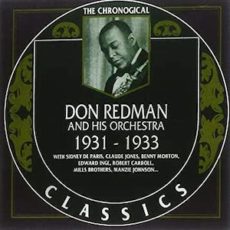
Claude Jones was born on February 11, 1901 in Boley, Oklahoma and began playing trombone at the age of 13, and studied at Wilberforce College before dropping out in 1922 to join the Synco Jazz Band. This group eventually evolved into McKinney’s Cotton Pickers, where he would play intermittently until 1929.
From there, Jones played in a variety of noted swing jazz ensembles from 1929 through the Depression until 1950, playing with Fletcher Henderson, Don Redman, Alex Hill, Chick Webb, and Cab Calloway.
He recorded with Jelly Roll Morton in 1939 and Louis Armstrong/Sidney Bechet in 1940. During the 1940s and into the Fifties, he also played with Coleman Hawkins, Zutty Singleton, Joe Sullivan, Benny Carter, and Duke Ellington.
After completing his second stint with Ellington, trombonist Claude Jones became a mess steward on the ship S.S. United States and passed away at sea on January 17, 1962.
More Posts: history,instrumental,jazz,music,trombone
Daily Dose Of Jazz…
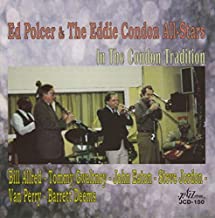
Ed Polcer was born February 10, 1937 in Paterson, New Jersey. He started leading jazz bands while attending Princeton University. While there studying engineering, he was headed toward a promising career as a professional baseball player. During that time, he was asked to play at the wedding of Princess Grace and Prince Rainier in Monaco, as well as a concert in Carnegie Hall. He chose music over baseball.
When cornetist Bobby Hackett recommended him to Benny Goodman, he abandoned his engineering and purchasing day jobs and joined Goodman’s small band. Other musicians in that band included John Bunch, Bucky Pizzarelli, Slam Stewart, Al Klink, Zoot Sims, George Masso, and Peter Appleyard.
While in his 20s and 30s, Ed played with Teddy Wilson, Bobby Hackett, Kenny Davern, Dick Wellstood, Gene Ramey, Sonny Greer, Joe Muranyi, Herbie Nichols and Joe Venuti. With his wife, singer and actress Judy Kurtz he managed and co-owned with Red Balaban, Eddie Condon’s Jazz Club in New York City from 1977–1985. Sharing the bandstand with him at the club were such musicians as Vic Dickenson, Herb Hall, and Connie Kay.
He was instrumental in giving several younger musicians, such as Scott Hamilton, Warren Vache, Dan Barrett, and Mark Shane a showcase of their talents. He served as musical director of several jazz festivals, including the North Carolina Jazz Festival, Colorado Springs Jazz Party, and San Diego Jazz Party. In the 1980s he served as president of the Long Island, New York-based non-profit International Art of Jazz, which promoted community and corporate involvement in jazz, presented jazz programs. He played for five U.S. Presidents, including the Congressional Ball at the White House for President Clinton in 1994, and played in Thailand with the King of Thailand, a jazz clarinetist and enthusiast.
He has been awarded the New Jersey Jazz Society lifetime achievement award, named a Jazz Legend by the San Diego Jazz Party, and honored by the Atlanta Jazz Preservation Society for unyielding commitment to the preservation of our beloved American art form of jazz. Cornetist, bandleader, festival director, club owner, and mentor Ed Polcer, who has a melodic mellow-toned sound with an unforced delivery, recorded ten albums as a leader and fourteen as a sideman, remains active.
More Posts: bandleader,cornet,history,instrumental,jazz,music