

Daily Dose Of Jazz…
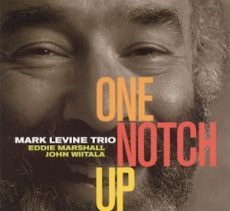
Mark Jay Levine was born on October 4, 1938 in Concord, New Hampshire and began playing the piano at the age of five, trombone in his early teens. Attending Boston University, graduating with a degree in music in 1960, he also studied privately with Jaki Byard, Hall Overton and Herb Pomeroy.
Moving to New York City in the Sixties he freelanced and then played with musicians Houston Person, Mongo Santamaría, and Willie Bobo from 1971 to 1974. Levine then moved to San Francisco, California and played with Woody Shaw for two years. His debut album was made as a leader for Catalyst Records in 1976.
He went on to play with the Blue Mitchell/Harold Land Quintet, Joe Henderson, Stan Getz, Bobby Hutcherson, Luis Gasca, and Cal Tjader. From 1980 to 1983, he concentrated on valve trombone, but then returned to playing mainly the piano. He then led his own bands, and recorded for Concord as a leader in 1983 and 1985. From 1992 Mark was part of Henderson’s big band. He created a new trio in 1996 and recorded it for his own, eponymous label. His Latin jazz group, Que Calor, was formed in 1997.
He put on his educator hat in 1970, teaching in addition to private lessons at Diablo Valley College, Mills College, Antioch University in San Francisco, San Francisco Conservatory of Music, Sonoma State University, and the JazzSchool in Berkeley. Levine wrote two method books: The Jazz Piano Book, and The Jazz Theory Book.
Pianist, trombonist, composer, author and educator Mark Levine, whose album Isla was nominated for a Grammy Award for Best Latin Jazz Album, died of pneumonia on January 27, 2022 at the age of 83.

More Posts: bandleader,clarinet,composer,educator,history,instrumental,jazz,music,producer,trombone

NICOLE HENRY
Nicole Henry is a jazz vocalist out of Philadelphia, Pennsylvania. Her debut release, The Nearness of You received critical acclaim and earned Henry the “Best New Jazz Artist” award by HMV Japan and landed on most jazz radio playlists in the United States. Henry’s Teach Me Tonight reached #1 in Japan and was named HMV Japan’s Best Vocal Jazz Album of 2005. She won the 2013 Soul Train Music Award for Best Traditional Jazz Performance.
She has recorded eight albums to date with her latest Time to Love Again hit the online shelf in 2021. She continually performs around the States. From classic jazz to classic soul, and a sprinkling of everything in between, Nicole Henry will perform material including “A Lot of Living to Do,” “You Taught My Heart to Sing,” and more.
Nicole has also enjoyed four national “TOP 10” CDs in the U.S., Japan and the U.K. and has headlined stages in 20 countries throughout her career garnering worldwide rave reviews by Japan Times, El Pais, DownBeat, Essence and more. Among her numerous accolades, Henry received the Soul Train Award for “Best Traditional Jazz Performance” & Artist” by HMV Japan, and “Best Solo Musician” by the Miami New Times.
The Band:
Nicole Henry ~ Vocals
Pete Wallace ~ Piano
Bass ~ James McCoy
Trumpet ~ Jean Caze
Drums ~ TBD
Tickets: $60.50 ~ $65.50 (fees included)
More Posts: adventure,bandleader,club,genius,instrumental,jazz,music,preserving,travel,vocal

DEE DANIELS QUARTET
Music is not a just-discovered thing for her. She has a firm foundation in the church, singing in a church choir when she was younger. She was then attracted to the soul-touching and enticing beauty of R&B.
She is in tune with the music she sings, respecting its integrities and demanding that its stories are as clear as intended, adding her own coolness and spicing to give it her unique personal energy.
In her spirit is a love for visual art — she was a high-school art teacher — but music has this almost seductive tug, and all are forgiven for falling deeply for it as Dee did. Music education is a passion. She inspires students of voice through masterclasses, workshops, and scholarship offerings.
The words of Mary Kunz of The Buffalo News say a lot about the experience of Dee Daniels’ vocal artistry: “Dee Daniels’ voice brings to mind all the most delirious adjectives: Honeyed. Sweet. Low, rich, smooth, and slow as molasses.” David A. Frye’s words about the singer are precious ones: “The Great American Songbook is in her DNA.”
Tickets: $15.00 ~ $35.00 | Student ~ General
More Posts: adventure,bandleader,genius,instrumental,jazz,music,preserving,travel,vocal
Daily Dose Of Jazz…
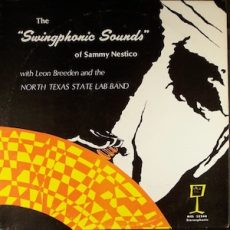
Harold Leon Breeden was born on October 3, 1921 in Guthrie, Oklahoma. At three his parents moved to Wichita Falls, Texas where he grew up and graduated from high school. He attended Texas Wesleyan College in Fort Worth, Texas on a scholarship and later transferred to Texas Christian University where he completed both his bachelor’s and master’s degrees. A move to New York City had him doing graduate work at Columbia University, he studied clarinet with Reginald Kell with whom Benny Goodman studied.
In 1944 after military duty he became the Director of Bands at Texas Christian University and later served as Director of Bands at Grand Prairie High School, then Director of Jazz Studies at the University of North Texas College of Music, where Breeden remained until his retirement in 1984.
Breeden also played saxophone and studied composition and arranging at Texas Christian. As a producer of the NBC Symphony, conducted by Arturo Toscanini, he declined a position as staff writer and arranger for the orchestra to take care of his ill father. Moving back to Texas he worked as music coordinator for KXAS-TV in Fort Worth, known at the time as WBAP-TV.
In the last several years of his life, Leon frequently soloed on clarinet with The Official Texas Jazz Orchestra. In 2009, The University of North Texas awarded him with an honorary Doctor of Humane Letters degree.
Clarinstist, educator, composer and director Leon Breeden, who made the One O’Clock Lab Band internationally famous, died of natural causes on August 11, 2010 in Dallas,Texas.
More Posts: bandleader,clarinet,composer,educator,history,instrumental,jazz,music
The Jazz Voyager
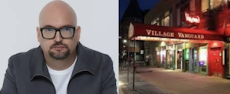
There’s nothing like New York City anytime of year but autumn is one of the best. The Jazz Voyager is staying put this week in the Village at the Washington Square Hotel. Just a short walk from the hotel is the legendary Village Vanguard, home to their long-running orchestra which was started by Thad Wilson and Mel Lewis, the iconic basement location that has hosted decades of the greatest and up and coming jazz musicians and vocalists.
Ethan Iverson is holding down the piano bench for this week’s entertainment along with saxophonist Sam Newsome, trumpeter Johnathan Finlayson, Jacob Garchik on trombone, bassist Peter Washington and drummer. His residency lasts through Sunday, October 5th with two sets each night. As usual I’ll be at the second seating.
Cover: $40.00

More Posts: adventure,club,ensembles,genius,jazz,music,piano,preserving,travel