

The Quarantined Jazz Voyager
I REMEMBER MILES 6.10.21
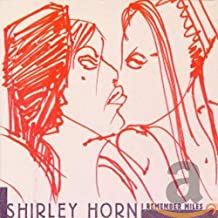
As I continue to be vigilant in my social distancing, masking, and avoiding the unasked that no one is checking I take down off the shelf a favorite vocalist who I used to see perform at the Bohemian Caverns in Washington, DC. This week the album I have selected is the 1998 studio album I Remember Miles by Shirley Horn. It was recorded in tribute to Miles Davis and covers songs that showed the sensitive side of the musicians..
The album’s cover art is a drawing Davis had once done of them both. The album design and artwork was by Chika Azuma, and Ira Gitler wrote the liner notes. Horn’s performance on this album won her the Grammy Award for Best Jazz Vocal Performance at the 41st Grammy Awards.
The production team was composed of producer Richard Seidel, assistant producer Sheila Mathis, production coordination by Camille Tominaro, Dave Baker engineered and mixed the album, and mastering was performed by Duncan Stanbury.
Track List | 52:54
- My Funny Valentine (Lorenz Hart, Richard Rodgers) ~ 5:33
- I Fall in Love Too Easily (Sammy Cahn, Jule Styne) ~ 5:39
- Summertime (George Gershwin, Ira Gershwin, DuBose Heyward) – 4:59
- Baby Won’t You Please Come Home (Charles Warfield, Clarence Williams) ~ 7:21
- This Hotel (Johnny Keating, Richard Quine) ~ 3:37
- I Got Plenty o’ Nuttin’ (Gershwin, Gershwin, Heyward) – 3:39
- Basin Street Blues (Williams) ~ 5:28
- My Man’s Gone Now (Gershwin, Gershwin, Heyward) ~ 10:39
- Blue in Green (Miles Davis, Bill Evans, Al Jarreau) ~ 5:59
- Shirley Horn ~ piano, vocals, producer
- Ron Carter ~ bass guitar
- Roy Hargrove ~ flugelhorn, trumpet
- Toots Thielemans ~ harmonica
- Buck Hill ~ tenor saxophone
- Charles Ables ~ double bass
- Steve Williams ~ drums, percussion
- Al Foster ~ drums

More Posts: adventure,album,club,genius,jazz,museum,music,preserving,restaurant,travel,vocal
Daily Dose Of Jazz…
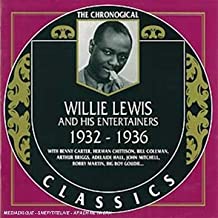
William T. Lewis, born Willie Meria Tawlton Lewis on June 10, 1905 in Cleburne, Texas. Growing up in Dallas, Texas and played in variety shows as a teen. He attended the New England Conservatory of Music, then played in Will Marion Cook’s orchestra. When Cook’s band was taken over by Sam Wooding, he traveled with him on his tours of Europe, South America, and North Africa, remaining until Wooding disbanded the orchestra in 1931.
Following this he put together his own band, Willie Lewis and His Entertainers. They featured some of Wooding’s old players and played to great success in Europe. Among those who played in his band were Herman Chittison, Benny Carter, Bill Coleman, Garnet Clark, Bobby Martin, and June Cole. His Entertainers recorded for French label Disques Swing.
In 1941 Willie disbanded the Entertainers and returned to New York City. He played sparsely after this but found some work as an actor, but took up bartending as his fortunes declined.
Clarinetist and bandleader Willie Lewis passed away on January 13, 1971 in New York City, at age 65.

More Posts: bandleader,clarinet,history,instrumental,music

Daily Dose Of Jazz…
Sanford Gold was born on June 9, 1911 in Cleveland, Ohio and played locally in Cleveland and led regional bands. Moving to New York City in the 1930s he collaborated with Babe Russin and Raymond Scott in 1935, and formed a trio with Dave Barbour in 1941.
In 1942 he worked as a studio musician for CBS before serving in World War II until 1946. After being discharged Sanford worked with Don Byas, Mary Osborne and others before he went to work for CBS rival NBC, from 1949-1954. An album was recorded under his name on the Prestige label in 1955 titled Piano d’Or.
A sideman, Gold worked with Johnny Smith, Al Cohn, Vic Dickenson, Coleman Hawkins and Sally Blair. He was one of the premier jazz piano teachers of his time. He self-published a book, A Modern Approach to Keyboard Harmony and Piano Techniques. Pianist Sanford Gold passed away on May 29, 1984.
More Posts: bandleader,history,instrumental,jazz,music,piano
Three Wishes
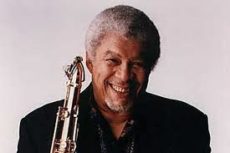
Frank Foster replied to the question the Baroness posed of his three wishes by telling her:
1. “Enlightenment! You know what I mean when I say that?”
2. “The absolute love of one person.”
3. “To see the whole world.”
*Excerpt from Three Wishes: An Intimate Look at Jazz Greats ~ Compiled and Photographed by Pannonica de Koenigswarter

More Posts: baroness,history,instrumental,jazz,music,pannonica,saxophone,three,wishes
Daily Dose Of Jazz…
Louis Thomas Black was born on June 8, 1901 in Rock Island, Illinois and began playing banjo during early childhood. He became a professional musician in 1917.
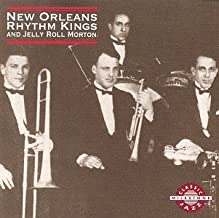
By 1921 he had joined the famous New Orleans Rhythm Kings at Friar’s Inn in Chicago, Illinois. With this band, he participated to the first-ever interracial recording session with pianist Jelly Roll Morton.
Leaving the band in 1923, Lou went on to play with other bands. From 1925 until 1931, he was a staff musician for radio station WHO in Des Moines, Iowa. He left music in the early 1930s, but came back and began playing in 1961. He sat in with several bands during a brief stay in New York City, then played gigs in Moline, Illinois from the fall of 1963.
An automobile accident landed him in a Rock Island hospital and while recovering from his injuries, he suffered a fatal heart attack. Lou Black, who often went by Lew or Louie and was one of the foremost banjo players of the Jazz Era, passed away on November 18, 1965.
More Posts: banjo,history,instrumental,jazz,music