

Daily Dose Of Jazz…
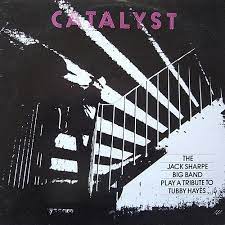
Jack Sharpe was born on August 19, 1930 in London, England. He began playing tenor saxophone at age eighteen. He played with Vic Lewis and Teddy Foster in the early 1950s and freelanced in the London area.
While working as a taxi driver in 1953 he played with Dizzy Reece in 1954, then in Tubby Hayes’s band the following year until 1956. Jack played with Mike Senn in the Downbeaters after 1957, worked further with Hayes, and led his own sextet in 1958. He went on to promote and book other musicians.
In the early 1970s Sharpe managed a nightclub where he led the house band on weekends. By 1975 he had left music intermittently to continue driving a cab. He returned to jazz in 1985, playing with Alan Branscombe and leading a Tubby Hayes tribute band.
Tenor saxophonist and bandleader Jack Sharpe, who was mainly active on the London jazz scene, transitioned on November 4, 1994.

More Posts: bandleader,history,instrumental,jazz,music,saxophone
Daily Dose Of Jazz…
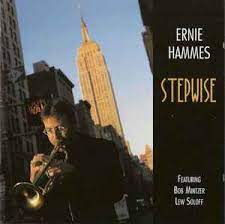
Ernie Hammes was born on August 18, 1968 in Esch-sur-Alzette, Luxembourg and studied at the Conservatories of Esch-sur-Alzette and Metz, France. He would later study at the Manhattan School of Music and the Berklee College of Music in Boston, Massachusetts.
Since 1997, Hammes has performed in New York City, traveled widely to jazz venues and festivals across Europe and North America. The Duke Ellington Orchestra has flourished for over forty-eight years since the death of the Duke, himself. As of 2013, Hammes is the only European known to have been a member of the Duke Ellington Orchestra from any era.
In his native Luxembourg, Ernie is the founder, director and lead trumpet in the Luxembourg Jazz Orchestra and since 1987 he has been a member of the Musique Militaire Grand-Ducale (the Luxembourg Army Band) where he is lead trumpet and, since 1994, leader of the big band.
Trumpeter Ernie Hammes continues to perform, compose and lead orchestras.
More Posts: bandleader,history,instrumental,jazz,music,trumpet
Daily Dose Of Jazz…
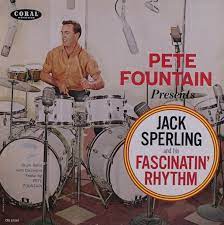
Jack Sperling was born on August 17, 1922 in Trenton, New Jersey. In 1941 he played with trumpeter Bunny Berigan. After World War II, he and Henry Mancini joined the Glenn Miller band when it was led by Tex Beneke. Drawing attention with his performance on the song St. Louis Blues in 1948, he then joined Les Brown and His Band of Renown, which played regularly for the Bob Hope radio program.
Sperling and other members of Brown’s band joined Dave Pell’s octet in 1953, recorded with the octet on Plays Irving Berlin and The Original Reunion of the Glenn Miller Orchestra. From 1954 to 1957 he was a member of Bob Crosby’s Bobcats. During the rest of his career, he worked in bands led by Charlie Barnet, Page Cavanaugh, Pete Fountain, and Benny Goodman.
He was among the studio musicians who accompanied Henry Mancini on the television show Peter Gunn. Jack recorded with him on the film soundtracks Charade and Days of Wine and Roses. He was the featured solo drummer on the theme song for the TV show Hogan’s Heroes and from 1959 to 1972 he was under contract with the NBC Orchestra. He worked on The Tonight Show Band, Rowan & Martin’s Laugh-In, and TV variety shows hosted by Bob Hope, Dean Martin, and Andy Williams.
In the music world, he recorded with Rosemary Clooney, Bobby Darin, Sammy Davis Jr., Doris Day, Ella Fitzgerald, The Four Freshmen, Lena Horne, Peggy Lee, Elvis Presley, Frank Sinatra, and Mel Tormé.
Drummer Jack Sperling, who was a big band and studio musician, transitioned on February 26, 2004.
More Posts: drums,history,instrumental,jazz,music
Daily Dose Of Jazz…
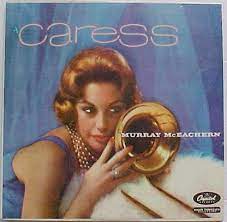
Murray McEachern was born in Toronto, Ontario, Canada on August 16, 1915 and studied the violin at the Toronto Conservatory of Music as a boy, and played his first concert recital at Massey Hall at age 12. As a teenager he studied both the saxophone and clarinet, playing with Lucio Agostini and also appearing on CRBC with Percy Faith. Over time he became proficient on several instruments, including the trombone, bass and trumpet.
In 1936, he went to Chicago, Illinois in search of work and got a break as soloist on trombone for Benny Goodman’s big band. He also worked with the Jack Hylton orchestra and then with the Casa Loma Orchestra led by Glen Gray from 1937-41. In 1941, McEachern joined the Paul Whiteman orchestra and shortly after began entertaining U.S. troops during World War II. Two years after the end of the war he went to work with the Phil Moore orchestra.
Murray did studio work in his later career for Hollywood films, including solo performances in The Glenn Miller Story, Paris Blues and The Benny Goodman Story. In the 1960s he was in the Morey Amsterdam Orchestra for the Morey Amsterdam Show on Television Station KTLA in Los Angeles.
A successful recording artist as leader, McEachern toured Europe in 1972 and briefly worked with the Duke Ellington orchestra the following year. He was owner/director of the Tommy Dorsey orchestra from 1974-77.
Trombonist and alto saxophonist Murray McEachern transitioned on April 28, 1982.
More Posts: bandleader,history,instrumental,jazz,music,saxophone,trombone

Daily Dose Of Jazz…
George Morrow was born on August 15, 1925 in Pasadena, California. After leaving the military he played with Charlie Parker, Sonny Criss, Teddy Edwards, Hampton Hawes and other musicians who were in Los Anegles, California. He then spent five years from 1948 to 1953 in San Francisco, California often appearing at the Bop City jazz club and working with Dexter Gordon, Wardell Gray, Billie Holiday and Sonny Clark, among others.
During the mid~1950s he recorded five albums with Sonny Rollins and at the end of the decade two with Sonny Stitt. He had been free-lancing around San Francisco clubs when Max Roach and Clifford Brown hired him to play with them after having rejected two other bassists. He appeared on all of the studio albums made by the Clifford Brown-Max Roach Quintet.
After the band dissolved due to the deaths of Brown and Richie Powell in a car accident, Morrow continued recording with Max Roach’s band. He also worked with Anita O’Day in the 1970s before joining the Disney World house band in 1976.
Bassist George Morrow, who never led his own recording date, transitioned on May 26, 1992 in Orlando, Florida.
More Posts: bass,history,instrumental,jazz,music