

Daily Dose Of Jazz…
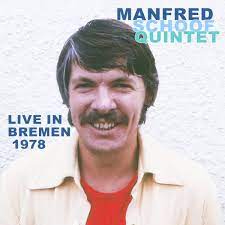
Manfred Schoof was born April 6, 1936 in Magdeburg, Germany and studied music in Kassel and Cologne, Germany where one of his teachers was the big band leader Kurt Edelhagen.
Schoof performed on Edelhagen’s radio program and toured with Gunter Hampel In the 1960s he started a free jazz band with Alexander von Schlippenbach and Gerd Dudek which became the basis for Manfred Schoof Orchestra. From 1969 to 1971 he was a member of the George Russell Orchestra.He has also worked with Jasper Van’t Hof and the Globe Unity Orchestra.
He composed classical music for the Berlin Philharmonic. His group has participated in performances of Die Soldaten, an operatic work by the contemporary composer Bernd Alois Zimmermann. He was featured in a profile on composer Graham Collier in the 1985 Channel 4 documentary Hoarded Dreams.
Since 2007 he has been chairman of the Union Deutscher Jazzmusiker. Trumpeter and composer Manfred Schoof has been a professor in Cologne since 1990.
More Posts: composer,history,instrumental,jazz,music,trumpet
Daily Dose Of Jazz…
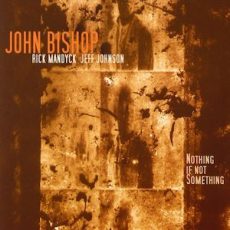
John Bishop was born on April 5, 1959 in Seattle, Washington and raised in Germany, Washington, D.C., San Antonio, Texas, and Eugene, Oregon. He started playing drums at the age of seven with the Patriots drum corp. Through high school and college he performed regularly and studied with Mel Brown and Charles Dowd at the University of Oregon prior to transferring to North Texas State University. A move back to Seattle in 1981 he played an extended engagement with Glider and never left.
The early Eighties saw Bishop as a member of the fusion group Blue Sky and for 20 years was a member of New Stories with pianist Marc Seales and bassist Doug Miller. They had four CDs of their own, six with the late be-bop saxophonist Don Lanphere, and a Grammy nominated recording with Mark Murphy, among others. They were a house trio for 17 years at Bud Shank’s Pt. Townsend Jazz Festival.
In 1997 John started the jazz label Origin Records, which was later named Jazzweek’s 2009 Label Of The Year, and OriginArts, a graphic design & CD production company, to help further the exposure of creative artists and their music. In partnership with his ex-drum student, Matt Jorgensen, and released over 750 recordings by 370 artists from around the world. 2003 saw them begin Seattle’s annual 4-day Ballard Jazz FestivalIn 2002 they added another jazz label, OA2 Records, a classical imprint, Origin Classical in 2008. Bishop has designed over eight hundred recording packages and multiple book covers, banners, posters, and other graphics for clients around the globe.
He has taught drums privately for 40 years, was on the faculty at the University of Washington from 2005-2009, and is presently adjunct at the Cornish College of the Arts. He regularly does drum and jazz workshops throughout the country, often with Hal Galper, including at the University of North Texas, University of Indiana, Dartmouth, Cal Arts, The New School, Purchase Conservatory-NYC, William Paterson University, University of Louisville, San Jose State University, The Jazz School- Berkeley, and Kent State University, to name a few.
He’s appeared on more than a hundred albums, and was inducted into the Seattle Jazz Hall of Fame in 2008, and named a Jazz Hero by the Jazz Journalists Association in 2019. Drummer and record producer John Bishop continues to pursue his endeavors in the industry.
More Posts: drums,history,instrumental,jazz,music,record producer
Daily Dose Of Jazz…
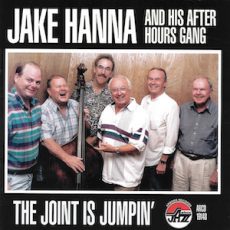
Jake Hanna was born in Roxbury, Massachusetts on April 4, 1931 and first performed in Boston, Massachusetts. He was the house drummer at Storyville nightclub in Boston, Massachusetts for a number of years in the 1950s and 1960s. Through the decades beginning in the late Fifties he played with Toshiko Akiyoshi, Maynard Ferguson, Marian McPartland, and Woody Herman’s Orchestra.
He appeared with the Mort Lindsey Orchestra on Judy Garland’s multi Grammy Award-winning 1961 live album, Judy at Carnegie Hall. He did extensive work as a studio musician both in and out of jazz, including an eleven year period from 1964 to 1975 as the drummer for the big band of the Merv Griffin Show. Jake recorded several albums with Carl Fontana for Concord Jazz in the mid-1970s and also played in Supersax. Later in his career he did much work as a sideman for Concord.
Drummer Jake Hanna transitioned from complications from blood disease on February 12, 2010 in Los Angeles, California at the age of 78.
More Posts: drums,history,instrumental,jazz,music
Daily Dose Of Jazz…
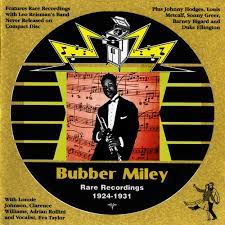
James Wesley “Bubber” Miley was born April 3, 1903 in Aiken, South Carolina into a musical family. At the age of six, he and his family moved to New York City, New York where, as a child, he occasionally sang for money on the streets, and later, at the age of 14, studied the trombone and cornet.
In 1920, after having served in the Navy for 18 months, he joined a jazz formation named the Carolina Five, and remained a member for the next three years, playing small clubs and boat rides all around New York City. After leaving the band at the age of 19, Miley briefly toured the Southern States with a show titled The Sunny South, and then joined Mamie Smith’s Jazz Hounds, replacing trumpeter Johnny Dunn. They regularly performed in clubs around New York City and Chicago, Illinois. While touring in Chicago, he heard King Oliver’s Creole Jazz Band playing and was captivated by Oliver’s use of mutes. Soon Miley found his own voice by combining the straight and plunger mute with a growling sound.
Miley’s talent and unique style were soon noticed in New York’s jazz scene by Duke Ellington who wanted him to jump in for trumpeter Arthur Whetsel. His collaboration with Ellington has secured his place in jazz history. Early Ellington hits, such as Black and Tan Fantasy, Doin’ the Voom Voom, East St. Louis Toodle-Oo, The Mooche, and Creole Love Call, prominently featured Miley’s solo work.
After leaving Ellington’s orchestra in 1929, Bubber joined Noble Sissle’s Orchestra for a one-month tour to Paris, France. After returning to New York, he recorded with groups led by King Oliver, Jelly Roll Morton, Hoagy Carmichael, Zutty Singleton and with Leo Reisman’s society dance band. In 1930, he recorded six songs for Victor Records under the name Bubber Miley and his Mileage Makers, a formation of thirteen musicians including clarinetist Buster Bailey.
His alcoholism terminally affected his life. Trumpet and cornetist Bubber Miley who specialized in the use of the plunger mute, transitioned from tuberculosis on May 20, 1932 on Welfare Island in New York City.
Daily Dose Of Jazz…
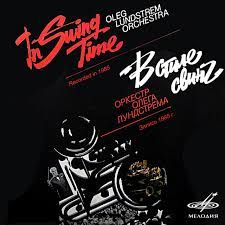
Oleg Leonidovich Lundstrem was born April 2, 1916 into a family of musicians in Chita, Transbaikal Oblast. His family moved to Harbin, China when he was five. By 1935, inspired by Duke Ellington’s Dear Old Southland record which he purchased, he joined forces with eight other young Russian amateur musicians and formed the Oleg Lundstrem Orchestra. The following year the band moved to Shanghai, China where they immediately became popular among the public. The band was an important part of Shanghai’s jazz scene until 1947, along with Buck Clayton Orchestra.
After World War II, in 1947 Oleg returned to the Soviet Union and settled in Kazan, where he worked as a violinist in the opera and ballet theatre, while keeping his jazz orchestra as a side act. 1956 saw the Oleg Lundstrem Orchestra moving to Moscow where he was appointed by the Soviet cultural authorities as the orchestra’s art director and conductor.
His orchestra was recognized by the Guinness Book of Records as the oldest continuously existing jazz band in the world, the official name being The State Oleg Lundstrem Chamber Orchestra of Jazz Music.
Composer and conductor Oleg Lundstrem, also spelled Lundstroem or Lundström, transitioned from natural causes at his home on October 14, 2005 in Korolyov, Moscow Oblast at the age of 89.
More Posts: bandleader,composer,conductor,history,instrumental,jazz,music,violin