

Daily Dose Of Jazz…
Herbie Lovelle was born June 1, 1924 in Brooklyn, New York. His uncle was drummer Arthur Herbert. He began his career in the late 1940s with the trumpeter, singer and bandleader Hot Lips Page. By the 1950s he was playing with the saxophonist Hal Singer, Johnny Moore’s Three Blazers and the pianist Earl Hines.
Through working for both Lucky Thompson and Jimmy Rushing of Count Basie’s Orchestra, he became house drummer at the Savoy Ballroom in New York City for much of the 1950s. He toured with the tenor saxophonist Arnett Cobb and the pianist Teddy Wilson in 1954.
He contributed to the pianist Paul Curry’s album Paul Curry Presents the Friends of Fats in 1959. Then in the early years of television, Herbie performed with the King Guion Orchestra on the Jerry Lester Show and the Ed Sullivan Show. In 1966, he was the lead drummer for the Sammy Davis, Jr. TV show.
During the 1950s Lovelle began playing more R&B and worked as a studio musician recording behind Sam Taylor, Bob Dylan, Pearls Before Swine, Eric Andersen, David Blue, John Denver, Tom Rush, B. B. King, John Martyn, the Strangeloves, the McCoys, and the Monkees. He continued working as a studio musician well into the 1980s.
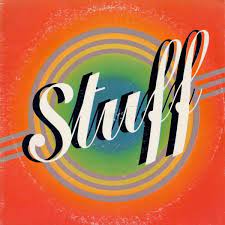
In 1976, he produced the first album by Stuff, which went platinum in Japan. He also played drums in the 1976 revival of Guys and Dolls. From the 1980s on he acted in film and television, on such shows as Law & Order and Third Watch. His film credits ~ A Man Called Adam, Bella, Mitchellville, The Rhythm of the Saints, Don’t Explain, The Curse of the Jade Scorpion, and Down to Earth among others.
His list of recordings as a studio musician extended across genres to some six dozen albums with jazz notables Candido Camero, Buck Clayton , Art Farmer, Herbie Mann, Sonny Stitt, Budd Johnson, Buddy Tate, Chico O’Farrill, Evie Sands, Johnny Hodges, Nat Adderley, Tony Bennett, Illinois Jacquet and numerous others. Drummer, producer and actor Herbie Lovelle transitioned on April 8, 2009 in New York City.

Daily Dose Of Jazz…
Billy Robinson was born on May 31, 1939, in Fort Worth, Texas. His jazz roots go back to his father’s nightclub where he played boogie-woogie piano as a child, and watched the adult musicians perform. At the beginning of his musical career he played with John Carter, Ornette Coleman, and Dewey Redman. Living and playing in San Francisco, California in the mid-1960s towards the end of the decade he relocated to New York City, where he collaborated with Charles Mingus in 1969.
During the late 1960s, Robinson converted to Islam and remained a practicing Muslim for the rest of his life. A move to Montreal, Canada is where he married his first wife in 1970. Short-lived, four years later he married Suzanne Cyr and moved to Ottawa, Canada in 1978 and performed sporadically at the local level.
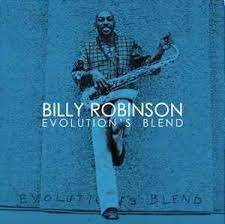
Following his recording debut on Archie Shepp’s Attica Blues, Billy released his first album titled Evolution’s Blend as a leader in 1972. Then in 1973 he played on the Sadik Hakim track Grey Cup Caper. From 1972 to 1998 he was a part of six recording sessions.
Tenor saxophonist, composer, educator and bandleader Billy Robinson, who was dubbed The Mystic by Freddie Hubbard, transitioned from a heart attack on August 11, 2005, in Ottawa, Ontario, at the age of 66.Bestow upon an inquiring mind a dose of a Fort Worth saxophonist to motivate the perusal of the genius of jazz musicians worldwide whose gifts contribute to the canon…
Billy Robinson: 1939 ~2005 | Tenor SaxophoneMore Posts: bandleader,composer,educator,history,instrumental,jazz,music,saxophone

Daily Dose Of Jazz…
David Kenneth Brooks, Jr. was born May 29, 1922 in Fayetteville, North Carolina, the older brother of Tina Brooks. His first professional gig was with the medicine show of Pepper McAllister.
He served in the Army during World War II where he played with James Moody. He moved to New York City after his discharge in 1944, where he played at Minton’s Playhouse and the Harlem Grill. He toured North Carolina in a band alongside Sonny Payne in 1947, then played with George Barkley at the Baby Grand in New York. He first recorded with Barkley around 1947 or 1948, then went on to play with Sonny Thompson from 1948 to 1957.
In 1958 he worked with Jimmy McCracklin and in 1961 with Phil Upchurch. While doing session work with pop musicians in the 1960s. From 1967 to 1973 he played at the Fantasy East in New York City with alto saxophonist Charles Williams and Don Pullen, recording three albums as a trio for Mainstream Records.
After a short run with Jimmy McGriff in 1974, Brooks became a member of Bill Doggett’s ensemble, where he remained for two decades from 1976 to 1996. He worked in the middle of the 1990s with Bross Townsend, Carrie Smith, and the Harlem Blues and Jazz Band, and toured France with Al Casey in 1999.
He recorded with Wynonie Harris, Phil Upchurch, Charles Williams, Bill Doggett, Bross Townsend, Michel Pastre, Joseph Carter, and Bobby Forrester. Tenor saxophonist David Kenneth Brooks, Jr., better known as Bubba Brooks or Bubber Brooks, transitioned on April 11, 2002.

More Posts: history,instrumental,jazz,music,saxophone
Daily Dose Of Jazz…
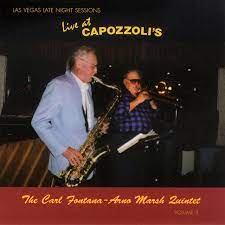
Arno Marsh was born on May 28, 1928 in Grand Rapids, Michigan and played early on in local dance bands, then played in Woody Herman’s ensemble from 1951 to 1953, where he soloed frequently on Herman’s Mars Records releases.
He led a band in a Grand Rapids residency from 1953 to 1955, then rejoined Herman intermittently through 1958. He recorded with Stan Kenton, Charlie Barnet, Lionel Hampton, Buddy Rich, and Harry James. After the late 1950s most of Marsh’s activity was in Las Vegas, Nevada leading hotel orchestras. He accompanied Nancy Wilson on record with one of them in 1968, and did a Woody Herman tribute in 1974.
Tenor saxophonist Arno Marsh transitioned at the age of 91 on July 12, 2019.
More Posts: history,instrumental,jazz,music,saxophone
Daily Dose Of Jazz…
William Charles “Diz” Disley was born on May 27, 1931 in Winnipeg, Manitoba, Canada, where his parents worked. When he was four, they moved back to Llandyssil in Montgomeryshire, Wales and then five years later to Ingleton, North Yorkshire, England where his mother worked as school teacher. During his childhood he learned to play the banjo, but took up jazz guitar at the age of 15, after being exposed to the playing of Django Reinhardt. His neighbour Norry Greenwood taught him the chords to Miss Annabel Lee and Try a Little Tenderness in the summer of 1946.
Showing an early gift for drawing, he left school to enroll at Leeds College of Art, which had a reputation for student music making, in particular trad jazz. Soon he was playing in the Vernon City Ramblers and the Yorkshire Jazz Band with trumpeter Dick Hawdon and clarinettist Alan Cooper.
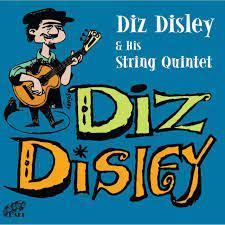
Post National Service in 1953, he resumed his studies in Leeds, and began selling cartoons to national newspapers and periodicals. A move to London, England saw him joining Mick Mulligan’s band with George Melly. He worked with most of the trad jazz bands of the day, including Ken Colyer, Cy Laurie, Sandy Brown, Kenny Ball, and Alex Welsh. In 1958, he formed a quintet to replicate that sound, employing violinist Dick Powell, guitarists Danny Pursford and Nevil Skrimshire, and a range of double bassists including Tim Mahn.
Disley started working as guitarist with a number of skiffle groups as it took over from trad jazz working and recording with Ken Colyer, Lonnie Donegan, Bob Cort, Nancy Whiskey. He would go on to persuade Stephane Grappelli to return to public performances using an all-strings acoustic line-up, recreating the spirit of the Quintette for a new generation of listeners. This began a collaboration between Grappelli and the Diz Disley Trio, sometimes billed The Hot Club of London, and after twenty years he broke his wrist when he was knocked down by a motorcycle. In 1978 Grappelli, Disley, and others were invited by David Grisman to contribute the score to the film King of the Gypsies. Grappelli and Disley had walk-on parts as gypsy musicians and were suitably attired for the occasion, but the soundtrack to the movie was never released.
In the 1980s Disley formed a working partnership with gypsy jazz guitar prodigy Bireli Lagrene, then put together a club quintet for Nigel Kennedy, and the Soho String Quintette that recorded Zing Went The Strings for Waterfront Records.
In the 1990s, he spent several years in Los Angeles, California and delved into blues and country-rockabilly. He moved to Spain in the 2000s and painted several portraits of jazz musicians in the cubist style. In early 2010 his health took a turn for the worse, and he was admitted to the Royal Free Hospital in Hampstead, England on February 2nd. Guitarist Diz Disley transitioned on March 21, 2010.
More Posts: bandleader,guitar,history,instrumental,jazz,music