

Daily Dose Of Jazz…
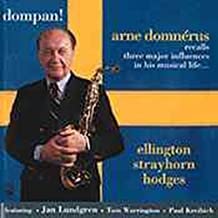
Sven Arne Domnérus was born on December 20, 1924 in Stockholm, Sweden and began to play the clarinet at the age of 11. By the time he left school he had taken up the saxophone and turned professional. In 1949 he performed at the Paris Jazz Festival and with Charlie Parker when he was on tour in Sweden in 1950.
A few years later Arne recorded with Clifford Brown, Art Farmer, and James Moody. From the middle 1950s to the middle 1960s he was a featured soloist in the Swedish Radio Big Band. With Bengt-Arne Wallin, Rolf Ericson, and Åke Persson (the latter two were former members of Duke Ellington’s Orchestra), he participated in the Jazz Workshops organised for the Ruhrfest in Recklinghausen by Hans Gertberg from the Hamburg radio station.
He recorded several times with Quincy Jones in Sweden and is featured throughout The Midnight Sun Never Sets, composed and arranged by Jones and recorded under Jones’ direction by Harry Arnold’s orchestra in 1958. Domnérus’ playing in his early career was typical of the cool, sophisticated, technically accomplished and lyrical style of Swedish modern jazz during the 1950s.
As a leader Domnerus recorded forty~four albums and another 104 as a sideman with Alice Babs, Lars Gullin, Bengt Hallberg, Dizzy Gillespie, Thad Jones, George Russell, Toots Thielemans, Red Rodney, James Moody, Leonard Feather and Monica Zetterlund, among others too numerous to mention.
Saxophonist, clarinetist and composer Arne Domnerus, who wrote for film and television, and retired from playing due to his declining health, passed away on September 2, 2008 in his hometown.

More Posts: bandleader,clarinet,composer,history,instrumental,jazz,music,saxophone
Daily Dose Of Jazz…
Lucius Carl Watters was born on December 19, 1911 in Santa Cruz, California and raised in Rio Vista, California. At St. Joseph’s military academy he belonged to the drum and bugle corps. In 1925, he moved with his family to San Francisco, California where he started a jazz band. Teaching himself how to arrange music, he found work playing trumpet on a cruise ship. He studied music at the University of San Francisco with help from a scholarship, but he dropped out of school to pursue a career.
During the Thirties, he went on tour across America with the Carol Lofner Big Band. While in New Orleans, Louisiana he became interested in traditional jazz. Back in California, he assembled jam sessions with Bill Dart, Clancy Hayes, Bob Helm, Dick Lammi, Turk Murphy, and Wally Rose. In 1938, he formed a band that included Hayes, Helm, Squire Gersh, Bob Scobey, and Russell Bennett. The band found steady work at Sweet’s Ballroom in Oakland, California and slipped in pieces of traditional New Orleans jazz into the repertoire until Watters was fired.
1939 saw Lu established the Yerba Buena Jazz Band to revive the New Orleans jazz style of King Oliver. He brought in pianist Forrest Browne, who taught the band music by Jelly Roll Morton. He wrote music and arrangements to add to the traditional repertoire. World War II interrupted their performing and he joined the Navy. After the war they reunited and started playing at different clubs and backing visiting musicians Kid Ory, James P. Johnson, and Mutt Carey.
In 1950 the band broke up and Watters left music. He became a carpenter, cook, and a student of geology. Coming out of retirement in 1963 he performed with Murphy at an anti-nuclear protest in California to prevent a nuclear plant from being constructed at Bodega Bay. He recorded an album for Fantasy with Rose, Helm, Bob Mielke, and Barbara Dane. It included the title track and another song named for the San Andreas Fault, which was consistent with his interest in geology.
Trumpeter and bandleader Lu Watters, who had a mineral from California named wattersite in his honor, passed away on November 5, 1989 in Santa Rosa, California at age 77.
More Posts: bandleader,history,instrumental,jazz,music,trumpet
Daily Dose Of Jazz…
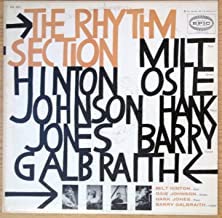
Joseph Barry Galbraith, born on December 18, 1919 in Pittsburgh, Pennsylvania.
Moving to New York City in the early 1940s he found work playing with Babe Russin, Art Tatum, Red Norvo, Hal McIntyre, and Teddy Powell. He played with Claude Thornhill in 1941–1942 and again from 1946–1949 after serving in the Army. In ‘53 he did a tour with Stan Kenton.
Having extensive work as a studio musician for NBC and CBS in the 1950s and 1960s, presented him with the opportunity to work with among others Miles Davis, Michel Legrand, Tal Farlow, Coleman Hawkins, George Barnes, John Lewis, Hal McKusick, Oscar Peterson, Max Roach, George Russell, John Carisi, and Tony Scott.
He accompanied on the recording of singers Anita O’Day, Chris Connor, Billie Holiday, Helen Merrill, Sarah Vaughan and Dinah Washington. He was a mentor to Ralph Patt.
In 1961, he appeared in the film After Hours. In 1963-1964 he played on Gil Evans’s album The Individualism of Gil Evans, and in 1965 he appeared on Stan Getz and Eddie Sauter’s soundtrack to the 1965 film Mickey One.
As an educator he taught for five years from 1970 to 1975 at CUNY (City University of New York) and published a guitar method book in 1982. From 1976–77 Galbraith taught guitar at New England Conservatory in Boston, Massachusetts.
Guitarist and bandleader Barry Galbraith passed away from cancer at the age of 63 on January 13, 1983 in Bennington, Vermont.
More Posts: bandleader,guitar,history,instrumental,jazz,music
Daily Dose Of Jazz…
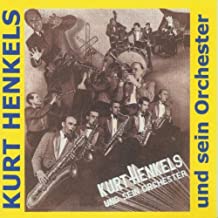
Kurt Henkels was born in Solingen, Germany on December 17, 1910. He led jazz and light music ensembles. He conducted radio and television dance bands from the 1930s well into the 1970s.
Unfortunately, little is known or written about his early childhood or his formal education years. Bandleader Kurt Henkels, who made over 250 recordings, passed away on July 12, 1986 in Hamburg, Germany.
More Posts: bandleader,history,instrumental,jazz,music
Daily Dose Of Jazz…
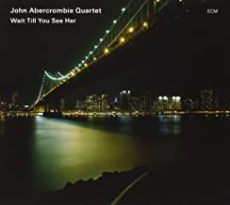
John Laird Abercrombie was born in Port Chester, New York on December 16, 1944. Growing up in the 1950s in Greenwich, Connecticut he was attracted to the rock and roll of Chuck Berry, Elvis Presley, Fats Domino, and Bill Haley and the Comets. He also liked the sound of jazz guitarist Mickey Baker of the vocal duo Mickey and Silvia. He had two friends who were musicians with a large jazz collection and they listened to albums by Dave Brubeck and Miles Davis.
The first jazz guitar album he heard was by Barney Kessel, and taking guitar lessons at the age of ten, asked his teacher to show him what Kessel was playing. After high school, John went to Berklee College of Music and while there he was drawn to the music of Jim Hall, Sonny Rollins, and Wes Montgomery. He cites George Benson and Pat Martino as inspirations. His playing around Boston, Massachusetts led to his meeting the Brecker Brothers and organist Johnny Hammond Smith, who invited him to go on tour.
From Berklee in 1967 to North Texas State University to a move to New York City in 1969 where he became a popular session musician. He joined the Brecker Brothers in the jazz-rock fusion band Dreams, followed by recordings with Gato Barbieri, Barry Miles, and Gil Evans. He continued to play fusion in Billy Cobham’s band until an invitation from drummer Jack DeJohnette led to the fulfillment of Abercrombie’s desire to play in a jazz-oriented ensemble.
Around the same time, record producer Manfred Eicher, founder and president of ECM Records, invited him to record an album. He recorded his first solo album, Timeless, with DeJohnette and keyboardist Jan Hammer. who had been his roommate in the 1960s. In 1975 he formed the band Gateway with DeJohnette and bassist Dave Holland.
Between 1984 and 1990, Abercrombie experimented with a guitar synthesizer. Free jaz became a mainstay for him in the 1990s and 2000s as he formed many new associations. Drummer Adam Nussbaum, and Hammond organist Jeff Palmer became his trio and made a free-jazz album, then replaced Palmer with organist Dan Wall and released three albums between 1992 and 1997. Adding trumpeter Kenny Wheeler, violinist Mark Feldman and saxophonist Joe Lovano to the trio he recorded Open Land in 1999.).
He continued to tour and record until the end of his life. who recorded 59 as a leader, 4 with Gateway, 6 with Andy LaVerne and 93 as a sideman for the who’s who in jazz. Guitarist John Abercrombie, whose work explored jazz fusion, free jazz, and avant-garde jazz, passed away of heart failure in Cortlandt Manor, New York, at the age of 72 on August 22, 2017.
More Posts: bandleader,composer,guitar,history,instrumental,jazz,music