

Daily Dose Of Jazz…
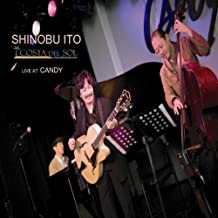
Shinobu Ito was born in Oiso, Kanagawa, Japan on January 28, 1951. While a young boy, his interest was in American pop songs, so his father bought him a guitar and gave him lessons. Devoting great efforts to his study of the guitar, in junior high school he organized his own pop music group and performed at various musical events. He became interested in jazz guitar during his high school days when he listened to Wes Montgomery. While attending Tokai University, he studied guitar with Ikuo Shiosaki, and became a member of the university’s Jazz Workshop.
He began his professional career at this time, performing at clubs and on recordings. In 1975, during a 6-month stay in Los Angeles, California he met Toshiko Akiyoshi, who introduced him to many musicians and strongly suggested to him that he go to New York to learn and play jazz on his next visit to the States.
When he returned to Japan in 1975, Shinobu joined vocalist Yoshiko Kimura’s group, and also resumed activities with top Japanese musicians such as Kohsuke Mine, Seiichi Nakamura, Shigeharu Mukai, Hidefumi Toki and Takao Uematsu. He also performed with Tete Montliu, Bill Reichenbach, Ronnie Foster, Stanley Banks in this era.
Back in New York City again in 1977 he became a member of a 10-piece band directed by Reggie Workman, joined Teruo Nakamura & his Rising Sun Band and Shinobu appeared on pianist Tsuyoshi Yamamoto’s album in 1981. Once settled he performed and recorded with Joe Jones Jr., Sadik Hakim, John Orr, Tommy Turrentine, Bob Mintzer, Rickey Ford and Kenny Kirkland, Valery Ponomarev, Lonnie Plaxico, Eddie Henderson, Lonnie Smith, Jesse Davis, Kenny Davis and Jeff Williams, Mike Formanek, Vincent Herring and Judy Niemack among others.
Shinobu released his first CD in 1991 with Tom Harrell, Danny Gottlieb, Gary King, Mark Soskin and Dick Oates. While Shinobu is known as a jazz guitarist who plays with a pick, he also plays only with his fingers, and his improvisations effectively fuse classical guitar and jazz.
As an educator he has worked as an instructor in the Jazz Division of the Senzoku College of Music in Tokyo, Japan. Returning to New York City in 2009 guitarist Shinobu Ito resumed performing and recording and continues to explore new directions.
More Posts: bandleader,history,instrumental,jazz,music,saxophone
Daily Dose Of Jazz…
Charlie Holmes was born on January 27, 1910 near Boston, Massachusetts and began playing alto saxophone at age 16 and emulated the style of his childhood friend, Johnny Hodges.
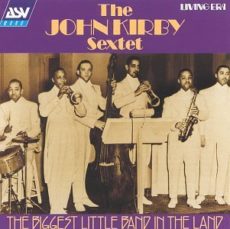
Beginning his professional career a week later, after moving to New York City Charlie worked for a variety of groups, including Luis Russell in 1928. Between 1929 and 1930 he recorded with Red Allen. He would work with Russell again a few times and in 1932 joined the Mills Blue Rhythm Band. He was in John Kirby’s Sextet, Cootie Williams’ Orchestra, and Louis Armstrong’s band for much of the next two decades.
Leaving music in 1951, Holmes did not return for twenty years then worked in Clyde Bernhardt’s Harlem Blues & Jazz Band. He later played for the Swedish band Kustbandet. He never acted as a leader in any recording or group.
Alto saxophonist Charlie Holmes, best known for composing Sugar Hill Function, not only performed during the swing era but also played clarinet and oboe for the Boston Civic Symphony Orchestra, passed away on September 19, 1985 in Stoughton, Massachusetts.
More Posts: composer,history,instrumental,jazz,music,saxophone

Daily Dose Of Jazz…
James Otis Wyble was born on January 25, 1922 in Port Arthur, Texas and in his early years worked for a radio station in Houston. He and guitarist Cameron Hill played Western swing, an outgrowth of jazz, in a band led by Burt “Foreman” Phillips. The sound of two guitars attracted Bob Wills, another fan of Western swing, and he hired both men for his band, the Texas Playboys.
His career interrupted by World War II, he served in the Army from 1942 to 1946, but returned to music after he came home. Jimmy continued to play in Western swing bands, but his interest in jazz surfaced on his 1953 debut album, The Jimmy Wyble Quintet. He would soon work with Barney Kessel and Benny Goodman, and then played with Red Norvo for eight years, including on a tour of Australia accompanying Frank Sinatra.
During the 1960s Wyble took a job as a studio musician in Los Angeles, California working as a guitarist for movies and television, playing on movie soundtracks, including The Wild Bunch, Ocean’s Eleven, Everything You Always Wanted to Know About Sex and Kings Go Forth, and played on TV shows such as The Flip Wilson Show and Kraft Music Hall.
He became an educator after taking classical guitar lessons from Laurindo Almeida, teaching guitar to Larry Koonse, Howard Roberts, Howard Alden and Steve Lukather among others. The 1970s saw Jimmy developing a two-line contrapuntal approach to guitar and composed numerous etudes in this style, publishing Classical/Country, The Art of Two-Line Improvisation, and Concepts for the Classical and Jazz Guitar.
During the 1980s, he left the music business, returning to performance in 2005. Larry Koonse, his former student, issued the album What’s in the Box with compositions by Wyble based on his book of etudes.
Guitarist, composer, and educator Jimmy Wyble continued to perform, record and teach until his death on January 16, 2010.
More Posts: composer,educator,guitar,history,instrumental,jazz,music
Daily Dose Of Jazz…
Igor Grigoriev was born on January 24, 1955 in Moscow, Russia and taught himself to play the guitar as a young child, and later obtained his master’s degree from a music institution in Russia. As a young boy in the late sixties, he was interested in the latest music of the time, rock and started his career, gaining fame by playing and touring around the world.
Becoming a band leader of the trio, Roof, with trumpeter Andrew Solovyov, and percussionist Michael Zhukov they recorded on Melodia Records and Leo Records. His group, Asphalt also gained tremendous popularity despite its short life span.
As he developed musically, Grigoriev became interested in Charlie Parker’s work, but in later years the influence of classical composers became evident in his music. Permanently migrating to the United States in 1989 he continued his career, as a classical and jazz musician, but later he became more and more interested in Avant-garde music.
Better known for his 1990s work, he rapidly assimilated the American avant-garde and forged his own, instantly identifiable style. His music of the 1970s and 1980s saw transition from rock to classical to jazz and to avant-garde music. Igor developed methods of simultaneously improvising bass lines, harmony and melodic lines. In his later years, his playing became less predictable and formulaic.
He has recorded a number of solo albums, as well as recording or performing with Stan Getz, Red Callender, Larry Gales, Milcho Leviev, Ira Schulman, Rod Oakes, and many others. Igor and Rod founded OGOGO in 1996, which is one of the most important organizations to perform improvised music. His central focus was free improvisation, though he occasionally appeared in more conventional jazz and classical contexts, such as big band, various ensembles, and string orchestra.
He composed and arranged for a wide range of music genres, did orchestra work for a Russian circus, and arranged music for theatrical plays. As an educator he taught guitar, music history, jazz history, ensembles, and improvisation at Los Angeles Harbor College and Cerritos College in Los Angeles, California. Guitarist, composer, arranger, band leader and educator Igor Grigoriev passed away on September 25, 2010.
More Posts: arranger,composer,guitar,history,instrumental,jazz,music
Daily Dose Of Jazz…
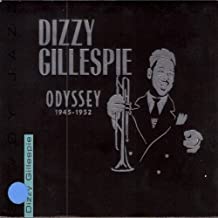
Ray Abrams was born January 23, 1920 in New York City, His younger brother was jazz drummer Lee Abrams. He first worked with Dizzy Gillespie in 1945, toured Europe with Don Redman in 1946 and was with Andy Kirk in 1947. He went back and forth between Kirk and Gillespie for decades.
Outside of his work with Gillespie he was best known for the Ray Abrams Big Band. Other bands with which he played into the early 1950s include those of Hot Lips Page, Roy Eldridge, and Slim Gaillard.
Tenor saxophonist Ray Abrams, known for his jazz and jump blues playing, passed away in July 1992.
More Posts: history,instrumental,jazz,music,saxophone