

Daily Dose Of Jazz…
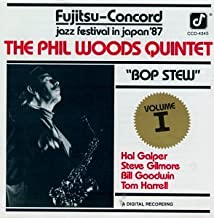
Steven Dirk Gilmore was born January 21, 1943 in Trenton, New Jersey and picked up bass when he was twelve years old, playing locally in Philadelphia, Pennsylvania as a teenager. At age 17 he enrolled at the Advanced School of Contemporary Music, run by Oscar Peterson.
Later in the 1960s Steve played with Ira Sullivan and the Baker’s Dozen Big Band. In 1967 he joined Flip Phillips’s group and remained until 1971, after which he worked with Al Cohn and Zoot Sims, Mose Allison, The Thad Jones/Mel Lewis Orchestra, Phil Woods, Richie Cole, and the National Jazz Ensemble.
The 1980s saw him performing with John Coates, Meredith D’Ambrosio, Dave Frishberg, Hal Galper, Tom Harrell, and Toshiko Akiyoshi, as well as with Woods. Gilmore and Woods would remain collaborators well into the 1990s.
In 1988 he began working with Dave Liebman, with whom he would work intermittently through the late 1990s. Other performing and recording associations included Carol Sloane, Susannah McCorkle, Bill Charlap, and Jim Hall, Tony Bennett, Michele LeGrand, Tom Waits, Susannah McCorkle, and Eddie Jefferson.
An experienced clinician, he has recorded eight jazz Play-along teaching recordings with Jamey Aebersold. In addition he has produced two transcribed bass line books and has received three Best Of The Year Grammy Group Awards in 1977, 1982, 1983 as part of the Phil Woods Quartet. Bassist Steve Gilmore continues to perform and record.
More Posts: bass,instrumental,jazz,music
Daily Dose Of Jazz…
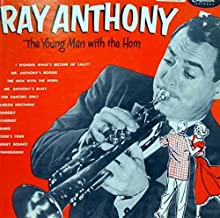
Ray Anthony was born Raymond Antonini on January 20, 1922 into an Italian family in Bentleyville, Pennsylvania but moved with his family to Cleveland, Ohio, where he studied the trumpet. From 1940~1941 he played in Glenn Miller’s band and appeared in the Glenn Miller movie Sun Valley Serenade before joining the U.S. Navy during World War II. After the war he formed his own group and the Ray Anthony Orchestra became popular in the early 1950s with The Bunny Hop, Hokey Pokey, and the theme from Dragnet. He had a No. 2 chart hit with a remake of the Glenn Miller tune At Last in 1952, the highest charting pop version of the song in the United States.
The following year his orchestra was featured when Helen O’Connell and Bob Eberly headlined a summer replacement program for Perry Como’s CBS television show. From 1953–1954 Ray was musical director of the television series TV’s Top Tunes.
After appearing as himself in the 1955 film Daddy Long Legs and starring in a short-lived television variety show, The Ray Anthony Show. Anthony he revved up his acting appearing in films during the late 1950s. In 1957, Anthony and his orchestra recorded the music score for the film This Could Be The Night, with vocals performed by Julie Wilson.
After his marriage to Mamie van Doren ende so did his brief film career. He continued his musical career and had another hit record with the theme from Peter Gunn, which reached No. 8 on the Billboard Hot 100 pop chart. Among his pianists was Allen “Puddler” Harris, and Kellie Greene, who also played the vibraphone. As a composer he wrote Thunderbird, The Bunny Hop, Trumpet Boogie, Big Band Boogie, and Mr. Anthony’s Boogie. Trumpeter Ray Anthony remains active today.
More Posts: bandleader,history,instrumental,jazz,music,trumpet
Daily Dose Of Jazz…
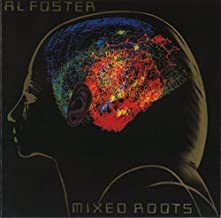
Al Foster was born on January 18, 1943 in Richmond, Virginia and grew up in New York City. He began playing drums at the age of 13 and made his recording debut on Blue Mitchell’s The Thing to Do at age 20.
He joined Miles Davis’s group when Jack DeJohnette left in 1972 and stayed with Davis until 1985. Foster began composing in the 1970’s, and has toured with his own band, including musicians such as bassist Doug Weiss, saxophonist Dayna Stephens, and pianist Adam Birnbaum.
He played with Miles Davis during the 1970s and was one of the few people to have contact with Davis during his retirement from 1975 to 1981. Al also played on Davis’s 1981 comeback album The Man with the Horn. He was the only musician to play in Davis’s band both before and after his retirement.
Other artists Foster has performed and recorded with include Joe Henderson, Freddie Hubbard, McCoy Tyner, Wayne Shorter, Bobby Hutcherson, John Scofield, Pat Metheny, Charlie Haden, Randy & Michael Brecker, Bill Evans, George Benson, Kenny Drew, Carmen McRae, Stan Getz, Toots Thielemans, Dexter Gordon and Chick Corea.
Drummer Al Foster, who has toured extensively with Herbie Hancock, Sonny Rollins, and Joe Henderson continues to engage in jazz.
More Posts: bandleader,drums,history,instrumental,jazz,music
Daily Dose Of Jazz…
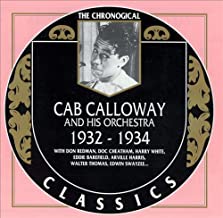
Morris Ellis “Fruit” White was born January 17, 1911 in Nashville, Tennessee and grew up in Peoria, Illinois. During the 1920s he played with Charlie Creath, Dewey Jackson, and Ethel Waters before joining The Missourians in 1928.
In 1930, Cab Calloway became the leader of the ensemble, with White becoming one of his most important sidemen. He remained with Calloway’s band until 1938. He played with Lionel Hampton in 1941, then left the music industry for good.
Banjoist and guitarist Morris White passed away In November 1986.

Daily Dose Of Jazz…
Claude Abadie was born on January 16, 1920 in Paris, France. He was interested in New Orleans jazz and Chicago jazz from an early age, and formed his own ensemble in 1941 to play in the Dixieland-revival style. Boris Vian played in the group from 1943.
Soon after, Abadie’s ensemble included Claude Luter, Jef Gilson, Raymond Fol, and Hubert Fol. He founded a new ensemble in 1949, which included Jean-Claude Fohrenbach and Benny Vasseur, but quit music in 1952, not returning to performance until 1963.
In 1965 he formed a large ensemble to play contemporary jazz and among his sidemen was Paul Vernon. Clarinetist and bandleader Claude Abadie turned 100 on his birthday and passed away on March 29, 2020.
More Posts: bandleader,clarinet,history,instrumental,jazz,music