

Daily Dose Of Jazz…
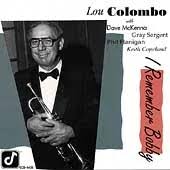
Lou Colombo was born in Brockton, Massachusetts on August 22, 1927 and started playing the trumpet when he was twelve. At seventeen he turned his attention to professional baseball and was signed with the Brooklyn Dodgers for seven years until a knee injury ended his career at 24.
Turning his attention to music Lou dove in full-time, mostly as an ensemble player and studio musician, playing and recording in the big bands of Dizzy Gillespie, Artie Shaw, Benny Goodman, Buddy Morrow, and Pérez Prado. He also worked sessions with Meredith D’Ambrosio on the 1989 recording South to a Warmer Place, George Masso on That Old Gang of Mine, 1996) and Jerry Jerome’s Something Borrowed, Something Blue.
Under his own name, Colombo recorded some albums one, including 1,990 at Concord Records, a tribute album for Bobby Hackett, one with Dave McKenna and Keith Copeland. Active on the Cape Cod jazz scene for five decades, trumpeter Lou Colombo passed away due to a traffic accident on March 3, 2012 at the age of 84.

More Posts: bandleader,cornet,flugelhorn,history,instrumental,jazz,music,trumpet
Daily Dose Of Jazz…
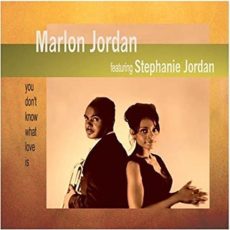
Marlon Jordan was born August 21, 1970 in New Orleans, Louisiana, one of six performers of a prominent family of New Orleans musicians. He is the son of saxophonist Edward “Kidd” Jordan and classical pianist Edvidge Jordan, and his brother Kent is a flutist, his sister Rachel is a violinist, and sister Stephanie is a jazz singer.
Starting on playing trumpet in the fourth grade, he graduated from the famed New Orleans Center for the Creative Arts. A major influence was Wynton Marsalis and Terence Blanchard who he knew when he was a child. Marlon recorded as a sideman with his brother Kent in 1987 and Dennis González in 1988.
In 1988 at age 18 he recorded his debut album as a leader, For You Only, with Branford Marsalis, brother Kent, and Elton Heron. Taking his quintet on the road, with Wynton Marsalis, Miles Davis and George Benson, he was billed as one of the headlining act in a series of JVC Jazz Festival dates. They would go on to play some of the country’s top jazz clubs, as well as in concerts.
He has recorded with his immediate family, Stephanie, Edward, Rachel, Kent, along with uncle Alvin Batiste, cousin Jonathan Bloom, uncle Maynard Chatters, and Chatters’ son, Mark.
In 2005, Marlon and sister Stephanie toured Bucharest, Germany, Lithuania and Ukraine as Jazz Ambassadors on a European Tour as part of the Higher Ground Relief effort sponsored by the U.S. Department of State, and Jazz at Lincoln Center to thank the people of Europe for their support of New Orleans and the Gulf region following Hurricane Katrina. Trumpeter, composer and bandleader Marlon Jordan continues to perform, record, and tour.
More Posts: bandleader,composer,history,instrumental,jazz,music,trumpet
Daily Dose Of Jazz…
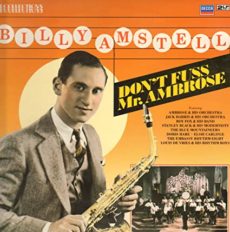
Billy Amstell was born on August 20, 1911 in London, England. At ten he played piano and at thirteen was teaching himself how to play the alto saxophone. He performed in Glasgow before moving to London in 1930, working with violinist Jack Harris.
During the next year, Billy recorded with Roy Fox and Spike Hughes and became a member of the Bert Ambrose Orchestra in which he played tenor saxophone. In the 1940s he worked for bandleader Geraldo and in the 1950s for the BBC Dance Orchestra, and in the 1960s while a studio musician he worked with George Chisholm.
The 1980s saw Amstell playing clarinet, releasing a solo album, Session After Midnight on the Zodiac label, and wrote his autobiography, Don’t Fuss, Mr. Ambrose. Saxophonist and clarinetist Billy Amstell, who continued to perform into his nineties, passed away on December 19, 2005 at the age of 94.
More Posts: bandleader,clarinet,history,instrumental,jazz,music,saxophone
Daily Dose Of Jazz…
Albert Morgan was born on August 19, 1908 in New Orleans, Louisiana into a musical family. He started on clarinet, then learned baritone saxophone, tuba, and bass. After taking lessons with Simon Marrero around 1919, he played with his brother Isaiah. Relocated briefly to Pensacola, Florida he played with Mack Thomas and Lee Collins.
Returning to New Orleans to play on riverboats with Fate Marable and Sidney Desvigne. Al went on to play with Davey Jones and Cecil Scott and recorded with the Jones & Collins Astoria Hot Eight.
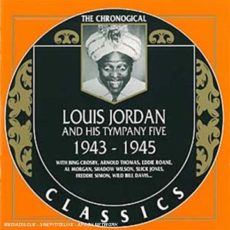
In the 1930s, Morgan led his own band and played as a sideman with Fats Waller, Les Hite, Zutty Singleton, Louis Jordan, and Sabby Lewis. This period saw him performing with Otto Hardwick and then spent four years with Cab Calloway from 1932 to 1936.
After leaving the Calloway orchestra, Al settled in California, playing live, on record, and on film. His film appearances include a feature on “Reefer Man” with the Calloway band in International House, Cab Calloway’s Hi-De-Ho, with Louis Armstrong in Going Places, and in The Gene Krupa Story.
From the 1950s to the 1970s, Morgan played extensively with Buddy Banks in a duo. Morgan recorded with Chu Berry, Coleman Hawkins, Don Byas, Jack Teagarden, Jay McShann, Red Allen, and T-Bone Walker.
Double bassist Al Morgan passed away on April 14, 1974 in Los Angeles, California.
More Posts: bandleader,bass,history,instrumental,jazz,music
Daily Dose Of Jazz…
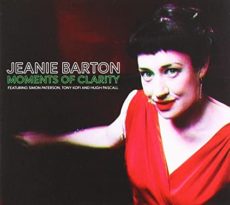
Jeanie Barton was born on August 18, 1978 in London, England. She spent years as a principal in the National Youth Music Theatre, then studied jazz harmony at Morley College in London as well as improvisation with BBC Jazz award winner Anita Wardell. She also cut her teeth as a singer for bebop pioneer Laurie Morgan’s trio, fronting their famous North London weekly gig, Downstairs at The King’s Head in Crouch End for over a decade.
She went on to support Georgie Fame, as well as backing vocals for Luddy Samms of The Drifters. Barton has performed for Samuel L Jackson, Shirley Bassey, and Pierce Brosnan. She has sung at The Jazz Cafe, The 606 Club, Ronnie Scott’s and The National Theatre, as well as a Parisian cruise on the Seine and the Cannes Film Festival.
Vocalist Jeanie Barton was voted Best Newcomer at the Marlborough Jazz Festival 2015, and in addition writes for the London Jazz News and Nottingham Live, formally the Nottingham Post.
More Posts: bandleader,history,instrumental,jazz,music,vocal