

Daily Dose Of Jazz…
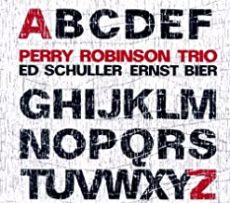
Perry Morris Robinson was born on September 17, 1938, the son of composer Earl Robinson. He grew up in New York City and attended the Lenox School of Jazz in Massachusetts in the summer of 1959. After serving in a U.S. military band in the early 1960s, his first record, Funk Dumpling with Kenny Barron, Henry Grimes, and Paul Motian was recorded by Savoy in 1962.
He would go on to record with Grimes on The Call in 1965, in which two of the album’s six songs are credited to Robinson, including the title track. From 1973, he worked with Jeanne Lee and Gunter Hampel’s Galaxie Dream Band. He contributed to Dave Brubeck’ s Two Generations of Brubeck and played with Burton Greene’ s Dutch klezmer band Klezmokum. He was the featured clarinetist on Archie Shepp’s LP Mama Too Tight on the Impulse! label.
Perry led his own groups in performances and on record, with albums on the Chiaroscuro, WestWind, and Timescraper labels. More recently, he worked with William Parker and Walter Perkins on Bob’s Pink Cadillac and several other discs on the CIMP label.
From 1975 until 1977, Robinson was a member of the Clarinet Contrast group, then recorded with Lou Grassi, Wayne Lopes, and Luke Faust in The Jug Jam, an improvisational jug band. He regularly plays and records in a free jazz and world music trio; played with Darius Brubeck and Muruga Booker in the MBR jazz trio, and played an integral part in the formation of the improvisational Cosmic Legends. In 2005 he was featured on his cousin Jeffrey Lewis’ album City and Eastern Songs on Rough Trade Records, A later release was OrthoFunkOlogy in 2008 with the band Free Funk. Clarinetist and composer Perry Robinson, whose autobiography, Perry Robinson: The Traveler was published in 2002, passed away on December 2, 2008.

More Posts: bandleader,clarinet,composer,history,instrumental,jazz,music
DAily Dose Of Jazz…
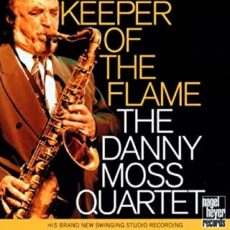
Dennis Moss MBE, known as Danny in the professional world, was born on August 16, 1927 in Redhill, Surrey, England. The son of a toolmaker, his childhood was spent on the south coast, in the Brighton-Worthing area, where he attended Steyning Grammar School. At the age of thirteen, he saw a jazz band appear briefly in a Bowery Boys film, and was so inspired by the clarinet playing that he swapped his most valued possession, his ice skates, for a second-hand instrument of his own. He was self-taught on both this and the tenor saxophone, which he took up at school,
A spell of National Service at the age of eighteen saw Moss performing for three years in a Royal Air Force regional band. After leaving the forces he joined the Vic Lewis Orchestra, then moved around various bands, especially ones with the potential for a soloist. In 1952, he joined Ted Heath’s band, soon discovering novelty numbers and musical reproductions were limiting his skills as an improviser, and he left after three years.
In 1957 Moss joined John Dankworth’s orchestra. Here, with the band’s encouragement, he began to develop his characteristic saxophone sound. He left Dankworth’s band in 1962, and from here, he joined Humphrey Lyttelton’s group, continuing to hone his style for another two years. He formed his own quartet, playing a mix of club gigs, festival appearances and radio broadcasts for the BBC and continued to tour with this quartet throughout the 1970s and 1980s. He also playing and recording with high-profile singers like Tony Bennett, Ella Fitzgerald, Bing Crosby, Sarah Vaughan, and Rosemary Clooney, and appearing with Buck Clayton in the mid-’60s and Louis Armstrong on his last British tour.
Diagnosed in 2005 with pleural mesothelioma, a rare form of lung cancer caused by exposure to asbestos. Saxophonist Danny Moss passed away on May 28, 2008, aged 80.
More Posts: bandleader,clarinet,history,instrumental,jazz,music,saxophone
Daily Dose Of Jazz…
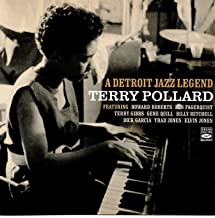
Terry Pollard (August 15, 1931 in Detroit, Michigan and began her career by collaborating with other Detroit musicians, such as Billy Mitchell and Elvin Jones, in the house band at the Blue Bird Inn. Johnny Hill, and the Emmitt Slay Trio.
Discovered by Terry Gibbs, she toured with him in the early 1950s, playing piano and vibraphone. They recorded several albums, including Terry Gibbs Quartet – Featuring Terry Pollard. Pollard appeared with Gibbs on an episode of The Tonight Show hosted by Steve Allen. Her collaborations with Gibbs from 1953 to 1957 marked the height of her career.
Pollard also performed with John Coltrane, Charlie Parker, Miles Davis, Chet Baker, Nat King Cole, Dinah Washington, Duke Ellington and Ella Fitzgerald
Recording a self-titled solo album for Bethlehem Records in 1955, Terry won Down Beat magazine’s New Artist award in 1956. She retired from her full-time music career shortly thereafter in order to raise a family, but she continued to play locally in Detroit and performed with Yusef Lateef, Dorothy Ashby, Don Fagerquist, and Diana Ross and the Supremes among others.
Her contributions to the mid-century Detroit jazz scene were recognized in the book Before Motown: A History of Jazz in Detroit 1920-1960, by Lars Bjorn and Jim Gallert. Pianist, vibraphonist Terry Pollard, who was inducted into the Michigan Jazz Hall of Fame, passed away on December 16, 2009 in Detroit.
More Posts: bandleader,history,instrumental,jazz,music,piano,vibraphone
Daily Dose Of Jazz…
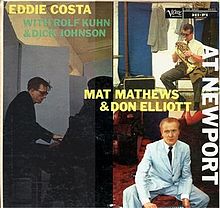
Edwin James Costa was born on August 14, 1930 in Atlas, Pennsylvania, near Mount Carmel, in Northumberland County. He was taught and influenced on piano by his older, musically trained brother, Bill, and a local piano teacher. He took paid jobs as a pianist from the age of 15, and in contrast to his piano training, he was self-taught on vibes.
In 1949 he played and toured for a few months with violinist Joe Venuti. He then worked for his brother in New York until 1951, when Eddie was drafted into the army. During this time in the armed forces, he performed in Japan and Korea. After his discharge, he returned home and worked around the New York area, including for bands led by Kai Winding, Johnny Smith, and Don Elliott.
n 1957 he was chosen as Down Beat jazz critics’ new star on piano and vibes – the first time that one artist won two categories in the same year. He became known for his percussive, driving piano style that concentrated on the lower octaves of the keyboard.
Costa had an eight-year recording career, during which he appeared on more than 100 albums, with five of them were under his own leadership. As a sideman, he appeared in orchestras led by Manny Albam, Gil Evans, Woody Herman, and others; played in smaller groups led by musicians including Tal Farlow, Coleman Hawkins, Gunther Schuller, and Phil Woods; and accompanied vocalists including Tony Bennett and Chris Connor. Costa died, aged 31, in a car accident in New York City.
His first recording as a leader was in 1956, with his trio featuring bassist Vinnie Burke and drummer Nick Stabulas. Around this time, he was nicknamed The Bear by Burke for his powerful playing. He and Burke joined Tal Farlow and became the resident trio at the Composer Club. In 1957 Costa was again leader, recording Eddie Costa Quintet with Woods, Art Farmer, Teddy Kotick, and Paul Motian. He would go on to record 1958’s Guys and Dolls Like Vibes with Bill Evans, Wendell Marshall, and Motian.
Late at night on July 28, 1962, pianist, vibraphonist, composer, and arranger Eddie Costa passed away in a car crash, involving no other vehicles, on New York’s Westside Highway at 72nd Street in New York City.
More Posts: arranger,composer,history,instrumental,jazz,music,piano,vibraphone
Daily Dose Of Jazz…
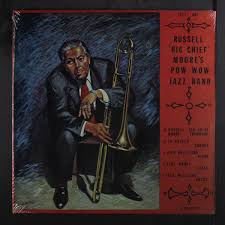
Big Chief Russell Moore was a Pima American Indian born on August 13, 1912 in Komatke, Arizona and lived in Blue Island, Illinois from age twelve, where he studied trumpet, piano, drums, French horn, and trombone. Moving to Los Angeles, California in the early 1930s, he worked freelance with Lionel Hampton, Eddie Barefield, and others. Departing Los Angeles for New Orleans, Louisiana in 1939, he worked with Oscar Celestin, Kid Rena, A.J. Piron, Paul Barbarin, Ernie Fields, Harlan Leonard, and Noble Sissle.
He played with Louis Armstrong’s last big band from 1944 to ‘47, then worked freelance on the Dixieland jazz circuit. The 1950s saw him playing with Ruby Braff, Pee Wee Russell, Eddie Condon, Wild Bill Davison, Jimmy McPartland, Tony Parenti, Mezz Mezzrow, Sidney Bechet, and Buck Clayton. He returned to play in the Louis Armstrong All-Stars in 1964–65, but fell ill and had to leave the group. After recovering he led a Dixieland group of his own, which toured Canada repeatedly.
He worked with pianist Eddie Wilcox shortly before Wilcox died in 1968, then played with Cozy Cole in 1977 and Keith Smith in 1981. Trombonist Big Chief Russell Moore, who recorded as a leader for Vogue, Trutone, and Jazz Art record labels, passed away in Nyack, New York on December 15, 1983.
More Posts: bandleader,history,instrumental,jazz,music,trombone