

Daily Dose Of Jazz…
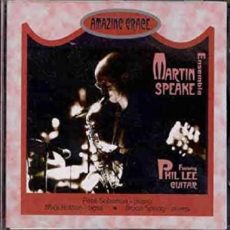
Phillip Robert Lee was born on April 8, 1943 in London, England and studied guitar with Ike Isaacs as a teenager. He was a member of the National Youth Jazz Orchestra, including their performance in the 1960 Antibes Jazz Festival. By the 1960s he was playing with John Williams and Graham Collier, was resident at Ronnie Scott’s Old Place, and in a band that included Bob Stuckey, Dudu Pukwana, and John Marshall.
During the 1970s, he played in jazz-rock bands such as Gilgamesh and Axel with Tony Coe and with Michael Garrick, Henry Lowther, and John Stevens. He recorded Twice Upon a Time in 1987 with Jeff Clyne.
Later in his career, he worked with Gordon Beck, Andres Boiarsky, Benny Goodman, Lena Horne, Marian Montgomery, Annie Ross, Dardanelle, Harry Edison, Ken Peplowski, Eddie Daniels, Jimmy Smith and the London Jazz Orchestra.
Phil Lee began playing jazz in the 1960s and. Since then he has recorded and appeared live with a vast range of musicians. including Pat Smythe, Duncan Lamont, Norma Winstone, Michael Garrick, Jimmy Hastings and Martin Speake. Phil has toured with Charles Aznavour, Michel Legrand, Gordon Beck and recently Jessye Norman.
In the 1970s he was a member of the fusion band Gilgamesh. His musicianship is held in high regard not only by fellow jazz players but also by musicians in other genres. His film credits include brief appearances in Eyes Wide Shut and Alan Plater’s TV film Misterioso and his playing featured in The Last of the Blonde Bombshells. Guitarist Phil Lee continues to perform, record and tour.

More Posts: guitar,history,instrumental,jazz,music
Daily Dose Of Jazz…
Ike Morgan, born Isaiah Morgan, came into the world on April 7, 1897 in Bertrandville, Louisiana into a musical family. He played in Plaquemines Parish in the early 1910s and then moved to New Orleans.
He led his brothers Al, Sam and Andrew in the Young Morgan Band beginning in 1922, which was later led by Sam and this ensemble recorded for Columbia Records. After Sam suffered a stroke in 1932, Ike resumed the leadership of the group, but it disassembled in 1933.
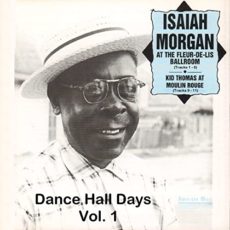
In the Thirties and Forties, Morgan was a bandleader in the Biloxi, Mississippi area, and played with Andrew there as well. Isaiah recorded in 1955 on an album called Dance Hall Days, Vol. 1, his group at this time featured Freddie Land on piano.
Retiring from music the following year, trumpeter Ike Morgan passed away on May 11, 1966 in New Orleans, Louisiana.
More Posts: bandleader,history,instrumental,jazz,trumpet
Daily Dose Of Jazz…
Bill Hardman was born William Franklin Hardman, Jr. on April 6, 1933 in Cleveland, Ohio. Growing up he worked with local players like Bobby Few and Bob Cunningham and while in high school he appeared with Tadd Dameron. After graduating he joined Tiny Bradshaw’s band.
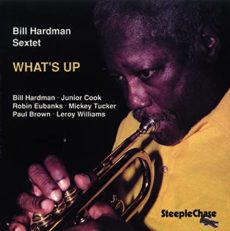
Hardman’s first recording was with Jackie McLean in 1956, later playing with Charles Mingus, Art Blakey and the Jazz Messengers, Horace Silver, and Lou Donaldson. He led a group with Junior Cook and recorded as a leader: Saying Something on the Savoy label. The album received critical acclaim in jazz circles but was little notoriety with the general public. He had three periods in as many decades with Art Blakey’s Jazz Messengers, though his misfortune was not to be with the Messengers at the time of their popular Blue Note recordings. Blakey occasionally featured him playing several extended choruses unaccompanied.
Though he was a crackling hard bop player with blazing technique, crisp articulations, and a no-frills sound, he never received commercial success like his colleagues Donald Byrd, Freddie Hubbard, and Lee Morgan.
Bill later incorporated into his sound the fuller, more extroverted romantic passion of a Clifford Brown – a direction he would take increasingly throughout the late-1960s and 1970s. As a leader, he recorded six albums, as a sideman he recorded more than three dozen with Dave Bailey, Walter Bishop Jr., Charles Earland, Curtis Fuller, Benny Golson, Eddie Jefferson, Ronnie Mathews, Jimmy McGriff, Hank Mobley, Houston Person, Mickey Tucker, Steve Turre, Mal Waldron, and Reuben Wilson.
Hard bop trumpeter and flugelhornist Bill Hardman passed away on December 5, 1990 in Paris, France.
More Posts: bandleader,flugelhorn,history,instrumental,jazz,music,trumpet
Daily Dose Of Jazz…
John Bishop was born in Seattle, Washington on April 5, 1956 and raised in Germany, Washington, DC, San Antonio, Texas and Eugene, Oregon. He started playing drums at 9 in Washington, DC with the Patriots drum corps and performed regularly throughout high school and college in Oregon, studying with Mel Brown and Charles Dowd. Attending the University of Oregon, he later transferred to the jazz program at North Texas State University.
Moving to Seattle in 1981 he had an extended engagement with the band Glider and never left. An unusually creative and fertile scene at the time, the city offered performances with top touring artists and the opportunity to create long and substantial musical relationships with inspired Northwest musicians. 1983, saw Bishop helping to form the fusion group Blue Sky, which released two national Top 10 albums and toured throughout the west coast and Canada over the next 9 years.
He was a twenty-year member of the piano trio New Stories with pianist Marc Seales and bassist Doug Miller, releasing 4 CDs of their own, 6 with the late be-bop saxophonist Don Lanphere, and Song for the Geese with Mark Murphy. They were a house trio for 17 years at Bud Shank’s Pt. Townsend Jazz Festival, headlined the 1993 JVC Jazz Festival in Vladivostok, Russia, appeared in concert with Tom Harrell, Julian Priester, Charles McPherson, Vincent Herring, Nick Brignola, Conte Condoli, Bobby Shew and Larry Coryell.
They regularly appeared around the country by themselves or touring with Mark Murphy, Ernie Watts or Don Lanphere. He has performed in concerts and clubs with Lee Konitz, Slide Hampton, Benny Golson, George Cables, Kenny Werner, Bobby Hutcherson, Dr. Lonnie Smith, Sonny Fortune, Herb Ellis, Buddy DeFranco, Bobby McFerrin, Joe Locke, Jerry Bergonzi, Carla Bley, Steve Swallow, Larry Coryell, and countless others.
John has taught drums privately for forty years, was on the faculty at the University of Washington from 2005-2009, regularly holds drum and jazz workshops throughout the country with the Hal Galper Trio, and co-founded The Reality Book, a web-based, HD Video Play-Along education system for jazz musicians of all levels.
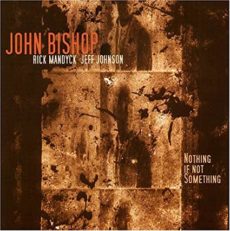
Drummer, educator, record label owner, graphic designer, and festival presenter John Bishop continues to perform, record, tour and educate. has been one of the primary voices in Northwest Jazz for over 35 years. He’s appeared on more than 100 albums, was inducted into the Seattle Jazz Hall of Fame in 2008, and was named a “Jazz Hero” by the Jazz Journalists Association in 2019.
More Posts: bandleader,drums,educator,history,instrumental,jazz,music
Daily Dose Of Jazz…
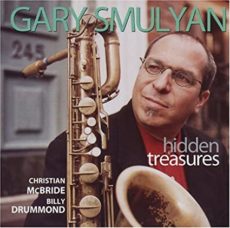
Gary Smulyan was born on April 4, 1956 in Bethpage, New York. He studied at Hofstra University before working with Woody Herman. His biggest influence is Pepper Adams. When Adams died, he recorded an album titled Homage, which featured eight pieces composed by Adams. He has recorded for Criss Cross Jazz and Reservoir Records, including the critically acclaimed High Noon: The Jazz Soul of Frankie Laine, featuring arrangements by Mark Masters.
He has recorded with Jimmy Knepper, Mulgrew Miller, Tommy Flanagan, Dick Oatts, Cedar Walton, Bob Stewart, John Clark, Joe Lovano, Joe Magnarelli, Mike LeDonne, Dennis Irwin, Christian McBride, Billy Drummond, Steve Johns, Peter Bernstein, Dominic Chianese, Gary Versace, Joseph Brent, Martin Wind, and Matt Wilson.
He has worked with an orchestra, as well as with Benny Green, Riccardo Fassi, Gerald Wilson, and Michael Benedict. Since 2006, Smulyan has served as artistic director at the Berkshire Hills Music Academy in South Hadley, Massachusetts.
Baritone saxophonist Gary Smulyan has consistently been ranked best baritone saxophone player in the annual Down Beat magazine readers’ and critics’ polls, continues to lead a trio with bassist Ray Drummond and drummer Kenny Washington.
More Posts: bandleader,composer,history,instrumental,jazz,music,saxophone