

Daily Dose Of Jazz…
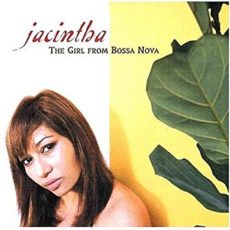
Jacintha Abisheganaden also known as Jacintha or Ja was born on October 3, 1957 in Singapore of Sri Lankan and Chinese parentage, her mother and played piano. Educated at Marymount Convent School, Raffles Institution and the National University of Singapore, where she graduated with an honor degree in English. She then went to America where she studied creative writing at Harvard University. She studied piano and voice from her early teens and also sang in the Singapore Youth Choir, where she met her future collaborator Dick Lee. Growing up she listened to vocal jazz and traditional pop, Stevie Wonder, Joni Mitchell, Miriam Makeba, Barbra Streisand.
She first came to prominence in 1976 winning a local television talent contest, Talentime, singing jazz. Continuing this winning streak in 1981, Jacintha nabbed the Best Female Performer award for her role as Nurse Angamuthu in General Hospital at the Drama Festival. She has worked as arts reporter, an actress, as well as a vocalist recording her debut album Silence in 1983 and two years later released her second album and played a series of live jazz shows at The Saxophone.
In 2004, Jacintha performed her own cabaret jazz show, The Angina Monologues at the Old Parliament House, Singapore. Since her debut album she has recorded eleven albums, dedicated a few to Ben Webster, Julie London, Johnny Mercer and Hollywood, and has released a compilation album in 2008. Vocalist Jacintha Abisheganaden continues to perform, acting and recording.

Give The Gift Of Knowledge

More Posts: vocal
Daily Dose Of Jazz…
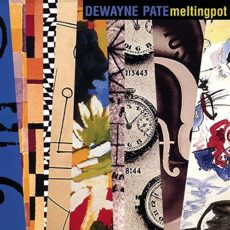
Dewayne Pate was born in Richmond California on October 2, 1960 in the cradle of East Bay Funk. He began learning the bass at the age of 15 and by 1980 was moving to Los Angeles where he attended the Musicians Institute and studied with bassists Jeff Berlin and Bob Magnusson..
He returned to the Bay Area with a wide range and versatility. Pate has worked with Pete Escovedo, Ray Obiedo, Charlie Musselwhite, Henry Butler, Long John Baldry, Chris Cain, Bonnie Hayes, Duke Robillard, Betty LaVette, RAD, Johnny Hiland, Huey Lewis and the News and Tracy Nelson. He held a 2 year position with guitarist Robben Ford.
In 1992 he released a highly acclaimed instructional video titled ”The Art Of Tapping” and released his debut solo CD titled “Melting Pot” with Robben Ford, Dennis Chambers, Andy Narell, Marc Russo, and Johnny Hiland. Bassist Dewayne Pate has toured with trumpeter Arturo Sandoval and continues to perform and record both as a leader and sideman.
Put A Dose In Your Pocket
More Posts: bass guitar
Daily Dose Of Jazz…
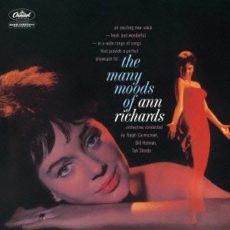
Ann Richards was born Margaret Ann Borden on October 1, 1935 in San Diego,California. She began taking singing lessons at ten and was self-taught on the piano. Appearing on the West Coast music scene in 1954, she had a short stint with Charlie Barnet’s band only to be later brought to the attention of Stan Kenton by songwriter Eddie Beal.
Richards was only with Kenton’s band for a few months in 1955 before the two were married. Kenton helped her secure a contract with Capitol Records and she was paired with conductor Brian Farnon and arranger Warren Baker for her 1958 debut album, I’m Shooting High. A duet album with Kenton, Two Much, was released in 1961.
The two separated in 1961 after she created scandal posed for the June 1961 issue of Playboy. She subsequently signed a contract with the Atco Records division of Atlantic Records. She released seven albums as a leader, two of them with Kenton. The cover of her 1961 album Ann, Man! was taken from the shoot. Vocalist Ann Richards committed suicide from a gunshot on April 1, 1982 in Hollywood, California, passing away at age 46.
Sponsored By

Double Impact Fitness
More Posts: vocal
Daily Dose Of Jazz…
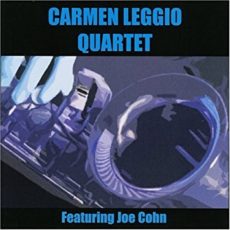
Carmen Leggio was born on September 30, 1927 in Tarrytown, New York. His last name literally translates to “music stand” and he taught himself to play at the age of nine. He began on clarinet, imitating Artie Shaw on the radio. At 14, he switched to tenor sax and began playing in clubs in his hometown of Tarrytown, a suburb just north of New York City.
He quit high school because he knew he was destined to be a musician and after playing the local scene, he moved to New York City in 1950. There he first worked with Terry Gibbs and became a studio musician.
His notable associations from the Fifties through the Seventies were with Marty Napoleon, Sol Yaged, Benny Goodman, the Maynard Ferguson Orchestra, Woody Herman and the Thad Jones/Mel Lewis Orchestra.
He went on to play with Gene Krupa, Buddy Rich, Dizzy Gillespie, and Doc Severinsen. Carmen has appeared on television, in movies, at the Newport Jazz Festival, Birdland and Carnegie Hall. Since 1961 and for the rest of his career Leggio played the same instrument, a Gold Medal SML made in France by Strasser, Marigaux & Lemaire with a Selmer D mouthpiece. He continued to perform Stardust, Nightmare and Begin the Beguine on an old King metal clarinet.
In his final years, he performed in various clubs and restaurants throughout Westchester. Tenor saxophonist Carmen Leggio passed away in Tarrytown on April 17, 2009.
More Posts: saxophone
Daily Dose Of Jazz…
Dennis Sandole was born Dionigi Sandoli on September 29, 1913 in Philadelphia, Pennsylvania and played guitar as a child. From 1946 until the early 1950s he was John Coltrane’s mentor , introducing him to theory beyond chords and scales and exposing him to the music of other cultures.
Sandole taught advanced harmonic techniques that were applicable to any instrument, using exotic scales and creating his own. His students over half a century included saxophonists James Moody, Michael Brecker, Rob Brown, and Bobby Zankel; pianists Matthew Shipp and Sumi Tonooka; guitarists Jim Hall, Joe Diorio, Pat Martino, Joe Federico, Tony DeCaprio, Jon Herington, Larry Hoffman, and Harry Leahey, Rufus Harley, Bob deVos and Frank Gerrard.
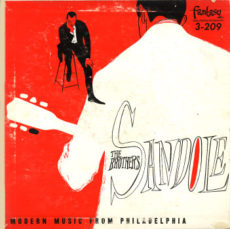
He recorded with his brother Adolph, Modern Music From Philadelphia, released by Fantasy in 1956. Guitarist, composer and music educator Dennis Sandole, who taught privately until the end of his life, passed away on September 30, 2000.
Jazz Is Global – Share
More Posts: guitar