

Daily Dose Of Jazz…
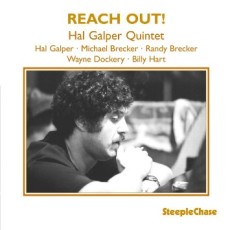
Harold “Hal” Galper was born April 18, 1938 in Salem, Massachusetts. He studied classical piano as a boy, but switched to jazz while studying at Berklee College of Music from 1955 to 1958. He hung out at Herb Pomeroy’s club, the Stable, hearing local Boston musicians such as Jaki Byard, Alan Dawson and Sam Rivers.
He started sitting in and became the house pianist at the Stable and later on, at Connelly’s and Lenny’s on the Turnpike. Eventually, Galper went on to work in Pomeroy’s band.
As his career progressed he worked with Chet Baker, Stan Getz and Nat Adderley and accompanied vocalists Joe Williams, Anita O’Day and Chris Connor. Between 1973-1975, Galper played in the Cannonball Adderley Quintet replacing George Duke.
Performing in New York and Chicago jazz clubs in the late 1970s, around this time, Hal recorded several times with guitarist John Scofield on the Enja label. The decade of the Eighties saw him as a member of the Phil Woods Quintet but left to pursue touring and recording with his own trio with drummer Steve Ellington and bassist Jeff Johnson.
As an educator Galper is internationally known, having theoretical and practical articles appear in six editions of Down Beat magazine. His scholarly article on the psychology of stage fright, originally published in the Jazz Educators Journal, has subsequently been reprinted in four other publications.
Pianist, composer, arranger, bandleader, educator and writer Hal Galper is currently on the faculty of Purchase College and the New School for Jazz and Contemporary Music.

Put A Dose In Your Pocket

More Posts: piano
Daily Dose Of Jazz…
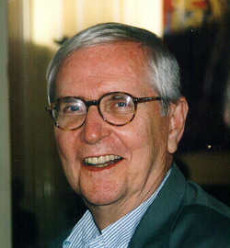
Whitney Lyon Balliett was born in Manhattan, New York on April 17, 1926. He was raised in Glen Cove, Long Island and attended Phillips Exeter Academy, where he learned to play drums. There he became part of a band that played “baggy Dixieland” and during the summer played gigs at a Center Island yacht club.
Drafted into the Army in 1946, interrupting Whitney’s freshman year at Cornell University, he returned to finish his degree in 1951. While matriculating he was a member of The Delta Phi Fraternity and after graduating went to work at The New Yorker, hired by Katherine White, one of the magazine’s fiction editors.
Among his many jazz wittings were: Such Sweet Thunder: 49 Pieces on Jazz, Super-drummer: A Profile of Buddy Rich, Alec Wilder and His Friends, Improvising: Sixteen Jazz Musicians and Their Art, Night Creature: A Journal of Jazz 1975-1980, American Musicians: Fifty-Six Portraits in Jazz, American Singers: Twenty-seven Portraits in Song, and Collected Works: A Journal of Jazz 1954-2000.
Acclaimed for his literary writing style, jazz critic, book reviewer and author Whitney Balliett passed away on February 1, 2007, aged 80, from cancer.
Uplift Someone’s World
More Posts: writer
Daily Dose Of Jazz…
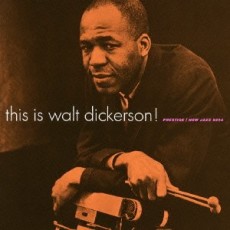
Walter Roland Dickerson was born on April 16, 1928 in Philadelphia, Pennsylvania. He graduated from Morgan State University in 1953 and after two years in the Army he settled in California. There the vibraphonist started to gain attention by leading a group with pianist Andrew Hill and drummer Andrew Cyrille.
During the Sixties in New York City was where he gained some further attention. He recorded four albums for Prestige Records and in 1962 Down Beat named him the Best New Artist.
Dickerson recorded his debut album This Is Walt Dickerson in 1961 on the New Jazz label and would go on to record six more before the end of the decade for New Jazz, Audio Fidelity and MGM record labels. He worked with Elmo Hope, arranging his 1963 album Sounds From Rikers Island.
From 1965 to 1975 he took a break from jazz, but later he worked again with Andrew Hill and Sun Ra. Beginning in 1975 after his return to performing he recorded Tell Us Only The Beautiful Things and Walt Dickerson 1976 on the Whynot label. He then began recording ten albums for the Danish Steeplechase label and one for Soul Note in 1978.
Vibraphonist Walt Dickerson, who was most notably associated with the post-bop idiom, passed away on May 15, 2008 from a cardiac arrest in Willow Grove, Pennsylvania.
Jazz Is Global – Share
More Posts: vibraphone
Daily Dose Of Jazz…
Casper Reardon was born on April 15, 1907 in New York City. He studied classical harp at the Curtis Institute of Music before going on to play for the Philadelphia Orchestra and then the Cincinnati Symphony Orchestra.
Before Reardon the harp had been used in dance music for the occasional flourish, but he is considered the first for using harp as a jazz instrument for solos and performances. By 1936 he was hailed as the World’s Hottest Harpist, and the following year he played Cousin Caspar in the film You’re a Sweetheart.
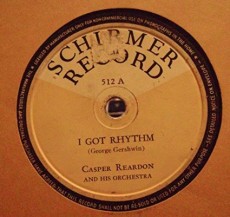
1938 saw him playing harp for the Broadway musical I Married An Angel. As a jazz musician Reardon can be heard performing on albums by Jack Teagarden and Paul Whiteman. As a leader Casper recorded a handful of records for Liberty Music Shops and Schirmer.
Classical and jazz harpist Casper Reardon passed away in New York City on March 9, 1941 at the age of 33.
Give A Gift Of Jazz – Share
More Posts: harp
Daily Dose Of Jazz…
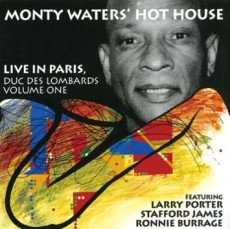
Monty Waters was born on April 14, 1938 in Modesto, California. He received his first musical training from his aunt and first played in the church. After college, he was a member of a rhythm & blues band and in the late 1950s he worked with musicians like B.B. King, Lightnin’ Hopkins, Little Richard and James Brown on tour.
In San Francisco Monty played with King Pleasure and initiated in the early 1960s a “Late Night Session” at Club Bop City. There he came into contact with musicians such as Miles Davis, John Coltrane, Art Blakey, Red Garland and Dexter Gordon, who visited this club after their concerts. In addition, he and Pharoah Sanders, Dewey Redman and and Donald Garrett formed a big band.
By 1969 Waters had made a move to New York City and toured with Jon Hendricks. During the 1970s he participated in the Loft Jazz scene and recorded as a sideman with Billy Higgins, Joe Lee Wilson, Sam Rivers, and Ronnie Boykins. Like many other jazz musicians, he eventually left the States in the 1980s for Paris, where he worked with Chet Baker, Johnny Griffin and Sanders again.
Following Mal Waldron and Marty Cook to Munich, he continued to work with musicians such as Embryo, Gotz Tanferding, Hannes Beckmann, Titus Waldenfels, Suchredin Chronov and Joe Malinga. Saxophonist, flautist and singer Monty Waters passed away on December 23, 2008 in Munich, Germany.
Inspire A Young Mind