

Daily Dose Of Jazz…
Norman Louis Bates was born on August 26, 1927 in Boise, Idaho. His mother was an organist and he was a younger brother of bassist Bob Bates. He played in Jimmy Dorsey’s band for a year in 1945, then with Raymond Scott and Carmen Cavallaro shortly thereafter.
By 1948 he was part of the Dave Brubeck Trio, and the following year performed with Paul Desmond. Norman recorded with Jack Sheedy’s Dixieland Jazz Band in 1950.
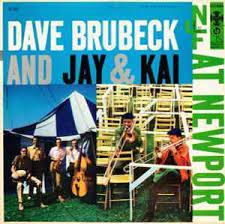
After spending four years in the Air Force, Bates played with Wally Rose’s Dixieland Band in 1955 and then replaced his brother Bob in Brubeck’s quartet, playing on multiple albums from Dave Brubeck and Jay & Kai at Newport (1956) onwards. He also recorded with Desmond’s group again in 1956. In 1957 he left Brubeck, and led a trio in San Francisco, California.
Double bassist Norman Bates transitioned on January 29, 2004.
Bestow upon an inquiring mind a dose of a Boise bassist to motivate the perusal of the genius of jazz musicians worldwide whose gifts contribute to the canon…

More Posts: bass,history,instrumental,jazz,music
Daily Dose Of Jazz…
Addison Gerald Farmer was born on August 21, 1928 in Council Bluffs, Iowa and was born an hour after his twin brother Art, reportedly at 2201 Fourth Avenue. Their parents divorced when the boys were four, and their steelworker father was killed in a work accident not long afterward. He moved with his grandfather, grandmother, mother, brother and sister to Phoenix, Arizona when he was still four.
Addison and his brother moved to Los Angeles, California in 1945 and attended the music-oriented Jefferson High School. There they gained music instruction and met other developing musicians such as Sonny Criss, Ernie Andrews, Big Jay McNeely and Ed Thigpen. The brothers earned money by working in a cold-storage warehouse and by playing professionally.
Taking bass lessons from Frederick Zimmermann, he went on to study at Juilliard and the Manhattan School of Music. By late 1945, Farmer was with Johnny Alston and His Orchestra recording for the Bihari Brothers’ Modern Music label, and shortly after on the Blue Moon label. He later recorded with Teddy Edwards’s band. Farmer played in several groups with his brother, including in ensembles led by Benny Golson, Gigi Gryce, Mose Allison, Jay McShann, Charlie Parker, and Miles Davis.
Bassist Addison Farmer, who recorded extensively for Prestige Records, transitioned from sudden unexpected death syndrome on February 20, 1963, in New York City at the age of 34.
More Posts: bass,history,instrumental,jazz,music
Daily Dose Of Jazz…
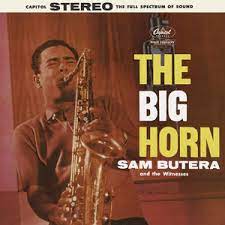
Sam Butera was born on August 17, 1927 and raised in an Italian-American family in New Orleans, Louisiana where his father ran a butcher shop and played guitar in his spare time. Hearing the saxophone at seven for the first time at a wedding, with his father’s encouragement he began to play.
His professional career blossomed early, beginning with a stint in big band drummer Ray McKinley’s orchestra directly after high school. At eighteen Butera was named one of America’s top upcoming jazzmen by Look magazine and by his early twenties, he had landed positions in the orchestras of Tommy Dorsey, Joe Reichman, and Paul Gayten.
As the big band era wound down Sam re-settled in New Orleans, where he played regularly at the 500 Club for four years. The club, owned by Louis Prima’s brother, was the connection that led him to his Las Vegas, Nevada collaborations with Prima and Keely Smith.
Prima transitioned from big band to Vegas and the Sahara and called Butera to assemble a band posthaste. They drove from New Orleans to Las Vegas and without a name on opening night in 1954 when Prima asked Butera before a live audience he responded spontaneously, “The Witnesses”, and the name stuck, remaining the bandleader for more than twenty years.
Noted for his raucous playing style, his off-color humor, and the innuendo in his lyrics, he also wrote arrangements, composed music. Sam is widely regarded as the inspiration for the vocal style of fellow New Orleans-born jazz singer Harry Connick, Jr. He went on to appear on television and in movies. Tenor saxophonist Sam Butera transitioned from pneumonia in Las Vegas on June 3, 2009 at the age of 81.
More Posts: arranger,bandleader,composer,history,instrumental,jazz,music,saxophone

Daily Dose Of Jazz…
Armando Joseph “Buddy” Greco was born Armando Joseph Greco to an Italian-American family in Philadelphia, Pennsylvania on August 14, 1926. His mother introduced him to piano at age four and as a child he sang on the radio, and in his teens performed in the city’s night clubs. Sixteen saw him hired by Benny Goodman and spent four years touring the world with the Goodman orchestra, playing piano, singing, and arranging. Becoming acquainted with Great Britain in 1949 he spent many years performing in numerous clubs. He moved to Essex, keeping his Palm Springs property as a vacation home.
In 1951 he started his recording career, signing with labels such as Coral, Kapp, Epic, and Reprise. 1969 saw Buddy form a duo with jazz guitarist Ron Escheté. He opened a small club in Palm Springs, California which became popular for celebrities to dine. After closing it, he moved to England.
In 2008, he and singer Lezlie Anders toured the UK, performed with the BBC Big Band and at Ronnie Scott’s Jazz Club in London. He was the first Las Vegas headliner to star at a British casino when he performed at the Circus Casino, and he performed a tribute to Frank Sinatra for BBC Radio 2 with the 42-piece BBC Concert Orchestra. He toured the UK with the Swinging Las Vegas Legends show beginning in July 2010.
In 2010, Greco and his wife Lezlie produced the stage show Fever! The Music of Miss Peggy Lee, which met with critical acclaim at its London West End opening. They continued to perform and tour for the next seven years. Vocalist Buddy Greco transitioned on January 10, 2017, in Las Vegas, Nevada, at the age of 90.
More Posts: bandleader,conductor,history,instrumental,jazz,music,vocal
Daily Dose Of Jazz…
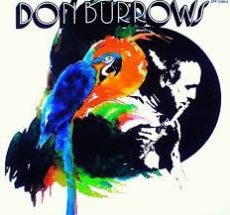
Donald Vernon Burrows was born on August 8, 1928 Marrickville, New South Wales, Australia and attended Bondi Public School. In 1937, visiting flutist and teacher Victor McMahon inspired him to start learning the flute, beginning on a B-flat flute. By 1940 he was captain of the Metropolitan Schools Flute Band and studying at the Sydney Conservatorium of Music.[2]
In 1942, Burrows had begun playing clarinet and appeared on The Youth Show, a Macquarie Radio show. In 1944 he was invited to play and record with George Trevare’s Australians. He became well-known in Sydney jazz circles and was performing in dance halls, nightclubs and radio bands.
During the 1960s and 1970s, Burrows had many engagements in Australia and the United States, including six years performing at the Wentworth Hotel in Sydney. In 1972, he was invited to perform at the Montreux Jazz Festival[4] and later the Newport Jazz Festival.
He received his first gold record in 1973 for his record Just the Beginning, instigating the first jazz studies program in the southern hemisphere, at the New South Wales Conservatorium of Music. He was appointed a Member of the Order of the British Empire (MBE) and appointed Chair of Jazz Studies at the conservatorium.
Though he mostly performed to classical music audiences through tours with Musica Viva and the Australian Broadcasting Corporation concert series, he had an extensive recording career with his groups and performed on albums by others. He also worked with Frank Sinatra, Dizzy Gillespie, Nat King Cole, Oscar Peterson, Tony Bennett, Stéphane Grappelli, Cleo Laine, and the Sydney Symphony Orchestra.
His arthritis from age 38, though making it somewhat difficult to play, never stopped him. In later years he had Alzheimer’s disease and lived in a nursing home in northern Sydney. Saxophonist, flutist and clarinetist Don Burrows transitioned on 12 March 12, 2020, aged 91.
More Posts: bandleader,clarinet,flute,history,instrumental,jazz,music,saxophone