


Daily Dose Of Jazz…
Bill Ohashi was born on March 29, 1949 in New York City, New York. His formative years were spent learning at Julliard, Mannes College, U. of PA, Berkley School of Music, and bandstands in NYC, New England and the southern corridor. He was making the jam session rounds in the city with jazz legends Kenny Dorham, Roy Eldridge, Charlie Mingus, Jack DeJohnette, Joe Henderson, Jaki Bayard, Carla Bley, George Cables, Lenny White, Billie Cobham and Art Blakey’s Messengers, among others.
Bill’s early work was with Willie Colon, Eddie Palmieri, Larry Harlow, Machito, Slide Hampton, Chuck Israels, Chico O’Farrill, Joe Farrell, Elvin Jones, Bruce Fowler, Ray Charle’s Big Band, Thad Jones-Mel Lewis Jazz Orchestra, Charlie Mingus, Gil Evans, as well as Paul Butterfield Blues Band, Eddie Kendricks & The Temptations, Franki Valli & The Four Seasons, Marvin Gaye, The Spinners, Aretha Franklin, The Four Tops, Jay & the Americans, Yoko Ono, The O’Jays & Stevie Wonder.
After a brief to move to the west coast and a short hiatus from playing, the legendary Ray Charles wisely gave Bill the opportunity to join his band on the road for about a year, bringing Bill back into the working music scene; Bill subsequently toured Europe three times with Lionel Hampton, playing around NYC and began his own record label, EAR Records, Inc.
As an educator he taught at NYC’s Third St. Music School, Henry St. Settlement, Boy’s Harbor, New England Conservatory, Metropolitan School of Music and others. Trombonist Bill Ohashi, who subs on Saturday Night Live, continues to perform and record.

More Posts: bandleader,educator,history,instrumental,jazz,music,trombone
Daily Dose Of Jazz…
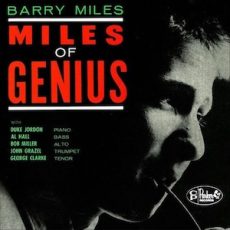
Barry Miles was born Barry Miles Silverlight on March 28, 1947 in Newark, New Jersey and grew up in North Plainfield, New Jersey. In 1956 he joined the musicians union at age nine as a child prodigy on drums, piano and vibraphone appearing with Miles Davis and John Coltrane among other talents of the day. He appeared live and on television shows including To Tell the Truth, Dick Van Dyke’s variety show, and The Andy Williams Show.
In 1961 at age fourteen he made his solo artist debut recording, “Miles of Genius”, as drummer and composer with sidemen Al Hall and Duke Jordan. Miles continued to perform with his own band in the early 1960s in which he composed the material that enabled up and coming talents such as Woody Shaw, Eddie Gómez and Robin Kenyatta to display their talents.
While a student at Princeton University he concentrated on his piano playing, recording a live album in 1966 entitled Barry Miles Presents His Syncretic Compositions. He followed in 1969 with the eponymously titled album, Barry Miles, incorporating electric instruments.
The Seventies saw him recruiting his brother Terry Silverlight on drums along with guitarists Pat Martino and John Abercrombie to record his White Heat album, which is regarded as one of the pioneering fusion jazz recordings. For the next decade, Miles recorded several albums in which he developed the principle of fusing styles together in jazz.
In the late 1970s and throughout the 1980s, Barry went on to work as Roberta Flack’s musical director for a stint that lasted fifteen years. During that time he composed, produced and recorded songs that Flack recorded in the film Bustin’ Loose, and on her album Oasis. He established a long-lasting relationship with Al Di Meola as his performing, recording and co-producing keyboardist.
He wrote the instruction book, “Twelve Themes With Improvisations”, and is currently out of print. In 2013, he released Home and Away, Volume One, his first album as a leader in 27 years. Pianist, record producer and author Barry Miles continues to perform, record and produce.
More Posts: author,bandleader,history,instrumental,jazz,music,piano,record producer
Daily Dose Of Jazz…
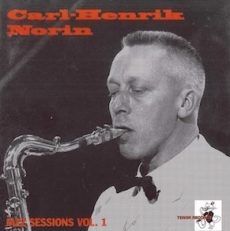
Carl-Henrik Norin was born on March 27, 1920 in Västerås, Sweden. He first began playing professionally in the early 1940s with Gösta Tönne and Thore Ehrling. As a member of Ehrling’s ensemble, he composed the piece Mississippi Mood.
He led a sextet in Stockholm, Sweden in the 1950s and early 1960s, which played jazz as well as accompanying popular singers such as Bibi Johns. Among his sidemen were Jan Allan and Rolf Billberg.
He played with Harry Arnold, Roy Eldridge, Lars Gullin, Peanuts Holland, and Bjarne Nerem. Saxophonist Carl-Henrik Norin died on May 23, 1967, Stockholm, Sweden.
More Posts: bandleader,history,instrumental,jazz,music,saxophone
Daily Dose Of Jazz…
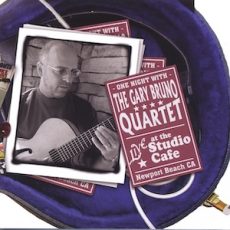
Gary Bruno was born in New Jersey on March 26, 1962. Showing an interest in music at the age of five he began learning drums and two yers later started studying guitar. Taking weekly lessons he showed prodigious technique and a hunger for learning music. His parents gave him a radio that he took everywhere as early as age three. It only took a short period of guitar lessons that he began to learn the songs of the day from the radio.
By age thirteen Gary had his first professional job with his band. Hired by a family friend he played a Christmas party, and that job was the first of what would become a livelihood. By his junior year in high school he was playing three to four nights a week as well as teaching. All four years of high school also found him playing first chair in the local jazz ensemble and winning outstanding soloist awards two of the four years.
After high school he began to get calls for recording sessions from unsigned local songwriters and local producers creating jingle ads for radio. Local club dates with bands served as his night job, and the days found him teaching, recording and studying guitar. The club dates kept Bruno within the New York, New Jersey, and Pennsylvania area with occasional outside tri-state travel.
Gary landed a seat in the Dave Mason Band, which took his playing to a national & international level. This led to playing Greenpeace concerts with John Denver. Moving to Las Vegas he got gigs playing the Las Vegas Strip as much as six nights a week. Leaving Las Vegas, he settled in Southern California where he currently resides.
Guitarist and educator Gary Bruno will continue composing, recording & performing.
More Posts: bandleader,educator,guitar,history,instrumental,jazz,music
Jazz Poems
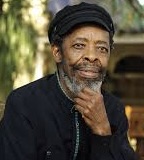
FOR ART BLAKEY AND THE JAZZ MESSENGERS For the sound we revere we dub you art as continuum as spirit as sound of depth here to stay In my young years I heard you bopping and weaving messages I could only walk to where wood mates with skin I would have dubbed you godhead but your sound rolled and pealed I am the drumhead even though Blue Note don’t care nothing bout nothing but profit How you sound is who you are where your ear leans moaning or bopping from the amen corner of chicken and dumpling memories and places In my young years I would have dubbed you something strange as god of opiate heaven of brutal contact of bible and rifle memories But the drumhead rolled my name: How you sound is who you are like drumsound backing back to root roosting at the meeting place the time that has always been here Even here where wood mates with skin on wax to make memory, to place us even in this hideous place pp-ppounding pp-ppounding the ss-ssounds of who we are even in this place of strange and brutal design KEORAPETSE KGOSITSILE | 1938~2018from Jazz Poems ~ Selected and Edited by Kevin Young

More Posts: book,classic,collectible,history,jazz,library,poet