
Daily Dose Of Jazz…
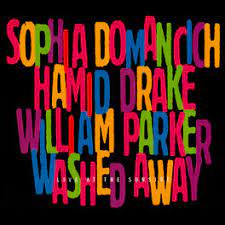
Sophia Domancich was born January 25, 1957 in Paris, France and began learning piano at the age of six. She attended the Conservatoire de Paris from 1968 to 1975 where she won first prize for piano and chamber music. She began her career as an accompanist in vocal and dance lessons, with the Paris Opera and the Théâtre de Caen.
In 1979 she met Steve Lacy, Bernard Lubat and Jean-Louis Chautemps who introduced her to the world of jazz and improvisation. By 1982 she formed a duet with Laurent Cugny and joined the big band Lumiére. She later participated in Quoi D’Neuf Docteur? with Steve Grossman, Glenn Ferris and Jack Walrath.
The following year during a brief collaboration with the group Anaïd, she met several English musicians from the Canterbury scene, drummer Pip Pyle, saxophonist Elton Dean and bassist Hugh Hopper, forming the group L’Equip Out in late 1984. The group included for a time a fifth member, Didier Malherbe on the flute and the tenor saxophone. In 1990, L’Equip Out recorded a second album, Up!, with bassist Paul Rogers.
With the latter and drummers Bruno Tocanne and Tony Levin, she formed the Sophia Domancich Trio with which she toured for eight years and recorded five studio albums. Also with Rogers, she created a 1995 quartet with the original composition, this time with two trumpeters, Patrick Fabert and Jean-François Canape.
Through the 1990s and into the new century, Domancich continued collaborating and recording with John Greaves and Vincent Courtois’ Trouble with Happiness, and with Simon Goubert. She was a pianist under Didier Levallet in the Orchester National de Jazz. In 2000 she formed the Quintet Pentacle, in 2006 the Trio DAG (Domancich, Avenel, Goubert) creating three albums as a trio and an album “free 4 DAG” with saxophonist Dave Liebman. Sophia ventured into electronic music, formed three more groups to continue to express herself through her music.
She became the first woman to receive the Prix Django Reinhardt from the Jazz Academy as French Musician of the Year. By 2007 found herself included in the French Ministry of Foreign Affairs and the Ministry of Culture collaborative book, 100 Jazz Titles, that included her 2002 Pentacle Quintet release.
She has recorded 10 albums as a leader, 7 as a co-leader and 20 as a member of other groups. Pianist and jazz composer Sophia Domancich continues to compose, explore, perform and reinvent herslf.

More Posts: bandleader,composer,history,instrumental,jazz,music,piano
Daily Dose Of Jazz…
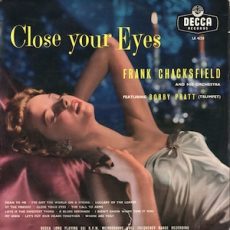
Robert Stuart Pratt was born on January 24, 1927 in Aberdeen, Scotland and was a professional musician from the age of 16, having mastered trumpet, flugelhorn, piano, drums and vocals. He served in the Royal Corps of Signals leading the Skyliners Army Dance Band.
In 1948 he joined Ken McIntosh’s outfit for a year before joining Ted Heath the following year. Due to his ability to play high and loud brought distinction to the brass section and his high note duets with Bert Ezzard became a highlight of the band’s appearances. Bobby was a mainstay with Heath until 1960.
As one of the busiest session players in Britain, Pratt found himself in high demand not only for jazz big band work but consistent work with top jazz and pop perfprmers in both record, tv and film studios. He played in the big bands of Humphrey Littelton, Eddie Harvey, Tubby Hayes, Tommy Watts, Vic Feldman, Jack Parnell, the Forty Two Big Band and the Downbeat Big Band.
Over the course of his career Bobby also recorded as a member of the Tommy Whittle Septet, The Kirchin Band, the Johnny Keating All Stars, Frank Chacksfield and Kenny Baker’s Dozen.
Trumpeter Bobby Pratt committed suicide on June 5, 1968 at the age of 41.
More Posts: drums,flugelhorn,history,instrumental,jazz,music,piano,trumpet,vocal
Daily Dose Of Jazz…
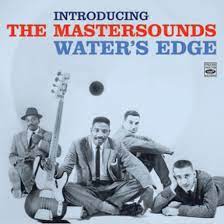
Richie Crabtree was born January 23, 1934 in Sidney, Montana. A student of legendary piano virtuoso Freddie Saatman, the pianist first popped up on the jazz scene in the company of the Montgomery Brothers. His short recording career seems to have taken place between the late ’50s and early ’60s, largely as a member of a quartet called the Mastersounds. This group, which duplicated the Modern Jazz Quartet’s popular instrumentation of piano, vibes, bass, and drums, but not its style, was an even mix of Montgomery siblings and others. Monk played the bass, with Buddy on the vibraphone, and Crabtree took rhythmic cues from drummer Benny Barth.
While Wes sat in at times, it was Buddy and Monk that were continually looking for a way of making the intricate inventions of bebop more appealing to easy listening and pop listeners. In 1957 the group was gigging in San Francisco and landed a contract with the World Pacific label. They recorded two albums before label honcho Dick Bock went to Indianapolis to check out Wes that they had been bragging about. The resulting recordings were also the debut on vinyl for a 19-year-old Freddie Hubbard.
A serious devotee of the founding fathers of bebop, Richie was not about to slouch on the harmonic contribution. However, little seems to have been written about him since 1961, a point where discographers place his last recording session. The Mastersounds group was at the height of its popularity in 1960, so naturally this was also the year the group decided to break up.
Pianist Richie Crabtree faded into obscurity and to date nothing has surfaced about his whereabouts or whether he is living or dead.

Daily Dose Of Jazz…
Theodore Smith was born on January 22, 1932 in Washington, D.C. During the Sixties he played with Betty Carter, and with Clifford Jordan with whom he recorded the album Bearcat, and Kenny Dorham in 1961-62, recording the album Matador.
From 1962 to 1963 Teddy played with Jackie McLean and Slide Hampton. Following this he played with Horace Silver, including performances at the 1964 Montreux, Antibes, and Paris jazz festivals. He was a member of the quintet that recorded four tracks on Silver’s album Song for My Father.
Smith’s performance on the title track of Song for My Father, beginning with the opening unison figure between his bass and Silver’s piano, has been one of the most widely heard pieces of jazz music in the world for nearly a half-century and an influence on such artists as Stevie Wonder and Steely Dan.
Following his Silver residency in which he also recorded Live, Teddy went on to play with Sonny Rollins from 1964 to ‘65 recording The Standard Sonny Rollins and played with Sonny Simmons in 1966.
Double-bassist Teddy Smith, never a leader, died on August 24, 1979 in his birth city.
More Posts: bass,history,instrumental,jazz,music
Requisites
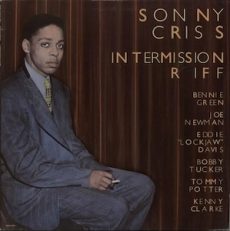
Intermission Riff ~ Sonny Criss | By Eddie Carter
In 1951, producer Norman Granz, the founder of several jazz labels and the chief architect behind the Jazz at The Philharmonic concerts, began a tour featuring Billy Eckstine at the Shrine Auditorium in Los Angeles, California. During the intermission, an all-star septet led by alto saxophonist William “Sonny” Criss took the stage. The result of their performance is this morning’s album from the library, Intermission Riff (Pablo Records 2310-929), released in 1988 after archivist Eric Miller discovered the tapes. His bandmates are Joe Newman on trumpet, Bennie Green on trombone, Eddie “Lockjaw” Davis on tenor sax, Bobby Tucker on piano, Tommy Potter on bass and Kenny Clarke on drums. My copy is the original U.S. Mono release.
Intermission Riff by Ray Wetzel and Michael H. Goldsen opens the set. Eddie begins with a robust introduction before the ensemble’s lively melody. “Lockjaw” gets busy first in the opening solo. Joe motors along in the next spirited statement, and then Sonny follows with an electrifying reading that receives a huge ovation from the audience at its climax. Green provides an exclamation point with an exhilarating solo into a thrilling ending. How High The Moon by Nancy Hamilton and Morgan Lewis starts with the trio’s calypso introduction preceding the high-spirited theme. Newman starts things off, and then Davis is remarkably assured on the next solo. Potter gives an impressive reading next. Green excels on the following reading, and Criss cooks with passionate enthusiasm on the closer.
A rocking version of Perdido by Juan Tizol, Ervin Drake and Hans Lengsfelder starts with the septet’s vigorous melody. Criss makes a strong impression on the first solo. Newman shows assurance and confidence in the second reading. Tucker takes over with an energetic performance, followed by Davis’ unrestrained enthusiasm. Green enters the next solo with a vengeance, then Clarke closes with a brisk workout into the reprise and ending. Body and Soul by Johnny Green, Edward Heyman, Robert Sour and Frank Eyton begins with Green’s soothing introduction before the pace moves to mid-tempo for the ensemble’s melody. Newman, Tucker, Criss, and Davis all contribute concise readings that are expressed very well.
High Jump by E. Greene culminates the set in a blowing session as fast as the Road Runner after the septet’s joyous exuberance in the melody. Bennie speaks his piece first with the added horsepower of the front line in one chorus. Sonny meets the challenge on the second statement, and then Newman gives an aggressive reading that dares the rhythm section to keep up with him. Davis infuses his solo with a few bars of Wild Blue Yonder while exchanging a few thoughts with Kenny, who responds in explosive form preceding the closing chorus. George Horn initially mastered Intermission Riff and it was digitally remixed by Danny Kopelson. The album’s sound quality does have a few momentary sound dropouts, but Eric Miller thought the music was too important to be edited, so he didn’t remove them.
Intermission Riff gives a glimpse of Sonny Criss, who possessed a beautiful sound that was capable of creating emotional solos. He had much to offer the jazz world, as demonstrated on his albums for Imperial, Impulse, Muse Peacock, Prestige and Xanadu. In 1977, he was diagnosed with stomach cancer, and on November 19 of that year, at age fifty, he took his own life as a result of the constant pain. Whether you’re just discovering his music or are already familiar with his discography, I offer for your consideration on your next record shopping trip, Intermission Riff. It’s a remarkable live performance by
Sonny Criss that swings with the best of them and is recommended for a spot in any jazz library!
~ Body and Soul, How High The Moon, Perdido – Source: JazzStandards.com ~ Sonny Criss – Source: Wikipedia.org © 2024 by Edward Thomas Carter

More Posts: choice,classic,collectible,collector,history,instrumental,jazz,music,saxophone