

Daily Dose Of Jazz…
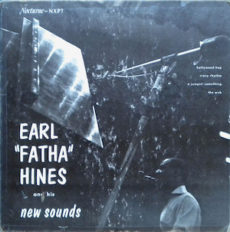
Le Roy Watts Harris Jr. was born on February 12, 1916 in St. Louis, Missouri. He played violin while young, then learned saxophone and clarinet. By age 13 he was playing with pianist Chick Finney.
Relocating to Chicago, Illinois around 1930 he played with Ray Nance from 1931 to 1936. Following this stint he worked with Earl Hines from 1937 to 1943. He joined the United States Navy during World War II and played in a band from 1943 to 1944. After his discharge he played with Bill Doggett, Ben Thigpen, Tadd Dameron, Sarah Vaughan, Singleton Palmer, and Wynonie Harris, then returned to play with Hines once more.
In the early 1950s he led his own band at the Kit Kat club in New York. He resettled in St. Louis again in 1957 and played with Eddie Johnson from 1960 to 1971.
Saxophonist and clarinetist Le Roy Harris Jr., whose father and uncle were both jazz musicians, transitioned on February 16, 2005 in his hometown of St. Louis.

More Posts: bandleader,clarinet,history,instrumental,jazz,music,saxophone
Daily Dose Of Jazz…
Martin Drew was born on February 11, 1944 in Northampton, England and started to play the drums when he was six years old. Studying with drummer George Fierstone gave him a solid musical and technical background. He played his first professional engagement at the age of 13.
He was also a member of a trio led by Eddie Thompson. Martin was often heard playing on BBC Radio 2’s Sounds of Jazz program in the 1970s, which was introduced by Peter Clayton on Sunday evenings.
During the 1980s, Drew played simultaneously with the Ronnie Scott Quartet and with the jazz group Morrissey–Mullen, until they disbanded in 1988. He then led a quintet called Our Band with saxophonist Dick Morrissey, guitarist Jim Mullen who replaced original member Louis Stewart, pianist John Critchinson, and bassist Ron Mathewson.
Between 1997 and 2000, he led a quartet with Mornington Lockett on tenor saxophone, Gareth Williams on piano, and Laurence Cottle on electric bass. 2000 saw Martin forming the Celebrating The Jazz Couriers quintet with Mornington Lockett, playing the music of the original Jazz Couriers. They won the 2002 British Jazz Award for Best Small Group.
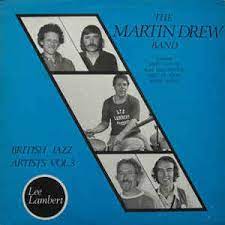
The New Couriers band reformed in 2003 with Paul Morgan on double-bass and Jim Hart on vibraphone. Lockett and Steve Melling on tenor saxophone and piano. He recorded one album in 1978 titled The Martin Drew Band, British Jazz Artists Vol. 3.
Drummer Martin Drew, who worked with over one hundred musicians from both sides of the Atlantic, transitioned following a heart attack on July 29, 2010, at the age of 66 in Harefield, Hillingdon, England.
More Posts: bandleader,drums,history,instrumental,jazz,music

The Quarantined Jazz Voyager
The masks the President promised are out however, he has given all the manufacturers an opportunity to participate. You only get two or three N95’s depending on where you get them. So if your Amazon order is slow to come stop by your local pharmacy and pick up yours. Continue social distancing and remain safe.
This week sliding off the shelves in alto saxophonist Jackie McLean and his 1963 album Destination… Out! The album was recorded on September 20, 1963, produced by Alfred Lion and released in November of the following year on the Blue Note label. It is the second McLean album to feature Bobby Hutcherson and Grachan Moncur III.
He’s 31 years of age and primed torecord an album for the ages. Hard bop aside he ventured into free jazz on this one to explore new sounds and improvisation never heard before. Four tunes make up this release, three by Moncur and one by the leader, who recognized the former’s penchant for composition.
Growth mandates that we expand our personal listening repertoire, that we stray from our comfort zone, and explore the options jazz offers. Needless to say McLean has put together a stellar band of musicians who engage us with the conversation they fluidly and freely have along its journey.
Track Listing | 34:57
- Love and Hate (Grachan Moncur III) ~ 8:25
- Esoteric (Moncur) ~ 9:02
- Kahlil the Prophet (Jackie McLean) ~ 10:23
- Riff Raff (Moncur) ~ 7:07
- Jackie McLean ~ alto saxophone
- Grachan Moncur III ~ trombone
- Bobby Hutcherson ~ vibes
- Larry Ridley ~ bass
- Roy Haynes ~ drums

More Posts: adventure,album,club,genius,jazz,museum,music,preserving,restaurant,saxophone,travel
Daily Dose Of Jazz…
Rahn Burton was born February 10, 1934 in Louisville, Kentucky. He began taking piano lessons at age 13, and worked locally in Louisville before playing his first gigs with Roland Kirk. He toured with Kirk from 1953 to 1959 and recorded with him into the early 1960s, contributing the composition Jack the Ripper to the 1960 release Introducing Roland Kirk.
Moving on to play local gigs in New York City and Syracuse, New York for a short time in the early 1960s, he returned to local playing in Louisville. During 1964-65 he played organ in George Adams’s touring ensemble, and played briefly with Sirone around the same time.
1967 saw Burton re-joining Roland Kirk’s group, playing with him at the 1968 Newport Jazz Festival and on several recordings through 1973. He also founded his own ensemble, African American Connection, which included Roland Alexander, Bob Cunningham, Ricky Ford, and Hannibal Marvin Peterson.
He recorded extensively as a sideman in the 1970s and 1980s with George Adams and Hannibal Peterson, Carlos Garnett, Beaver Harris, Jemeel Moondoc, Charlie Rouse, Leon Thomas and Stanley Turrentine. His associations in the 1990s included work in Austria with Nicholas Simion and a trio recording in 1992 with Walter Booker and Jimmy Cobb.
Pianist Rahn Burton, who was also known as Ron Burton or William Burton, transitioned on January 25, 2013 in Manhattan, New York.
More Posts: bandleader,history,instrumental,jazz,music,piano
Daily Dose Of Jazz…
Edward “Bruno” Carr was born on February 9, 1928 in The Bronx, New York. Growing up he lived around many different ethnic groups, including neighborhoods with German and Italian residents. Listening to the radio as a youth, he heard different styles of music while developing his ear and his memory. By the time he started playing professionally he had anarsenal of songs that he surprised band leaders he already knew and had no need for charts when they handed them to him.
As a timbale player in Latin bands, one can hear the inflection in the way he plays his small tom-toms at times. Though not a household name, his playing with a lot of fire and conviction made him a sought after drummer among the jazz elite. Kenny Burrell, Billie Holiday, Ray Charles, John Coltrane, Charlie Parker, Michael Franks, Aretha Franklin, Monte Alexander, Stanley Turrentine, Roy Ayers, King Curtis and Harry “Sweets” Edison have all had him on their bandstand.
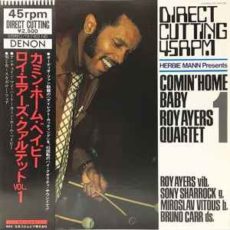
Here recorded several single albums, each with Aretha, Curtis Amy, Walter Davis Jr., Lou Donaldson, and Eddie “Cleanhead” Vinson, however, his largest body of work was with Herbie Mann, recording eighteen albums with the flutist from 1964 to 1970.
Drummer Bruno Carr, who was a frequent collaborator with Ray Charles, transitioned from lung cancer on October 25, 1993 in Denver Colorado at the age of 65.
More Posts: drums,history,instrumental,jazz,music