

The Quarantined Jazz Voyager
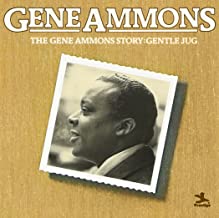
The Gene Ammons Story: Gentle JugOctober 6, 1992 was the Fantasy reissued compact disc release date of the original Prestige/Moodsville Records is my next exploration into one of the world’s great bop, cool jazz, and soul-jazz tenor saxophonists to keep me company during this pandemic. The Gene Ammons Story: Gentle Jug is a compilation reissue of sixteen songs recorded on two separate dates. A master at interpreting ballads, Gene Ammons presents lyrical music that is quite enjoyable.
The album was produced and original photography taken by Esmond Edwards, recorded by Rudy Van Gelder at Van Gelder Studio in Hackensack, New Jersey, and the art direction was contributed by Phil Carroll. The reissue producer and writer of the liner notes was Bob Porter and the album was remastered by Phil De Lancie.
A compilation of two previously released albums, 1961’s Nice an’ Cool” (1 to 8) recorded on January 26, 1961, and 1962’s The Soulful Mood of Gene Ammons (9 to 16) recorded April 14, 1962. Tracks 1 to 8, originally issued on Prestige / Moodsville 18 as Gene Ammons – Nice An’ Cool Tracks 9 to 16, originally issued on Prestige / Moodsville 28 as Gene Ammons – The Soulful Moods Of Gene Ammons.
Tracklist
Nice An’ Cool
- Till There Was You (Meredith Wilson ~ 7:08
- Answer Me, My Love (Rauch, Winkler) ~ 4:35
- Willow Weep For Me (Ann Ronell) ~ 4:00
- Little Girl Blue (Richard Rodgers, Lorenz Hart) ~ 4:55
- Something I Dreamed Last Night (Magidson, Yellen, Fain) ~ 7:41
- Something Wonderful (Riodgers, Hammerstein) ~ 3:03
- I Remember You (Mercer, Schertzinger) ~ 4:21
- Someone To Watch Over Me (Gershwin, Gershwin) ~ 3:48
- Two Different Worlds (Frisch, Wayne) ~ 4:53
- But Beautiful (Burke, Van Heusen) ~ 4:27
- Skylark (Carmichael, Mercer) ~ 6:19
- Three Little Words (Kalmar, Ruby) ~ 3:49
- On The Street Of Dreams (Lewis, Young) ~ 3:09
- You’d Be So Nice To Come Home (Cole Porter) ~ 4:17
- Under A Blanket Of Blue (Neiburg, Livington, Symes) ~ 5:12
- I’m Glad There’s You (Dorsey, Mertz) ~ 6:02
- Gene Ammons ~ Tenor Saxophone
- Patti Bown (tracks: 9 to 16) | Richard Wyands (tracks: 1 to 8) ~ Piano
- Doug Watkins (tracks: 1 to 8) | George Duvivier (tracks: 9 to 16) ~ Bass
- Ed Shaughnessy (tracks: 9 to 16) | J.C. Heard (tracks: 1 to 8) ~ Drums
When the curtain goes up and the pandemic is controlled I will return to flying around the globe discovering the best of jazz. Until that time arrives stay safe and healthy.
More Posts: adventure,club,genius,jazz,museum,music,preserving,restaurant,saxophone,travel

Daily Dose Of Jazz…
Jabbo Smith, born as Cladys Smith on December 24, 1908 in Pembroke, Georgia. At the age of six he went into the Jenkins Orphanage in Charleston, South Carolina where he learned trumpet and trombone. By the age of 10 was touring with the Jenkins Band and at the age of 16, he left the Orphanage to become a professional musician, first playing in bands in Philadelphia, Pennsylvania, and Atlantic City, New Jersey. Around 1925 he made his home in Manhattan, New York City, where he made the first of his well-regarded recordings till 1928.
In 1928 Jabbo toured with James P. Johnson’s Orchestra until the show broke up in Chicago, Illinois. He stayed for a few years and his series of twenty recordings for Brunswick Records in 1929 are his most famous of which 19 were issued. Billed as a rival to Louis Armstrong, unfortunately, most of these records did not sell well enough for Brunswick to extend his contract.
1935 Chicago had him featured in a recording session produced by Helen Oakley under the name of Charles LaVere & His Chicagoans, which included vocals by him and LaVere on LaVere’s composition and arrangement of Boogaboo Blues. In the 1930s, he made his base in Milwaukee, Wisconsin for many years, alternating with returns to New York. While there he collaborated with saxophonist Bill Johnson. Subsequently, Smith dropped out of the public eye, playing music part-time in Milwaukee, and worked a regular job at an automobile hire company.
He made a successful comeback in the late 1960s playing with bands and shows in New York, New Orleans, Louisiana, London, and France through the 1970s and into the 1980s.
He recorded concerts in France, Italy, Switzerland and Netherlands with the Hot Antic Jazz Band. Trumpeter Jabbo Smith, known for his virtuoso playing, passed away on January 16, 1991.
More Posts: bandleader,history,instrumental,jazz,music,trumpet
Daily Dose Of Jazz…
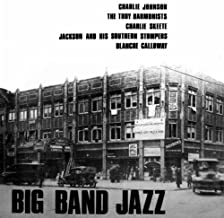
Mike Jackson was born on December 23, 1888 in Louisville, Kentucky. The details of his early life are not known, however, in 1921 he began composing songs for publisher Joe Davis. Soon after he became an accompanist playing piano for a number of early jazz and blues recordings, with Clara Smith, Alberta Hunter, Laura Smith, Thomas Morris, the New Orleans Blue Five, the Dixie Jazzers Washboard Band, Perry Bradford, and Buddy Christian.
He also recorded under his own name as Jackson and His Southern Stompers. With Morris, he worked in the vaudeville show The Wicked Age in 1927. He emigrated to Montreal, Canada in 1928, but returned to New York City in 1930, where he continued working as a composer.
His compositions included The Louisville Blues, written with Bob Ricketts in 1921 and recorded by W.C. Handy in 1923; Scandal Blues and Black Hearse Blues, both written in 1925; and Slender, Tender and Tall and Hey, Knock Me a Kiss, both of which were recorded by Jimmie Lunceford and Louis Jordan among others.
Pianist and composer Mike Jackson passed away on June 21, 1945 in New York City.
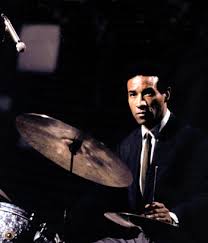
Three Wishes
When Panninica asked Max Roach what his three wishes would be, he simply said:
- “Wishes would be a superfluous luxury for me, because I have everything I desire. That’s the most important thing in the world.”
*Excerpt from Three Wishes: An Intimate Look at Jazz Greats ~ Compiled and Photographed by Pannonica de Koenigswarter

More Posts: baroness,drums,history,instrumental,jazz,music,pannonica,three,wishes
Daily Dose Of Jazz…
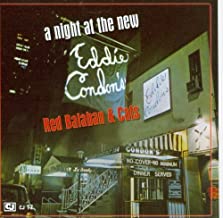
Red Balaban was born Leonard Balaban on December 22, 1929 in Chicago, Illinois. Moving the family to New York, he completed his early education at the Ethical Culture School. After graduating from Milford Academy in Connecticut, he graduated from Brown University.
Moving south to the panhandle, he raised breeding cattle on a farm in Bonifay, Florida and as a musician, he was a sideman, bandleader, and club owner. He played in regional ensembles from the 1950s, Red went on to hold a regular gig from 1966 at the Dixieland jazz club Your Father’s Mustache in New York City.
Balaban worked extensively as a sideman, for musicians such as Wild Bill Davison, Eddie Condon, Gene Krupa, Dick Wellstood, and Kenny Davern. He co-led Eddie Condon’s house band with Ed Polcer from 1975, and noted musicians in this outfit included Vic Dickenson, Warren Vache, and Connie Kay, before the club closed in the mid-1980s.
Tubist and sousaphonist Red Balaban, who also played banjo, stand-up bass, slide trombone, ukulele, and rhythm guitar, passed away after a brief illness seven days past his 84th birthday on December 29, 2013 in Milford, Connecticut.
More Posts: banjo,bass,guitar,history,instrumental,jazz,music,slide trombone,sousaphone,tuba,ukulele