

Requisites
A Tribute To Cannonball – Don Byas and Bud Powell | By Eddie Carter
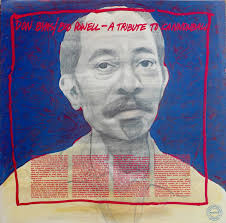
This next album from the library was recorded in 1961 but remained shelved until its release in 1979, four years after the death of the musician it honors. A Tribute To Cannonball (Columbia Contemporary Master Series JC 35755) brings together Don Byas on tenor sax and Bud Powell on piano for a program of standards and two original tunes. Completing the ensemble are Idrees Sulieman (tracks: A5, B1, B2, B4) on trumpet, Pierre Michelot on bass, and Kenny Clarke on drums. My copy used in this report is the 1979 US Stereo album.
The quartet begins Side One with the Cole Porter classic, Just One of Those Things that made its debut in the 1935 musical comedy, Jubilee. The trio opens with a scintillating conversation in the opening chorus. Don adds some fierce dialogue on the second verse, then continues traveling at breakneck speed on the first solo. Bud’s nimble fingers fly over the keys at a brisk pace on the finale towards the quartet’s enthusiastic ending.
Jackie My Little Cat is a pretty ballad by Pierre Michelot that slows the tone to a softer tempo. From the first phrase of the elegantly tranquil theme, the quartet creates a warmly affectionate atmosphere for Byas who infuses the lead statement with tasteful subtlety. Powell also produces a reading of extraordinary tenderness that compliments the rhythm section’s graceful groundwork into a sensuous finale. Cherokee, also known as Indian Love Song, was written in 1938 by Ray Noble as the first movement of his five-part Indian Suite. It became a hit for bandleader Charlie Barnet in 1939 and a jazz standard after Charlie Parker’s blistering rendition in 1941 with The Kansas City Band. The song begins with a brisk duet by Don and Pierre on the introduction, then proceeds with a lightning-fast melody. Byas begins his first solo with a sizzling performance, then Powell flexes his muscles with incredible virility. The saxophonist is completely energized on the closer with fiery intensity before the out-chorus.
I Remember Clifford by Benny Golson is a 1957 jazz standard honoring Clifford Brown who perished in an auto accident the year before with pianist Richie Powell and his wife Nancy. It became a huge hit for Golson after appearing on the albums, Jazz Lab and Lee Morgan, Volume 3 (1957), and Jon Hendricks wrote lyrics for it the same year. The quartet is beautifully disciplined on the melody, and Don taps a well of serenity, bringing out the most intimate feelings in every note of the lead solo. Bud closes with a warmly affectionate reading leading to a tender finale. Good Bait is by Tadd Dameron and Count Basie and was written in 1944. It became a significant part of Basie’s repertoire and Idrees Sulieman makes his first appearance. Kenny’s drums make the introduction, and the front line leads the quintet to establish the melody. Don starts the solos with long, flowing tenor phrases. Idrees follows with a fierce flow of notes from his trumpet. Bud comes next with a deliciously spry statement. Pierre makes a brief reading with an unrestrained flow of bass lines in between a few final remarks by both horns.
Side Two starts with the 1960 jazz standard, Jeannine by Duke Pearson. A brief workout by Clarke introduces the tune, segueing into the ensemble’s medium-fast melody. Don digs into the lead statement with a smoldering groove of vibrant verses. Idrees’ sentimental choruses on the second solo are tightly voiced and executed smoothly. Bud flies high on the third reading with a muscular drive. Kenny delivers a satisfying finale before the horns return to drive Jeannine home. All The Things You Are by Jerome Kern and Oscar Hammerstein II was originally written in 1939 for the unsuccessful Broadway musical Very Warm For May that year. The song survived, becoming one of Kern’s most cherished and recorded compositions. Byas and Sulieman exchange a peppy dialogue with the trio on the melody. Idrees says something special with a firm tone on the first solo. Don delivers the next message confidently in an authoritative manner. Bud also displays his virtuosity in an invigorating reading. Both horns split the next few choruses and Clarke provides a passionate showcase on a brief statement ahead of the coda.
Let me stop for a moment to describe this next tune. On the Side Two label, track three is listed as Jackie by pianist Hampton Hawes. It isn’t Hawes’ tune at all, it’s actually an alternate take of Pierre Michelot’s Jackie My Little Cat. Like the song on Side One, it’s a quartet piece with Byas and Powell as the featured soloists. After a beautiful theme statement, Don delivers an absolutely gorgeous opening solo. Bud follows with a haunting melodic interpretation ahead of the compassionate climax. The album ends with the second original by bassist Michelot, Myth is a cheery little tune full of fun and good spirits as evident by the sprightly introduction by the trio, ahead of the front line’s opening chorus. Byas starts the solos with a compelling performance that holds your attention from start to finish. Sulieman follows with a beautifully articulated presentation. Powell swings with exhilarating verses on the closing statement that bounces happily to the superb foundation by Michelot and Clarke.
A Tribute To Cannonball was produced by Cannonball Adderley and the engineer was Russ Payne who worked on many other Columbia LP’s. The music is excellent, and the sound quality is superb with the musicians surrounding your sweet spot providing some amazing jazz. The only issue I have with this album has nothing to do with the music, but the cover design. To read the liner notes by Gary Giddins, you need a high wattage light bulb or a well-lighted room because the words are small and dark blue on a red background. This is particularly notable on the back cover where the picture of Bud Powell is. Whoever thought this was a good idea, I hope they’ve never been allowed to design another record cover. That issue aside, I hope you’ll seek out A Tribute To Cannonball by Don Byas & Bud Powell on your next vinyl hunt. If you’re a fan of Hard-Bop, it’s an overlooked jewel that’s worthy of your consideration for a spot on your shelf!
~ Jazz Lab (Columbia CL 988); Lee Morgan, Volume 3 (Blue Note BLP 1557) – Source: Discogs.com
~ Cherokee, Indian Love Song, I Remember Clifford, All The Things You Are – Source: JazzStandards.com
~ Just One of Those Things – https://www.youtube.com/watch?v=9Gg0Md1geMw ~ Jackie My Little Cat – https://www.youtube.com/watch?v=9JmZCGKjrc0 © 2020 by Edward Thomas Carter
More Posts: choice,classic,collectible,collector,history,instrumental,jazz,music,piano,saxophone

Daily Dose Of Jazz…
Paul D. “Polo” Barnes was born on November 22, 1901 in New Orleans, Louisiana, the brother of Emile Barnes. He attended St. Paul Lutheran College and began playing alto saxophone in 1919. He and Lawrence Marrero formed the Original Diamond Band, later known as the Young Tuxedo Band.
In 1922 he was with Kid Rena, then the Maple Leaf Orchestra in 1923, and Papa Celestin’s Original Tuxedo Band. Later that year; Celestin’s group recorded his composition My Josephine, which became quite popular. He went on to play with Chick Webb in 1927 and with King Oliver three times between 1927 and 1935. He toured with Jelly Roll Morton in 1928-29.
In 1932-33 he led his own band then through that decade he played with Chester Zardis and Kid Howard. He played in Algiers, Louisiana in a Navy band during World War II, then returned to work with Celestin from 1946 to 1951. The Fifties saw him moving to California and left music, however, upon his return to New Orleans in 1959, he played with Paul Barbarin in 1960. but from 1962-65 joined the Young Men from New Orleans band that played on a riverboat at Disneyland.
Returning once again to New Orleans in 1964 he played at Preservation Hall and Dixieland Hall. While touring Europe in 1973-74, poor health ended his career in 1977. Clarinetist and saxophonist Polo Barnes, a mainstay of the New Orleans jazz scene of the 1920s and 1930s, passed away on April 3, 1981 in his hometown.
More Posts: clarinet,hitory,instrumental,jazz,music,saxophone
Daily Dose Of Jazz…
Keg Johnson was born Frederic Homer Johnson on November 19, 1908 in Dallas, Texas. His father was a choir director and he and his younger brother, Budd began their musical careers singing and playing first with their father and later with Portia Pittman, daughter of Booker T. Washington. They played in Dallas-area bands like the Blue Moon Chasers, then with Ben Smith’s Music Makers, eventually performing with Gene Coy and The Happy Black Aces.
Playing a variety of instruments but most noted as a trombonist, around 1928, in Kansas City, Missouri they played in several bands but by 1930 Keg left for Chicago, Illinois to play with Louis Armstrong, recording his first solo on Armstrong’s Basin Street Blues album. His move to New York City in 1933 Keg played with Fletcher Henderson, Benny Carter, and Cab Calloway at the Cotton Club, remaining with Cab for 15 years.
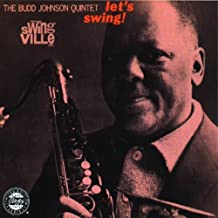
Leaving New York City for Los Angeles, California he briefly changed careers renovating houses. During the 1950s he returned to New York City where he and his brother reunited and recorded the album Let’s Swing. In 1961, he began playing with Ray Charles and was still in his band when trombonist Keg Johnson passed away in Chicago on November 8, 1967.
More Posts: history,instrumental,jazz,music,trombone
Daily Dose Of Jazz…
Victor Sproles was born on November 18, 1927 in Chicago, Illinois. During worked in the 1950s with Red Rodney and Ira Sullivan and appears on the Sun Ra recordings Super-Sonic Jazz, Sound of Joy and Deep Purple.
>As a session player he recorded with Stan Getz and Chet Baker on the 1957 Verve album Stan Meets Chet. In 1960 he joined Johnny Griffin’s Big Soul Band and the following year he played in Muhal Richard Abrams’ Experimental Band.
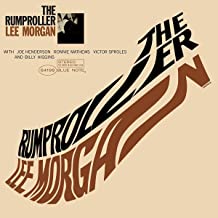
1964 saw him joining Art Blakey’s Jazz Messengers, recording the album ‘SMake It for Limelight, Lee Morgan and his old Sun Ra bandmate John Gilmore were in the group. He recorded two more albums with the Messengers after Gilmore left. This led to his subsequent appearance on Morgan’s Blue Note albums The Rumproller and The Sixth Sense.
In 1974 he played in Clark Terry’s big band and appeared on Buddy DeFranco’s album Free Fall. He recorded sixteen albums as a leader and another fifteen as a sideman. Bassist Victor Sproles passed away on May 13, 2005.
More Posts: bass,history,instrumental,jazz,music
Daily Dose Of Jazz…
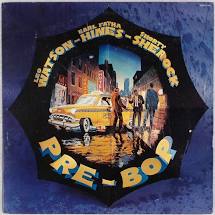
Clarence “Shorty” Sherock was born on November 17, 1915 in Minneapolis, Minnesota and attended the Illinois Military Academy. In the 1930s he was a soloist with the Jimmy Dorsey Orchestra and with the Gene Krupa Orchestra. He led a big band in the 1940s. In 1944 he was a featured soloist in Los Angeles, California at the first Jazz at the Philharmonic concert, a series started by Norman Granz. The concert included Nat King Cole, Illinois Jacquet, J. J. Johnson, Jack McVea, and Les Paul.
1946, Sherock recorded Leonard Feather’s composition Snafu, and in 1955 he recorded three tracks for Freddie Slack’s Boogie Woogie on the 88. As a member of the Nelson Riddle Orchestra, he recorded with Dean Martin, Frank Sinatra, Ella Fitzgerald, Van Alexander, Benny Carter, Bobby Darin, Bing Crosby, Pete Fountain, Mel Henke, Freddy Martin, Matty Matlock, and Mavis Rivers.
He only recorded two albums as a leader during his career. Swing trumpeter passed away on February 19, 1980 in Northridge, Los Angeles, California.
More Posts: bandleader,history,instrumental,jazz,trumpet