

Requisites
What Is This Thing Called Soul? ~ The Cannonball Adderley-Nat Adderley Quintet | By Eddie Carter
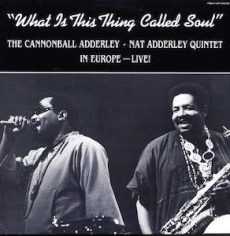
I revisited a few of my mom’s cherished albums a few nights ago. The first of them, this morning’s record from the library submitted for your approval, inspired today’s discussion. What Is This Thing Called Soul? (Pablo Live 2308-238) is a concise retrospective of three live performances by The Cannonball Adderley-Nat Adderley Quintet during their 1960 European Tour in Paris, France, Gothenburg, and Stockholm, Sweden. Released in 1984, the personnel for this live album are Nat Adderley on cornet, Cannonball Adderley on alto sax, Vic Feldman on piano, Sam Jones on bass, and Louis Hayes on drums. My copy is the original U.S. Stereo release.
Side One opens with Victor Feldman’s Azule Serape; the quintet sets things in motion with the effortlessly swinging melody. Cannonball is up first with a finger-snapping flight of pure joy. Nat provides the toe-tapping compliment in the following statement. Victor continues grabbing the listener in the third reading before the ensemble reassembles to take the song out, leaving the audience exhilarated. Cannonball takes a moment to announce the second tune, Big P, by Jimmy Heath, which turns the heat up significantly, beginning with Sam’s bass introduction to the group’s spirited theme. Cannonball is off to the races first with an inexhaustible flow of ideas. Nat follows with a solo full of energy ahead of the vigorous reprise and finale.
Cannonball quickly mentions Nat before presenting the next song, the cornetist’s One For Daddy-O, his tribute to the Chicago disc jockey, Daddy O-Daylie. The rhythm section starts with a relaxing introduction to the group’s laid-back theme. Cannonball’s opening solo is pleasant and friendly. Nat is as carefree as a day at the beach in the following reading preceding the out-chorus and ending. The second side opens with what Cannonball describes as a soul piece, The Chant by Victor Feldman. The ensemble starts the song with a happy melody, then steps aside for Cannonball’s funky opening statement. Nat emerges next with an enthusiastic performance; then Victor contributes an impressive interpretation before the quintet restates the theme.
What Is This Thing Called Love? by Cole Porter is a classic jazz standard from the thirties, or as Cannonball describes it in his introduction, What Is This Thing Called Soul? The quintet kicks off the melody vigorously; Cannonball then cooks up a storm in the opening statement so hard that the listener might need to check that their speakers aren’t on fire. Nat comes sailing in next and continues cruising down the road rapidly. Victor states his case in a furiously swinging solo, and then Louis engages in a heated exchange with Cannonball until the theme’s reappearance and climax. The ensemble launches into the melody of Cannonball’s Theme, where the saxophonist thanks the audience and reintroduces the group before the song ends as quickly as it began.
Cannonball and Nat Adderley produced What Is This Thing Called Soul? There’s no mention of who recorded these concerts, but I’m happy to say the album’s sound quality is excellent, allowing the listener to feel like they’re part of the French and Swedish audiences. My mom always loved Cannonball’s rapport with the crowd on his live albums, and his playing always possessed a soulful groove that got your fingers and toes tapping from the first note to the last. If you’re already a fan of both brothers and enjoy live hard-bop, I offer for your consideration What Is This Thing Called Soul? by The Cannonball Adderley-Nat Adderley Quintet on your next record hunt. It’s an overlooked but enjoyable album you won’t regret adding to your library!
~ What Is This Thing Called Love? – Source: JazzStandards.com
© 2024 by Edward Thomas Carter

More Posts: choice,classic,collectible,collector,history,instrumental,jazz,music,saxophone,trumpet
Requisites
Zoot ~ Zoot Sims Quartet | By Eddie Carter
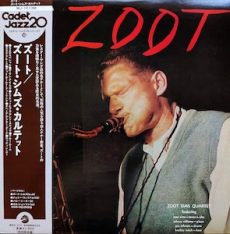
I’d just completed a long week and wanted to hear something soothing after dinner. I chose Zoot (Argo LP 608), a 1957 album by The Zoot Sims Quartet. John Haley Sims was born in Inglewood, California and began playing the clarinet and drums at an early age. By age thirteen, he started the tenor sax and later joined the big bands of Kenny Baker, Bobby Sherwood, and Benny Goodman. He got his nickname Zoot while playing with Kenny Baker and later gained attention in Woody Herman’s orchestra as one of the four brothers’ sax section. The personnel on this date are Zoot Sims on alto sax (track: B3) and tenor sax (A1 to B2, B4), Johnny Williams on piano, Knobby Totah on bass, and Gus Johnson on drums. My copy is the 1975 Japanese Mono reissue (Cadet MJ-1013M).
The first side opener, 9:20 Special by Earle Warren, begins with the quartet’s delightfully relaxing melody. Zoot is the first to whet the listener’s appetite in the opening reading. Johnny takes the baton for a light-hearted solo next. Knobby follows with a few well-placed bass notes, and Gus shares the finale with Zoot in a short conversation ahead of the theme’s reprise. The Man I Love by George and Ira Gershwin opens with the rhythm section’s tasteful background accompanying Zoot’s tenderly warm tone in the opening chorus and the saxophonist’s first reading. Johnny is equally thoughtful and sensitive in the following interpretation. Zoot adds a few soothing last thoughts, like gentle raindrops hitting the ground, into a mellow ending.
55th and State, an original by Zoot Sims, moves the beat upward to a medium bounce for the ensemble’s theme. Zoot leads off with an inspired improvisation, then passes the torch to Johnny, who follows with a rousing performance. Gus wraps up the finale, sharing a lively conversation with Zoot, leading to the theme’s return. Blue Room by Richard Rodgers and Lorenz Hart is an old show tune from the twenties. The quartet rises to the occasion, getting into an infectious groove on the melody. Zoot rolls out ideas effortlessly in the opening statement. Johnny extends the joyous mood in the following interpretation, and then Gus engages in a short exchange with Zoot, leading to the ending theme and conclusion.
Side Two begins with Gus’s Blues, an original by Gus Johnson that Johnny introduces, segueing to the foursome’s easygoing melody. Zoot sets a swinging groove on the opening performance. The pianist follows the leader with a bright, bouncy interpretation, and then the saxophonist returns for a closing presentation that disappears into nothingness. The group takes on another old chestnut with their rendition of That Old Feeling by Sammy Fain and Lew Brown. After the quartet establishes the opening ensemble, Zoot launches into one of his best solos on the album. Johnny responds with a compelling reading, and then the saxophonist delivers the last word in a short sermon before the group takes the song out.
Zoot switches to alto sax for Oscar Pettiford’s Bohemia After Dark. It’s a swinger from the word go, and this point is emphasized when the saxophonist takes charge during the foursome’s theme. Zoot continues cooking with confidence on the lead solo. Johnny meets the challenge head-on in a concise presentation, then turns it back over to Zoot, who delivers the knockout punch preceding the brisk reprise and climax. The closing track is Woody ‘n’ You, Dizzy Gillespie’s tribute to Woody Herman that takes off with the quartet’s brisk theme. Zoot opens with an enthusiastic performance. Johnny matches him in agility on the following statement. Knobby has a short stint next, and then Zoot and Gus share the exclamation point before the theme reprise and finale.
Dave Usher produced the album, but it’s unknown who the recording engineer was for the session. The album’s sound quality possesses a solid soundstage despite a minor issue during Knobby’s bass solo on Woody ‘n’ You, where the bass sounds distorted; the remainder of the album is excellent. Zoot Sims’s successful career as a leader and sideman lasted forty years, recording on various labels with many exceptional jazz musicians. He passed away from lung cancer on March 23, 1985, at the age of fifty-nine. If you’re a fan of Cool Jazz, I offer Zoot by The Zoot Sims Quartet for your consideration on your next record-shopping trip. This album of originals and standards is superbly performed and should become a welcome addition to your library!
~ That Old Feeling, The Man I Love, Woody ‘n’ You – Source: JazzStandards.com ~ Blue Room – Source: Wikipedia.org © 2024 by Edward Thomas Carter
More Posts: choice,classic,collectible,collector,history,instrumental,jazz,music,saxophone
Requisites
Star Highs ~ Warne Marsh | By Eddie Carter
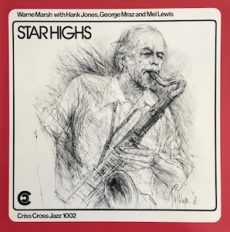
Warne Marsh enters the spotlight with Star Highs (Criss Cross Jazz 1002), an outstanding 1982 quartet album, his second release on the Dutch label. It was recorded two days after the tenor saxophonist’s performance at the NOS Jazz Festival in Amsterdam. Marsh, a talented musician who studied under pianist Lennie Tristano and later joined his group, is a notable figure in the Cool Jazz school. His collaborations with Lee Konitz and the jazz group Supersax have further solidified his reputation. He is accompanied here by the exceptional rhythm section of Hank Jones on piano, George Mraz on bass, and Mel Lewis on drums. My copy is the original Netherlands Stereo album.
The first side opens with Switchboard Joe, the first of four originals from the pen of Warne Marsh. The saxophonist guides George and Mel through a brief introduction to the quartet’s brisk theme. Marsh sets the tone with his opening statement, followed by a solo from Hank that answers him. Marsh then leads a brief conversation with George before the theme’s reprise. The ensemble then shifts to the title tune, Star Highs, starting with a relaxed groove for the melody. Marsh goes first with a beautifully constructed statement, followed by a concise comment from Jones leading to the closing chorus.
Hank Jones introduces his composition Hank’s Tune, a leisurely paced blues that gets into a happy mood from the quartet’s melody. Warne delivers the opening solo with a simplicity and melodic charm. Hank follows with a thoroughly delightful reading, and then George walks with a sense of fulfillment next. Warne gets the last word before the close. Charlie Parker’s Moose The Mooche gets underway with the quartet’s lively melody. Marsh takes off first with a robust opening statement, followed by Jones’s spirited solo. Mraz takes a short walk with authority. Lewis has the final say in a brief workout ahead of the climax.
Side Two opens to a brisk clip for the ensemble’s quick melody of Victory Ball by Lennie Tristano. Warne soars into the opening solo, with the rhythm section’s driving accompaniment. In the following interpretation, Hank is inspired to greater heights; then, Warne and Hank chase each other through the third reading. Lewis has a moment to shine before the theme returns. Marsh’s Sometimes starts with the trio’s tender introduction and a seductive lead solo by Jones. The saxophonist illustrates elegance and sensitivity in the second statement. Mraz rounds out the readings briefly, moving toward the gentle repeat of the theme.
One For The Band begins with a carefree theme. Warne takes the spotlight first, offering an endearing reading. Hank responds with a dreamy, satisfying statement before the quartet wraps things up. Gerry Teekens produced Star Highs, and Max Bolleman was the recording engineer. The album’s sound quality is superb, with a vibrant soundstage that emerges from your speakers as clearly as Waterford Crystal. Whether you’re a cool jazz fan or enjoy the tenor saxophone, Star Highs by Warne Marsh is a gem you should not miss on your next record-shopping trip. It’s a great introduction to a jazz giant that should appeal to any jazz lover and become a welcome addition to any library!
~ Moose The Mooche – Source: Wikipedia.org
© 2024 by Edward Thomas Carter
More Posts: choice,classic,collectible,collector,history,instrumental,jazz,music,saxophone
Requisites
Rifftide ~ Al Cohn | By Eddie Carter
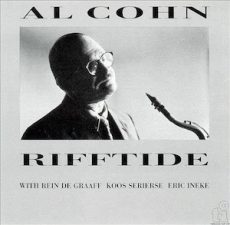
Submitted for your approval this morning is an excellent album by Al Cohn. Rifftide (Timeless Records SJP 259) was recorded during the tenor saxophonist’s 1986 European tour. He’s joined on this date by three Danish musicians: Rein De Graaff on piano, Koos Serierse on bass, and Eric Ineke on drums. My copy is the 1987 Netherlands Stereo release. Side One opens with a popular song by Kurt Weill and Ogden Nash, Speak Low. The trio takes off with a lively introduction leading to the quartet’s theme. Al gets everybody in the mood with a spirited opening statement. Rein swings into action next with an energetic reading. Eric has a vigorous conversation with the saxophonist ahead of the theme’s restatement and fadeout.
Blue Monk by Thelonious Monk is a slow blues that was the pianist’s favorite and one of his most recorded songs, a testament to its enduring appeal. The foursome begins the melody gently, leading to Cohn’s gorgeous interpretation. De Graaff is equally graceful on the following solo, and then Serierse shows his tender side in a pretty presentation preceding the reprise and finale. The tempo for the quartet’s quick melody moves upward to begin the 1945 jazz standard, Hot House by Tadd Dameron. Al takes the lead and crafts an exciting solo. Rein meets the challenge with a fiery passion in the following interpretation. Al reappears for the closing chorus and leads the group to the finish line.
The Thing by Al Cooper starts the second side with the foursome’s medium melody. Cohn cruises comfortably into the opening interpretation. De Graaff follows with a silky smooth statement, and then Serierse provides the exclamation point until the closing chorus. We’ll Be Together Again by Carl T. Fischer, and Frankie Laine is a beautiful ballad from the forties, and the group begins with a gentle melody. The saxophonist opens his first of two solos with an intimate story. Rein caresses each note of the following solo with tranquil tenderness. Al returns for his second reading, complemented by the rhythm section’s hauntingly beautiful support before the song’s summation.
The album ends with the title tune Rifftide by Coleman Hawkins. It’s a pretty tune that the quartet opens at a slow tempo for the melody. Cohn’s opening solo is particularly stirring; De Graaff has the next spot and draws the listener into the second statement. Serierse has a short reflective moment closer, leading to the theme restatement and climax. Al’s career, which lasted nearly five decades, was marked by numerous achievements. He recorded thirty-five albums as a leader, including fourteen years co-leading a quintet with Zoot Sims. He was also a successful arranger for several big bands and worked on Broadway. Al Cohn passed away from liver cancer on February 15, 1988, at age sixty-two.
Wim Wigt produced Rifftide, and Max Bollerman, who owns and still operates Studio 44, was the man behind the dials of the recording. The album’s sound quality is stunning, with a stellar soundstage transporting the quartet to your listening room with crystal-clear fidelity. If you’re a fan of cool jazz and post-bop, I invite you to check out Rifftide by Al Cohn the next time you’re on a record-shopping trip. It’s a terrific album that’s sure to please even the most discriminating jazz fan, and I highly recommend it for a spot in your library!
~ Blue Monk, Speak Low, We’ll Be Together Again – Source: JazzStandards.com
~ Al Cohn – Source: Wikipedia.org
~ © 2024 by Edward Thomas Carter
More Posts: choice,classic,collectible,collector,history,instrumental,jazz,music,saxophone
Requisites
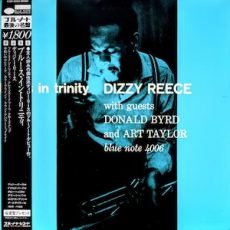
Blues In Trinity ~ Dizzy Reece | By Eddie Carter
Last night, I listened to one of my mom’s favorites, Blues In Trinity (Blue Note BLP 4006/BST 84006) by Dizzy Reece, which inspired this discussion. It was his second album as a leader and first for Alfred Lion’s label. Reece was born in Kingston, Jamaica, and began playing the baritone sax at eleven. He took up the trumpet at fourteen and later got the nickname Dizzy. At sixteen, he started playing professionally and worked with some of the best musicians in England, France, and the United States. Donald Byrd (tracks: A3, B1) and Dizzy Reece (A1 to B2) on trumpet, Tubby Hayes (A1, A3, B1 to B3) on tenor sax, Terry Shannon on piano, Lloyd Thompson on bass, and Art Taylor on drums are the musicians. My copy is the 1983 King Record Company Japanese Mono reissue (Blue Note BLP 4006 – K18P 9245).
The title tune and first of four originals by Dizzy Reece, Blues In Trinity, gets the first side off to a good start with the quintet’s medium theme. Dizzy jumps out front with a bright lead solo, then Tubby blows a set of wailing choruses. Terry takes charge next with a stunning short performance until the trumpeter and tenor saxophonist exchange riffs preceding the theme’s return. I Had The Craziest Dream by Harry Warren and Mack Gordon is a beautiful song from the 1942 film Springtime In The Rockies. Reece and the rhythm section reveal the song’s sensual beauty in an elegantly tender presentation. He also delivers a heartfelt solo as the only soloist.
Close-Up opens with a relaxing ensemble melody. Dizzy takes the lead, making each note look effortless. Tubby takes an exciting turn next, then Donald sinks his teeth into an aggressive statement. Terry follows with a solo of absolute joy. The front line takes the final flight in an exchange, leading to the sextet’s reprise and finale. Shepherd’s Serenade starts Side Two at a burning beat with the sextet’s rollicking theme. Reece launches into the opening statement with pure fire. Hayes continues with a shower of fiery notes from his tenor sax. Donald follows, blowing fierce heat in his second and final presentation, and then Art converses with the front line before the theme’s reprise and close.
Color Blind eases the throttle back to medium for the quintet’s finger-popping opening chorus. Dizzy goes right to work on the opening solo with plenty of feeling. Tubby takes the baton and builds the following interpretation effectively. Teddy maintains the mellow mood in the third performance, and the front line shares the finale in a short exchange before the theme’s restatement and climax. ‘Round About Midnight by Thelonious Monk, Cootie Williams and Bernie Hanighen ends the album as a feature for Tubby Hayes and the rhythm section. The saxophonist combines the elements of elegance, restraint, and tenderness in a gorgeous performance that culminates softly.
Tony Hall produced the initial session of Blues In Trinity, and Rudy Van Gelder is credited as the recording engineer. However, he only re-recorded the initial session. The sound quality of this King reissue is sensational, with a superb soundstage that emerges from your speakers as if the musicians are playing right in front of your listening chair. This album holds a special place in my heart, as it was a staple during our Sunday jazz dinners with my mom and sister when I was younger. If you’re a hard bop fan, I offer Blues In Trinity by Dizzy Reece for consideration on your next record-shopping trip. It’s an underrated, excellent album by one of the best musicians most may not know, and I highly recommend it for a spot in your library!
~ ‘Round About Midnight – Source: JazzStandards.com
~ I Had The Craziest Dream – Source: Wikipedia.org
© 2024 by Edward Thomas Carter
More Posts: choice,classic,collectible,collector,history,instrumental,jazz,music,trumpet