

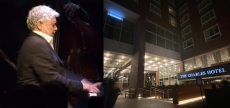
MONTY ALEXANDER
The Real Deal Monty Alexander is a Kingston, Jamaica born jazz pianist whose playing has a Caribbean influence and bright swinging feeling, with a strong vocabulary of bebop jazz and blues rooted melodies. He was influenced by Louis Armstrong, Duke Ellington, Erroll Garner, Nat King Cole, Oscar Peterson, Ahmad Jamal, Les McCann, and Frank Sinatra.
Alexander also sings and plays the melodica. He is known for his surprising musical twists, bright rhythmic sense, and intense dramatic musical climaxes. His recording career has covered many of the well-known American songbook standards, jazz standards, pop hits, and Jamaican songs from his original homeland. He performs frequently throughout the world at jazz festivals and clubs.
The Band: Monty Alexander ~ piano | Luke Sellick ~ bass | Jason Brown ~ drums
Tickets: $41.74~$53.38
More Posts: adventure,bandleader,club,genius,instrumental,jazz,music,piano,preserving,travel
Requisites
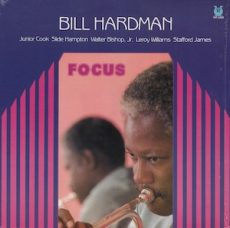
Focus ~ Bill Hardman | By Eddie Carter
This morning’s discussion is a terrific album by Bill Hardman. Focus (Muse Records MR 5259) is his fourth release as a leader, and a hidden gem in his catalog. Bill was born and raised in Cleveland, Ohio, where his jazz journey began playing with Tadd Dameron while in high school, and after graduating, with Tiny Bradshaw. His first recording with Jackie McLean in 1956 marked the beginning of a career that, although not widely known, earned deep respect in jazz circles for his exceptional trumpet and flugelhorn performances. On this album, Bill’s trumpet is joined by Slide Hampton on trombone (tracks: A2, A3, B1, B3), Junior Cook on tenor sax, Walter Bishop Jr. on piano, Mark Elf on guitar (B2), Stafford James on bass, and Leroy Williams on drums. My copy is the 1980 U.S. stereo release.
Side One is off to the races with Avila & Tequila by Hank Mobley. Leroy opens with a spirited introduction, accompanied by Walter and Stafford, setting the stage for the ensemble’s collective theme. Bill soars through the opening solo energetically. Junior’s following statement is brimming with dynamic energy. Walter maintains the vigorous momentum next, and Leroy charges the finale in a short workout, culminating in the theme’s reprise and fadeout. The sextet eases into the medium melody of Cubicle by Walter Bishop Jr. Bill gets into a good groove on the lead solo. Slide has an outstanding moment before Junior takes over to put his ideas into practice. Walter wraps it up before the restatement and exit.
Up next is Bill Lee’s Too Little, Too Late. The sextet’s medium-tempo introduction and melody start things off. Bill gets things going with a relaxing interpretation, then Slide moves with unhampered ease in the following solo. Junior jumps into a short, articulate statement next, and Walter wraps things up with a satisfying conclusion, preceding the closing chorus. The title tune, Focus by Tadd Dameron, changes the direction to begin the second side with the ensemble’s upbeat introduction and theme in unison. Slide steps up first to give a lively solo. Junior glides over the rhythm section with agility and skillful confidence next, then Bill attacks the following reading with virile lyricism. Walter continues conveying happy thoughts on the piano, and Stafford takes a short walk leading to the ending theme.
My One and Only Love by Robert Mellin and Guy Wood begins with Walter’s introduction, setting the mood for Bill’s tender melody with Junior shadowing him as it unfolds. Junior tells a touching story in the opening statement, then Mark delivers notes of great beauty in his only solo spotlight. Bill follows with a passionately haunting interpretation preceding his return to the gentle ending theme and soft climax. Minority by Basheer Qusim takes off like a race car with Leroy leading the sextet into a speedy melody. Bill goes to work first with a spirited solo, then Junior cooks at the right temperature. Slide infuses the following reading with riveting urgency. Walter builds the following statement exquisitely, and Leroy shines in a short workout before the melody’s restatement and finale.
Fred Seibert produced Focus, and the recording engineer was Fred Miller. The album is a joy to listen to, with a superb soundstage that brings the musicians to the sweet spot in your listening room with stunning fidelity. Bill Hardman recorded only five albums as a leader, but his discography as a sideman is extensive, including with Art Blakey and The Jazz Messengers, Lou Donaldson, Charles Mingus, and Horace Silver. He also co-led a group with Junior Cook but ultimately remained little known to the general public. He died on December 6, 1990, from a brain hemorrhage at age fifty-seven. If you’re a hard bop fan, I invite you to check out Focus by Bill Hardman on your next vinyl hunt. It’ll reward you with many hours of listening pleasure, especially if you’re a fan of jazz trumpet!
~ Jackie’s Pal (Prestige PRLP 7068) – Source: Discogs.com
~My One and Only Love – Source: JazzStandards.com
© 2025 by Edward Thomas Carter

More Posts: choice,classic,collectible,collector,flugelhorn,history,instrumental,jazz,music,trumpet

LEESA RICHARDS
Save Your Love For Me | Leesa Sings Nancy Wilson
As a part of Miami’s vibrant music scene, singer/songwriter Leesa Richards is helping to shape and define its evolving sound. She has performed with a slate of powerhouse artists including Faith Hill, The Bee Gees, Kelly Clarkson, Gloria Estefan, and Carole King, and recorded with Barbra Streisand and Lenny Kravitz, among other artists.
Richards grew up in music-rich Detroit and started showing an inclination towards the arts at a very early age. She began honing her vocal chops with soul greats Gerald Austin and Peabo Bryson and contemporary soul maverick Dionne Farris.
Tickets: $40.00 ~ $50.00
Presented by the Sunshine Jazz Organization
More Posts: adventure,bandleader,instrumental,jazz,music,preserving,travel,vocal
Daily Dose Of Jazz…
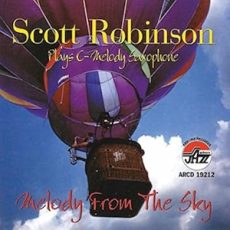
Scott Robinson was born on April 27, 1959 in Pompton Plains, New Jersey and was the son of a piano teacher and National Geographic book editor. Graduating from the Berklee College of Music in 1981, the following year he joined the college’s staff, becoming its youngest faculty member.
Robinson has appeared on more than 275 LP and CD releases, including twenty under his leadership, with musicians Frank Wess, Roscoe Mitchell, Ruby Braff, Joe Lovano, Ron Carter, Paquito D’Rivera, David Bowie, Maria Schneider, Rufus Reid, Buck Clayton, and the Orchestra of St. Luke’s. Four of these recordings won a Grammy Award. He has received four fellowships from the National Endowment for the Arts.
In 2000, the U.S. State Department named him a jazz ambassador for the year 2001, funding a tour of West Africa in which he played the early works of Louis Armstrong. Material from these appearances was released on the album Jazz Ambassador: Scott Robinson Plays the Compositions of Louis Armstrong by Arbors Records.
Throughout his career, Scott has worked to keep unusual and obscure instruments in the public view. His main instrument is a C-melody saxophone, however he has recorded with the ophicleide, and the rare contrabass saxophone.
Saxophonist Scott Robinson has operated his record label, ScienSonic Laboratories since 2009, in addition to his performing and recording.
More Posts: bandleader,history,instrumental,jazz,music,ophicleide,saxophone
Daily Dose Of Jazz…
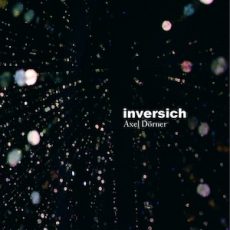
Axel Dörner was born on April 26, 1964 in Cologne, Germany and studied piano in the Dutch town Arnhem, Netherlands and at the Music Academy in Cologne. From 1991 he studied trumpet with Malte Burba, and during his studies collaborated with trumpeter Bruno Light as the Street Fighters Duo.
The duo expanded to form the Street Fighters Quartet and the Street Fighters Double Quartet, with members including Matthias Schubert, Bruno Leicht, and Claudio Puntin. He formed the Axel Dörner Quartet with Frank Gratkowski, Hans Schneider, and Martin Blume, and played with saxophonist Matthias Petzold on the albums Lifelines and Psalmen Und Lobgesänge.
Living in Berlin, Germany since 1994 and is an integral part of the city’s scene of new improvisational and experimental music. Besides playing solo and in his trio TOOT with Phil Minton and Thomas Lehn, he has played with Otomo Yoshihide, and in the groups Die Anreicherung, Ig Henneman Sextet, Ken Vandermark’s Territory-Band, Hedros, and the London Jazz Composers’ Orchestra.
A versatile musician, he has worked in the idiom of bebop, playing on pianist Alexander von Schlippenbach’s album Monk’s Casino, featuring interpretations of the complete compositions of Thelonious Monk.
Trumpeter and pianist Axel Dörner continues to perform and record.
More Posts: bandleader,history,instrumental,jazz,music,piano,trumpet