


Daily Dose Of Jazz…
Jean-Claude Naude was born on March 7, 1933 in Amiens, France. He attended the Amiens conservatory and played early in his career as a trumpeter for Raymond Fonsèque’s orchestra and with Georges Arvanitas.
By 1955 Naude was working with Maxim Saury, an association that would last a decade. He also played piano with Raymond Fonsèque in a trio with trombonist Luis Fuentes.
In the second half of the 1960s Jean~Claude led his own big bands and played with Gerard Badini, Jacky Samson, and Andre Paquinet. The 1970s saw him playing with Claude Bolling and in the 1980s with Bob Quibel.
Pianist and trumpeter Jean~Claude Naude transitioned on January 9, 2008.

More Posts: bandleader,history,instrumental,jazz,music,piano,trumpet
Requisites
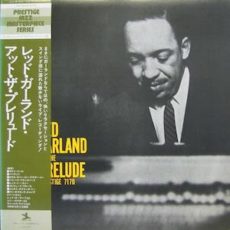
Red Garland at The Prelude | By Eddie Carter
This morning’s discussion is by one of my favorite pianists. Red Garland at The Prelude (Prestige PRLP 7170) is the first of three live albums, plus a fourth containing two live tracks documenting a single night’s performance by The Red Garland Trio. The other LPs are Lil’ Darlin’ (1959), Red Garland Live! (1965), and Satin Doll (1971). Red is supported on this date by Jimmy Rowser on bass, and Charles “Specs” Wright on drums. My copy used in this report is the 1978 Prestige Jazz Masterpieces Series Japanese Mono reissue (Prestige SMJ-6581). The album gets underway with Satin Doll by Duke Ellington, Johnny Mercer, and Billy Strayhorn. The trio opens with an irresistible toe-tapping beat on the melody. Red is up first and picks up the pace with a lively opening solo, then engages in a cheery conversation with “Specs” ahead of the group’s vibrant ending.
The crowd has only a moment to catch its breath before the ensemble jumps into a vigorous rendition of Perdido by Juan Tizol, Ervin Drake, and Hans Lengsfelder. In Spanish, the title means lost, but Juan’s tune is named for the New Orleans street. Garland takes charge from the opening chorus and chews up even more terrain on the first solo. Wright has a short statement and reappears during the climax. The group turns to a popular song from the 1942 film Iceland next, There Will Never Be Another You by Harry Warren and Mack Gordon. The trio takes us to a happy place on the melody and everyone gets a solo opportunity. The pianist takes off first, providing scintillating energy on the opening statement. Jimmy comes in next and walks his bass with authority, and “Specs” has the final word in an effervescent exchange with Red preceding the trio’s exit.
popular standard, Bye Bye Blackbird by Ray Henderson and Mort Dixon brings the first side to a close with a marvelous rendition by the trio. Garland was a member of the Miles Davis Quintet when he recorded it on Round About Midnight (1956). The trio is magical on the melody, and Red begins with a thrilling interpretation inspired by the rhythm section’s backing. Rowser follows with a short statement that’s joyous and carefree before Red returns to take the song out. Side Two starts at a speedy pace with Let Me See by Count Basie, Harry “Sweets” Edison, and Jon Hendricks. Red flies out of the gate rapidly on the song’s theme, then continues swinging hard on an energized opening solo. Jimmy soars into the next presentation swiftly, and “Specs” shares a second heated discussion with Red leading to the threesome’s quick finish.
Prelude Blues is the pianist’s contribution to the set and slows things down for him to have the solo spotlight to himself. Garland delivers a reading as succulent as soul food with Rowser and Wright adding the tasty ingredients to make this delicious meal complete. Just Squeeze Me by Duke Ellington and Lee Gaines brings the beat back to midtempo and the group swings easily on the melody. Red gets the most solo space and does the tune justice with a statement of sheer delight. Jimmy is heard briefly during the closing chorus. This set ends with a vivacious rendition of Count Basie’s theme, One O’Clock Jump. Red and “Specs” bring the song to life with a short introduction, then the pianist attacks the only solo with an intense groove while Rowser and Wright maintain the aggressive beat until the climax and the trio’s short signoff.
Red Garland at The Prelude was originally recorded by Rudy Van Gelder, and Victor Musical Industries has done a superb job mastering the original tapes. The album has a marvelous soundstage with a great definition from each instrument that transports your listening room to the club as the trio is on stage. Now that I have this record in my library, I’ll be on the hunt for the other three to complete the entire night’s performance. If you’re a fan of Red Garland, I invite you to audition Red Garland at The Prelude for a spot in your library. If you love jazz, this is an album you should treat yourself to!
~ Lil’ Darlin’ (Status Records ST 8314), Red Garland Live! (Prestige New Jazz NJLP 8326), Round About Midnight (Columbia CL 949/CS 8649), Satin Doll (Prestige P-7859) – Source: Discogs.com
~ Bye Bye Blackbird, Just Squeeze Me, One O’Clock Jump, Perdido, Satin Doll, There’ll Never Be Another You – Source: JazzStandards.com © 2022 by Edward Thomas Carter

More Posts: choice,classic,collectible,collector,history,instrumental,jazz,music,piano
Daily Dose Of Jazz…
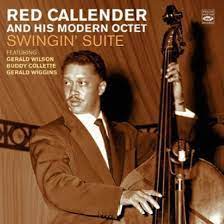
George Sylvester “Red“ Callender was born on March 6, 1916 in Haynesville, Virginia. He made his recording debut at 19 with Louis Armstrong’s band. In the early 1940s, he played in the Lester and Lee Young band, and then formed his own trio. Through the 1940s, he recorded with Nat King Cole, Erroll Garner, Charlie Parker, Wardell Gray, Dexter Gordon, Uffe Baadh and many others.
After a period spent leading a trio in Hawaii, Callender returned to the mainland, settling in Los Angeles, California. He became one of the first black musicians to work regularly in the commercial studios, including backing singer Linda Hayes on two singles. He would later turn down offers to work with Duke Ellington’s Orchestra and the Louis Armstrong All-Stars.
On his 1957 Crown LP Speaks Low, Callender was one of the earliest modern jazz tuba soloists. Keeping busy up until his death, some of the highlights of the bassist’s later career include recording with Art Tatum and Jo Jones, playing with Charles Mingus at the 1964 Monterey Jazz Festival, working with James Newton’s avant-garde woodwind quintet on tuba, and performing as a regular member of the Cheatham’s Sweet Baby Blues Band.
He reached the top of the British pop charts as a member of B. Bumble and the Stingers. In 1964, he was introduced and highlighted in performance with entertainer Danny Kaye on his television variety show, in a duet on the George and Ira Gershwin song, Slap That Bass.
He worked with an array of pop, rock and vocal acts as a member of The Wrecking Crew, a group of first-call session musicians in Los Angeles, California. Double bassist Red Callender, who also plays tuba, transitioned from thyroid cancer at his home in Saugus, California on March 8, 1992.
More Posts: bandleader,bass,history,instrumental,jazz,music,tuba
Daily Dose Of Jazz…
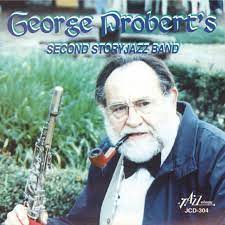
George Arthur Probert, Jr. was born on March 5, 1927 in Los Angeles, California and was an autodidact on his instruments. He first played with Bob Scobey from 1950 to 1953 and then went on to play with Kid Ory’s Creole Jazz Band.
Between 1954 and 1969, George played in the Firehouse Five Plus Two Dixieland Revival Band, an ensemble formed by Walt Disney Studios animators. They recorded with Disney composer George Bruns in 1957 and again in 1968.
Probert led his own bands from 1973, touring America and Europe. In 1997 he toured England, Germany & the Netherlands with Big Bill Bissonnette’s International Jazz Band. The all-star group featured Anthony “Tuba Fats” Lacen of New Orleans & British pianist Pat Hawes.
Clarinetist, soprano saxophonist and bandleader George Probert, who also worked as a television and movie music editor, transitioned on January 10, 2015 in Monrovia, California.
More Posts: bandleader,clarinet,history,instrumental,jazz,music

Daily Dose Of Jazz…
Ricky Ford was born in Boston, Massachusetts on March 4, 1954 and studied at the New England Conservatory. At the age of twenty he recorded with Gunther Schuller and then played in the Duke Ellington Orchestra under Mercer Ellington from 1974 to 1976.
Moving on to play with Charles Mingus from 1976 to 197777, the Dannie Richmond from ‘78 to ‘81, followed by Lionel Hampton for two years beginning in 1980 and ending up in the Mingus Dynasty. By 1983 Ricky was also played with Abdullah Ibrahim, a relationship that lasted for seven years. By the end of the decade he was also playing with Mal Waldron until 1994.
Ford has recorded twenty~two albums as a leader for Muse, Candid, and other labels. As a sideman he has recorded with but not limited to Yusef Lateef, Sonny Stitt, McCoy Tyner, Freddie Hubbard, Amina Claudine Myers, Sathima Bea Benjamin, Ran Blake, Steve Lacy, Jaki Byard, Red Rodney, Jack Walrath and others.
Tenor saxophonist Ricky Ford settled in Paris, France in the 1990s, has taught at Istanbul Bilgi University from 2001 to 2006, and in 2009 he founded the Toucy Jazz Festival in Yonne, France. He continues his pursuit of his music.
More Posts: bandleader,history,instrumental,jazz,music,saxophone