

Daily Dose Of Jazz…
Burton L. Collins was born on March 27, 1931 in New York City but raised in Philadelphia, Pennsylvania. During the 1950s he worked with Dizzy Gillespie, Urbie Green, Neal Hefti, Woody Herman, Elliot Lawrence, Johnny Richards, and Claude Thornhill.
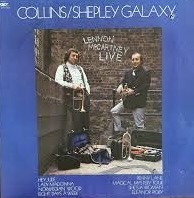
Relocating to New York around 1960 he played in Broadway orchestras and in ensembles with Cannonball Adderley, Albert Ayler, Jimmy McGriff, Blue Mitchell, Duke Pearson, and Stanley Turrentine, among others. With Joe Shepley he formed the group Collins-Shepley Galaxy in 1970, recording two albums, including a Lennon/McCartney tribute. Later in the decade he played flugelhorn with Urbie Green again as well as with Janis Ian, Lee Konitz, David Matthews, and T. Rex’s album Electric Warrior.
Over the course of his career he recorded a hundred albums as a sideman with, among others, Manny Albam, Woody Herman, Duke Pearson, Cy Coleman, Frank Foster, Sal Salvador, Pat Moran, Astrud Gilberto, George Benson, Chris Connor, Manhattan Transfer, Tony Bennett, Luiz Bonfa, Airto Moreira, Paul Desmond, Eumir Deodato and Lalo Schifrin.
He played little after the 1970s, though he appeared on record with Loren Schoenbergin 1987. Trumpeter Burt Collins transitioned on February 23, 2007 in Philadelphia.

More Posts: history,instrumental,jazz,music,trumpet
Daily Dose Of Jazz…
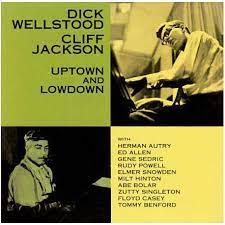
Abe Bolar was born on March 26, 1909 in Oklahoma City, Oklahoma. From 1932-1936 he was a member of the Oklahoma City Blue Devils. During the late Thirties he moved to New York City where he played with Hot Lips Page, then with Lucky Millinder from 1940 to 1941.
In the early 1940s he was a member of the Count Basie’s orchestra. In 1939 and 1940 he made recordings with Pete Johnson.
Double bassist Abe Bolar, who was married to pianist Juanita Bolar, transitioned on February 29, 2000 in Portland, Oregon.
More Posts: bass,history,instrumental,jazz,music
Daily Dose Of Jazz…
Linton Garner was born on March 25, 1915 in Greensboro, North Carolina. As a youngster he wanted to play cornet rather than piano, but due to problems with his teeth, was forced to concentrate on the keyboard. From the age of 8 until 10 he had piano lessons, as did his three sisters, unlike his brother.
He was arranger and pianist with Fletcher Henderson’s band before the Second World War, then spent 1943 to 1946 in the army, where he played both piano and trumpet in different bands. Afterwards he was pianist and arranger for a number of distinguished bands including those of Billy Eckstine and Dizzy Gillespie. He also accompanied Sarah Vaughan, Nat King Cole, Carmen McRae and Della Reese. He also wrote songs, including You’re the One For Me.
Moving to Canada in 1963, by 1974 he was invited by Arni May to Vancouver, British Columbia to accompany him at the opening of the Richmond Inn Hotel. Linton stayed in Vancouver and worked in many venues becoming the resident pianist for seven years at the Four Seasons Hotel.
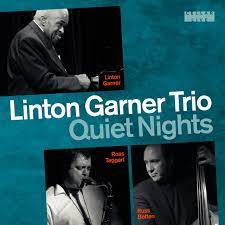
The 1990s had him playing at the Three Greenhorns in Vancouver. He also sang and played the piano in Rossini’s restaurant in Kitsilano. The Linton Garner Legacy Quartet, featuring drummer Don Fraser, bassist Russ Botten, pianist Ron Johnston, and pianist Miles Black continues to play Garner’s music.
Pianist, trumpet and vocalist Linton Garner, who was Erroll’s older brother, transitioned from kidney failure in Vancouver, at the age of 87 on March 6, 2003.
More Posts: bandleader,history,instrumental,jazz,music,piano,trumpet,vocal
Daily Dose Of Jazz…
David Owen Mackay was born on March 24, 1932 in Syracuse, New York. He attended Trinity College in Hartford, Connecticut from 1950 to 1954, where he was the first blind student to graduate. He then attended Boston University from 1956 to 1958, where he studied with Margaret Charloff. He also studied with Lennie Tristano in New York City, then at the Lenox School of Jazz where he studied with Bill Evans, and lastly at The Hartford School of Music where he studied with Asher Zlotnik.
By the mid-1960s, Mackay joined the Hindustani Jazz Sextet with Don Ellis, Harihar Rao, Emil Richards, Steve Bohannon, Chuck Domanico and Ray Neapolitan. During this period he played with the Don Ellis Orchestra. The late Sixties saw him and Vicky Hamilton formed a duo and produced two recordings together with instrumentation including flute and saxes from Ira Schulman and guitar from Joe Pass.
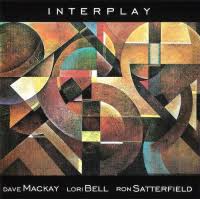
In the mid-1970s, Dave along with Bill Henderson, and Joyce Collins formed a unique trio which toured the northwest, recorded two Grammy nominated albums for Discovery, and by 1981 they were performing on the television show Ad Lib. By the end of the decade with Lori Bell, and Ron Satterfield he formed the group Interplay, which garnered them four Grammy npominations. In the 1990s, he teamed up with Stephanie Haynes.
By the turn of the century he teamed with John Giannelli on bass and Joe Correro on drums performing Bill Evans tunes in a celebration of the Life and Music of bassist Scott LaFaro. He then hooked up with bassist Kenny Wild and singer Tierney Sutton. He would go on to perform with Serge Chaloff, Sonny Stitt, Bob Wilber, Bobby Hackett, Jim Hall, Don Ellis, Emil Richards, Shelly Manne, Chet Baker, Joe Pass, Warne Marsh, Kai Winding, Stephanie Haynes, and Tierney Sutton.
As a composer a couple of Mackay’s original compositions were later recorded by Cal Tjader, and by the Baja Marimba Band. He wrote a majority of the music with lyricist Barbara Schill for a hit stage musical comedy titled Is It Just Me, Or Is It Hot In Here?
Pianist, vocalist and composer Dave Mackay, with roots in the works of Art Tatum, Bud Powell, and Bill Evans, who favored the standards of the 1940s and 1950s and the bossa novas of Luíz Eça, Antonio Carlos Jobim, and João Gilberto, transitioned on July 29, 2020.
More Posts: composer,history,instrumental,jazz,music,piano,vocal

Daily Dose Of Jazz…
Lance Bryant was born on March 23, 1961 in Markham, Illinois. His early musical experience was in the Baptist church. He received his formal education at Berklee College of Music in Boston, Massachusetts where he studied saxophone composition and arranging. Moving to New York City in the mid Eighties he continued his study of saxophone and arranging privately with Frank Foster.
In the Nineties he began his relationship with the Lionel Hampton Orchestra and three years later became the orchestra’s musical director and principal arranger. He made his film debut in Spike Lee’s Malcolm X. He traveled extensively with Phyllis Hyman, Jon Hendricks, Pete “LaRocca” Sims, Wallace Roney, Abdullah Ibrahim, Bootsy Collins,James Williams and numerous others. He was an on-stage musician for the Broadway musical review Swing, has recorded with Carla Cook, George Gee, Yoron Israel.
Returning to his church roots he became Director of Instrumental Music at Fountain Baptist Church, Minister of Music for Andover Baptist Church and released Psalm in 2002, his first of a four cd series of originals and jazz arrangements of hymns and spirituals. As an educator he has taught Covenant Christian Academy, Phillips Academy, his alma mater Berklee, and Jazz At Lincoln Center’s Educational Department.
Saxophonist, arranger and vocalist Lance Bryant when not touring with Abdullah Ibrahim and Ekaya, he continues to perform around New York and New Jersey with Andy Farber Orchestra and the New Lionel Hampton Big Band.
More Posts: arranger,history,instrumental,jazz,music,saxophone,vocal